Music therapist-in-training, singer-songwriter, instrumentalist
Brede Davis is a music therapy student with professional and personal experience primarily in fields of disability and mental health. She also plays and writes music as Brede Alanna Music on YouTube, Instagram, and Facebook.
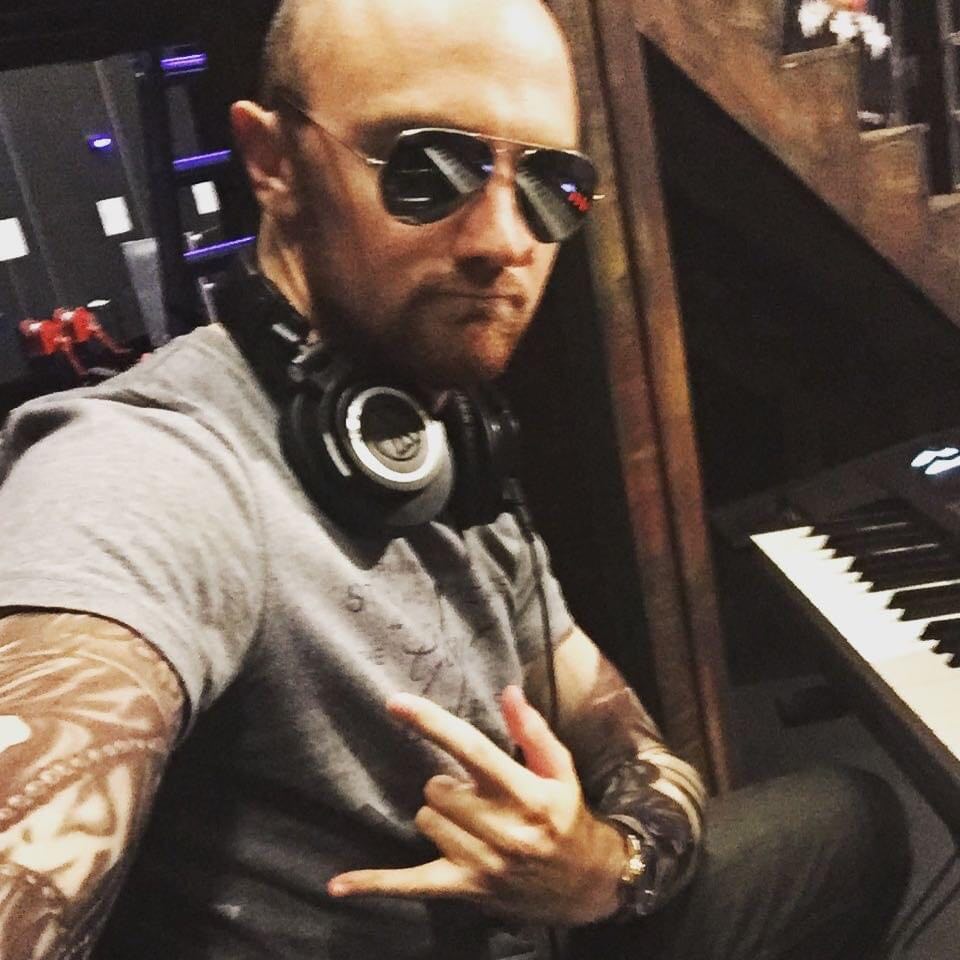
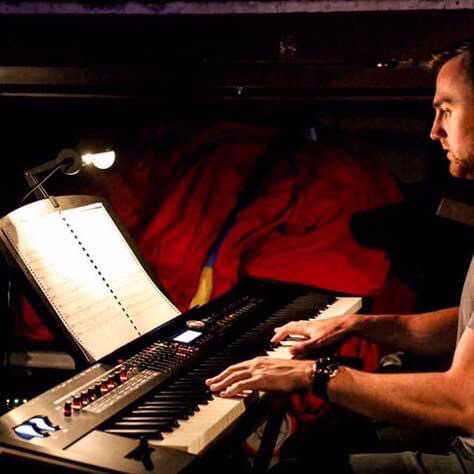
I had the chance to speak to Eric von Ahlefeldt, a music director and pianist who has worked extensively in the community music theatre scene in Geelong. Most recently, Eric was due to be assistant music director of CentreStage Geelong’s production of West Side Story, which will hopefully be staged at a later date.
When did you first begin MD’ing shows? Can you name some of the shows you have worked on?
I first began MD’ing shows in 2015, when I was twenty-two. I started out with small cabaret-style shows (small casts/minimal accompaniment, usually just piano). Eventually I started to gain a reputation for providing reliable piano accompaniment among the local theatre companies. This reputation, combined with having a positive attitude and enthusiasm for every project I was offered, meant that a number of opportunities to accompany rehearsals were coming my way. This eventually grew to gigs as an Assistant Musical Director to more accomplished MD’s, and eventually to MD’ing larger scale musicals myself.
Organisations I have MD’d or Assistant MD’d with include: GSODA Theatre Collective, CentreStage Pty Ltd, Theatre of the Damned, and GLTS. Some of the shows have included: Little Women, Joseph and the Amazing Technicolor Dreamcoat, Little Shop of Horrors. Two shows that were due to go ahead this year which have been postponed are West Side Story and Priscilla: Queen of the Desert.
What have been some show highlights over the last couple of years?
Each project brings with it unique and memorable challenges. Some have been hilarious, some have been incredibly daunting, but all have been a part of the growing experience. The biggest highlights for me have been from productions that brought the music out of the pit and on to the stage. The highlights below have been from shows that I have MD’d as well as productions where I have been in the band/orchestra.
Getting dressed in 80’s glam rock style to be part of the on-stage band for Rock of Ages.
Playing the piano onstage while playing the role of Oscar the Pianist for 42ndStreet. Depending on the scene, I would have to run back and forth from the stage and the side-stage pit.
Playing the role of the MC in Chicago from the onstage baby grand piano, which I was also playing in the orchestra. An amusing challenge of this was that I had lines to deliver while simultaneously playing the piano. I also had a small mirror next the music stand so that I could see the conductor who was positioned behind me.
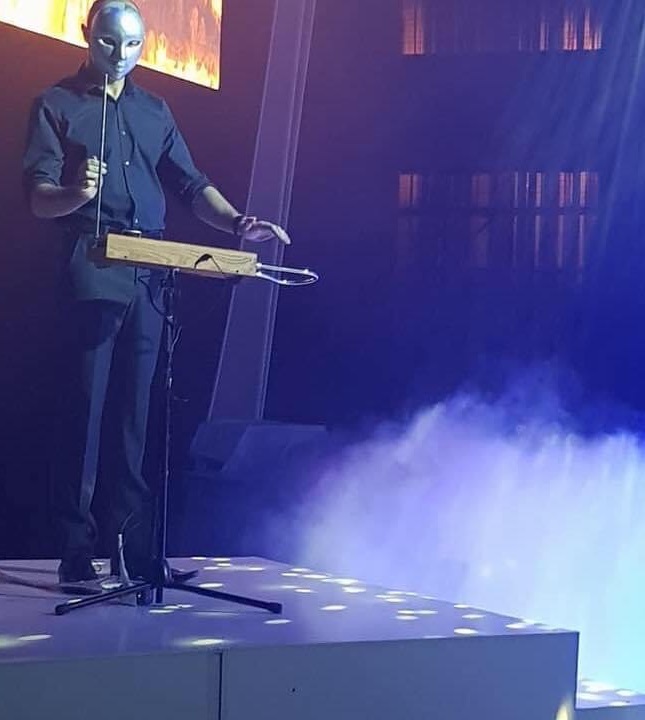
For Song Contest: The Almost Eurovision Experience, I learned to roughly play a little bit of the theremin, which I had to run onstage and play in the middle of a song for a few bars. While wearing an alien mask. You really do get the unexpected with some of these shows.
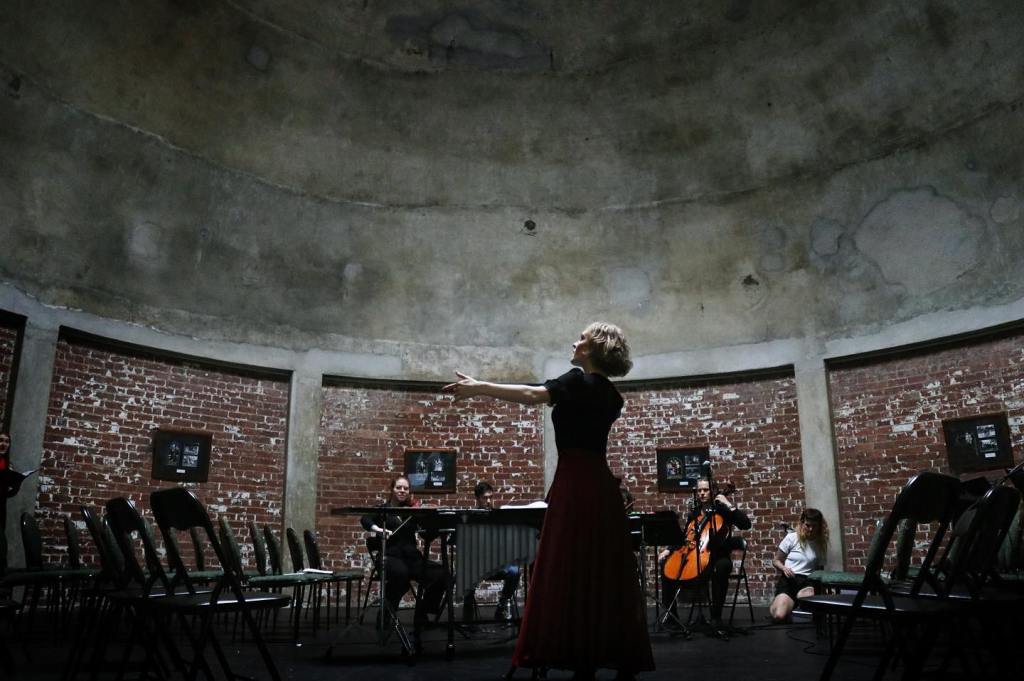
The most recent highlight was having the opportunity to conduct the full 29-piece orchestra in our final rehearsal for West Side Story. I am hoping to get the opportunity to do it again later in the year if the show successfully goes ahead once the COVID-19 situation has passed.
What are some of the biggest challenges/ learning experiences you have encountered through being in the trenches of the entire rehearsal process?
One of the biggest challenges an MD has to overcome is that of scheduling. When you are MD’ing a musical, some of the tasks you are in charge of include: putting together a cast, teaching a cast their vocal parts (this includes one-on-one work with leads as well as large harmony-heavy ensemble numbers), collaborating with the director and choreographer to ensure you are all following the same vision, rehearsing and assembling the band, and conducting for the run of the performances.
Essentially, there are too many variables in the air over the three or four month rehearsal period for an MD to not maintain a strict sense of scheduling.
Becoming a more organised person has been a real learning curve for me over the years and something I feel far more confident with now. The last thing you want to do as an MD is find yourself unprepared or backed into a corner that is difficult to dig yourself out of. Especially when the production is sticking to a strict timeframe, or when you are conducting in front of a live audience.
Any pieces of advice for aspiring Musical Directors out there, on how they can sharpen their skills and put themselves forward for opportunities?
The first piece of advice I would give to aspiring MD’s is to put yourself forward. A lot of working opportunities for the music side of community theatre, be it MD or pit musician, come from personal connection. Every MD will tell you they started as pit musicians and this is the best place to begin. The majority of musicians I call upon to play in the pit are musicians who I’ve played alongside before, who I know are capable of doing an incredible job and who I have a lot of fun playing alongside. Once your foot is in the door it becomes much easier. Personal connection is key, and no one will call upon you to be a part of the music side of a production if they don’t know your skills and your enthusiasm to join.
The next piece of advice for any MD (or pit musician) is to be a reliable one. Not showing up to a rehearsal without any explanation, is an excellent way to not get called back as it can throw many aspects behind schedule.
The next piece of advice feels like an obvious one, but it is important to know your music prior to rehearsal. If you are running an ensemble vocal rehearsal and you are not 100% sure of how the piece is meant to sound/ the context of the song in the show/who is onstage and offstage, etc, you will be setting yourself up for problems further down the track. Know. Your. Music.
In addition to this, the more intimate an understanding you have of the score, the more you will inspire your cast. The ensemble will work harder if you have a specific vision for the sound, something to work towards beyond just ‘here are your notes’.
The final piece of advice that I would give to aspiring MD’s is probably one of the most important, and that is to approach every new show/cast/production team/band with an enthusiastic and positive attitude. The personal relationship that an MD maintains with their cast and team cannot be understated, especially when it comes to the actual performances. You may have people in your cast who are taking part in their first show, or someone who has scored their first lead role.
Performing onstage is going to be quite intimidating and nerve-racking for some of your cast, and they need to see a familiar and friendly face when they look into the pit. They need to know that the MD/conductor is ‘in the trenches’ with them and has their back. The conductor should be someone they can look at and feel instantly more relaxed. I’ve always said the perfect MD should be someone who can strike the perfect balance of raising the standard of what’s expected, while simultaneously lowering the overall tension of the experience, which as I mentioned can be a daunting one for much of the cast. Community theatre is too personal-based to be making any enemies and is simply not worth it in the long run. Be friendly to each other.
What is the most rewarding thing about being the Musical Director and seeing a show come to life?
There are so many rewarding aspects to being an MD that have kept me doing it for as long as I have, the first one being my own personal musical development. Every musical brings new styles, new genres and new opportunities to implement your own personal touches to many areas of the music. Being able to see your own skills adapt, grow and fine-tune from show to show is certainly one of the most rewarding aspects.
Another element is the people you get to work with. My personal experience has shown that community theatre is one of the most caring, understanding and accepting communities of people to be around. It is so rewarding seeing friendships form, and an army of people work together towards a singular goal, to create the best production that they can.
And finally, getting to see the growth of these people throughout the rehearsal process. Whether it is one cast member’s ability to hold a harmony that they couldn’t at the beginning of rehearsals, or seeing someone who was deathly terrified in their audition go on to shine onstage, or seeing someone who doubted their own acting abilities draw a boisterous laugh or mournful sob from the audience. Seeing my castmates grow in confidence is easily one of the most rewarding aspects.
Any dream shows you’d like to tick off your bucket list?
Quite a few! Some of the shows I have wanted to tick off the bucket list for a long time include: The Phantom of the Opera, Catch Me If You Can, City of Angels, Into the Woods, The Last Five Years and The Prince of Egypt. Among many others!
What are some of your musical goals for the next few years?
My goals are really quite simple. Mainly to continue doing what I’m doing, as it’s what I enjoy doing more than anything. I want to continue working on as many different shows as possible, grow contacts with as many keen musicians as I can, and to get to work with as many theatre companies around Melbourne as possible.
Eric has been involved with amateur musical theatre in Geelong and Melbourne since 2015. His Musical Director credits include GSODA Theatre Collective’s production of Little Women: The Musical (2015) at Shenton Performing Arts Centre, CenterStage’s production of the cabaret, Nunsense (2016) and CenterStage’s Bending Broadway (2017). He also worked as the co-vocal director/rehearsal pianist for CenterStage’s production of Oklahoma! (2016). Eric has also played keys for a number of recent Geelong shows such as Lyric’s Legally Blonde: The Musical (2015), CenterStage’s Chitty Chitty Bang Bang (2017), Lyric’s Joseph and the Amazing Technicolour Dreamcoat (2017), CenterStage’s Oliver (2017), GSODA’s Heathers (2017), and most recently CenterStage’s 42nd Street (2018).
In addition to his musical theatre work, Eric was also the musical director for two recent variety shows last year; FOR GOOD: A Musical Variety Concert for the Good Friday Appeal, and GSODA Theatre Collective’s Lights Up.
In 2016 Eric completed his study at the Melbourne Conservatorium of Music majoring in classical piano performance. Outside of piano, he also enjoys playing the guitar as well as singing. Throughout the week, Eric teaches piano at Oxygen Tuition in Geelong, and through the company also teaches piano and guitar to students in primary schools around the Greater Geelong area such as Leopold Primary and St Aloysius Primary in Queenscliff. Prior to his recent study of music in Melbourne, Eric also completed a Diploma of Music at Oxygen College here in Geelong.
I wanted to write an article about how it has been helpful for me to lead from a more compassionate place with my relationship to music. I hope this is helpful for you as well – I’d love to start a conversation and hear about the ways you are adapting also!
Settling into a new rhythm
Allow yourself to grieve the postponements, cancellations, and changes to schedule
Like many of my peers, I had an intensely busy April coming up – amongst many things, I was looking forward to singing with Divisi ensemble, rehearsing Path of Miracles, singing in two St. John Passions, prepping a third year recital, working on material for opera auditions and masterclasses, studying a script, looking for work, etc etc… it’s fair to say that I felt comfortably busy and very intellectually stimulated! Naturally when everything began to be cancelled, my schedule and the schedule of my peers evaporated over the space of a few days. This was a disorientating week for everyone.
At first I didn’t let myself properly grieve the projects that were either put on hold or cancelled, nor did I allow myself to feel sad for all of the rehearsals I would have enjoyed. My conducting teacher gave me the advice that the best thing I could do was let myself be upset, rather than immediately launching into new things to study. Sometimes, the only way out is through – and the sadness needs to be allowed to run its course. So I took my calendar off of the wall and decided to scale everything back to – simply – one day at a time.
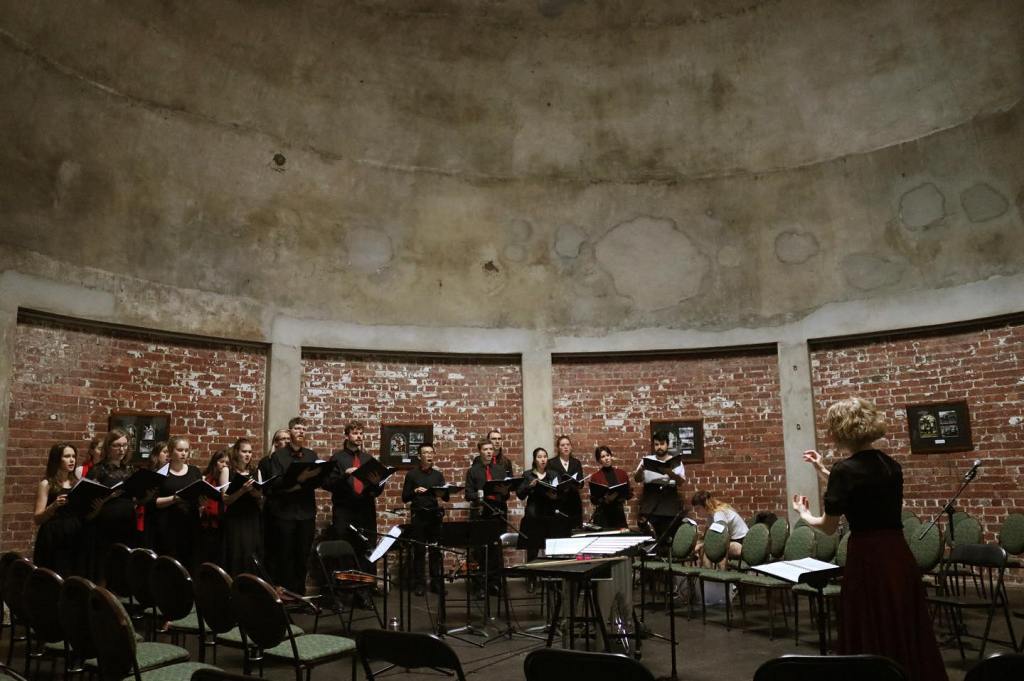
Grace in rehearsal for Candlelight VOX’s ‘Pause’ concert, November 2019.
Acceptance, and letting go of the impulse to be “productive” all of the time
Given that I’m a person who thrives when they are busy (and that the highlights of my social life centre around rehearsal banter), I found suddenly having so little human contact, and much time, astonishingly depressing. I’ve learned that the kindest way to deal with these feelings is to practice acceptance.
Given that the situation is unlikely to change for a while, there is not a lot we can do about the fact that it is going to affect us. And we are going to feel sad about it from time to time. And rather than judging that, or feeling guilty about it, or trying to be combative with it in any way, I find it’s kinder to acknowledge when I’m feeling low and not deny myself these feelings. I know that the feelings will come and go if I don’t hold onto them too tightly.
While I was processing everything in this way, I needed to stop practicing: acting like nothing had changed and that I could steamroll through wasn’t helping anything. Sometimes it’s healthy to take some time away from your instrument, and and come back to all the other parts of you. Other times, it’s good to start practicing even if you don’t feel like it – but only you (the individual!) can learn to know the difference here. The love for your instrument and motivation to practice will come back – you just have to let it fly away and circle back to you. Give yourself some time.
In rehearsal for Candlelight VOX’s ‘Pause’ concert, November 2019.
Check in with your habits, and make a new routine – but be kind
Routines, by definition, are something you create with time. So be kind if it’s taking you a little while to get into a new one. I often find that my practicing is less productive if I’m feeling off-kilter with my routines. You likely know all of this already, but just a gentle reminder – eat some food, get some fresh air if you can, do some exercise, take some time to read a book or do a jigsaw, and sleep at regular times. Check the energy you’re sending to yourself and to your friends, and bring some more self-awareness to your movement if necessary. If it’s a little unbalanced, come gently back to kindness and joy.
Look after yourself like you are a friend that you love dearly. Just start with one habit at a time. I always try to start with sleep. Also, get out of your pyjamas. Honestly, it helps.
Practicing with kindness
Lead with kindness and reconnect with joy – particularly if you’re struggling to “show up to the page”
I’ve had to come back to some habits I built when I was going through a period of uncertainty with my voice. If I’m really struggling to get started, I put my heat-pack in the microwave and flick the kettle on for some tea – and just by doing a couple of nice things I begin to associate the start of singing with kindness.
I used to also have the sound of the rain playing faintly during practice so that I could stop and focus on that if I started to get stuck in a loop of being mean to myself. For particularly foggy days, I keep a straw on my bedside table: if I can’t summon the energy to get out of bed, there’s no rule that says I can’t start warming up in bed. Sometimes the passion and the motivation won’t be around until you get started, and some days it won’t be there at all and it’s just another day in the proverbial office – and that’s okay too.
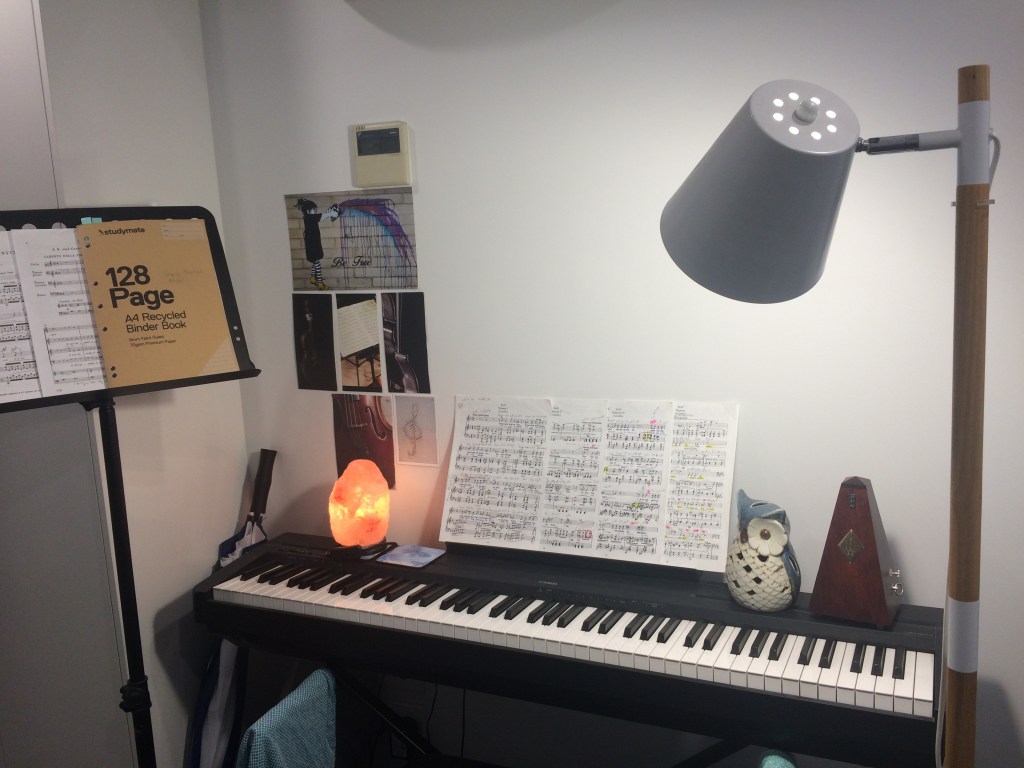
A glimpse into Grace’s personal practice space
I often start practice by lying in semi-supine and bringing my attention to my breath. This can be quite intimidating if I’m holding onto a lot of frantic energy because it means I have to address it head on. However – breathing through it gets it out of the way, so I can practice with calmness and clarity instead. Rather than letting negative thoughts become a barrier to practice, I just changed the way I practiced to anticipate them. The mind affects the body affects the voice, and so on.
It can also be good to give your joy a kickstart! What’s the rep that made you fall in love with your instrument? What music makes you go wow, I want to be able to do that!At the moment, I’ve got Britten’s Cabaret Songs and Andre Previn’s Honey and Rue on repeat. I also adore Vivaldi- that effervescent, champagne, slightly erratic feeling – and as always, anything by Wolf is just delicious to me. Pärt, Monteverdi, and Machaut also never fail to take my breath away.
Like every young, hopeful soprano, sometimes I just need to imagine what it would feel like to sing Sempre Libera or Je Veux Vivre… it really does pay to occasionally drift out of the immediate future, and daydream. It’s just as valuable to reconnect with whatever music made you fall in love with music – it doesn’t have to be classical – I loved Enya as a tiny kid and Adele as a teenager – and I still do.
Remind yourself of what normally helps your practice routine
This is like point 3, but for music practice. For me, I prefer to set my practice goals for the following day at the end of the previous day’s session – that way I still have clarity on both my ongoing goals and what small details still need work at the end of a session, and it’s easier to start with clarity the next day.
I also like to know when I’m working in the land of “building” or “playing” my instrument because each tend to engage two different patterns of thinking. I also find, both for vocal and mental fatigue – it’s more efficient to practice in twenty to thirty minute chunks, walk away, work on something else or do some silent practice, then come back and do another chunk.
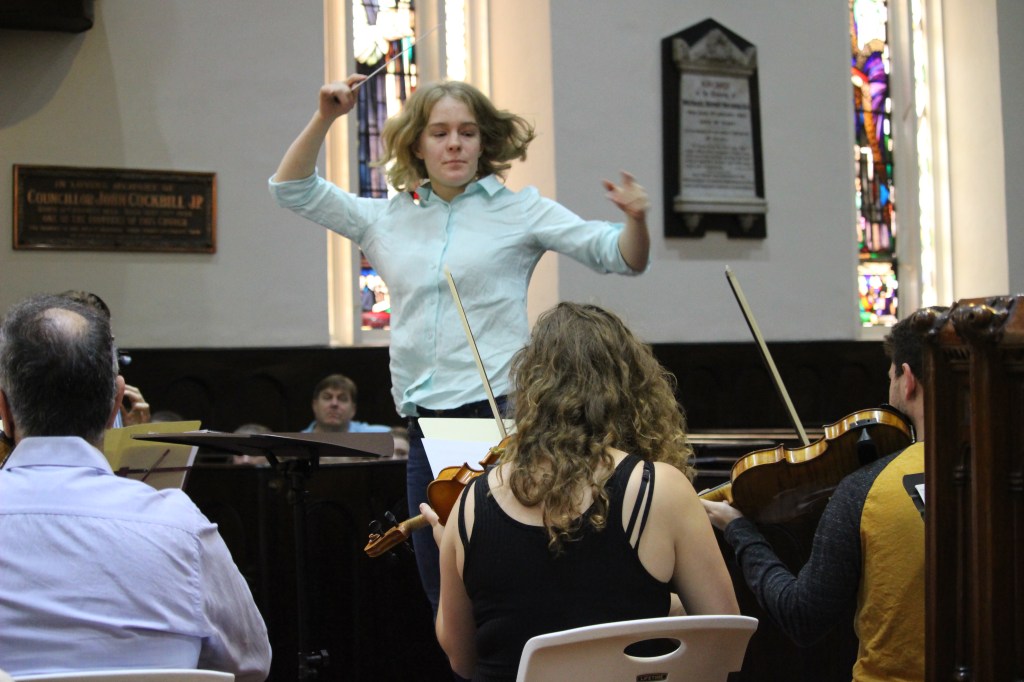
Grace participating in More Than Opera’s Summer Conducting Course, January 2020.
You’ll know what works for you – and if you’re still discovering that, there’s plenty of resources around to help you build a a routine! If anything, now is a good time to refine and experiment.
When you have the energy, engaging with other areas of practice that you might not usually have the time for
The heading pretty much sums it up. Rather than flying into a whole series of new things in one go, once your practice habits find some new equilibrium, ifit would bring you joy – find another part of your craft to tinker away at. I’ve started working on my Italian again, and am laughing at the total brain freeze that comes with beginner-level piano.
I also highly recommend using this time to read Julia Cameron’s The Artist’s Way. I’m re-reading it at the moment with two of my close friends and it is a gift of astute observation and astonishing clarity.
Fever Pitch Magazine enquiries can be sent to Stella Joseph-Jarecki through stellamusicwriter.wordpress.com
I recently had an unexpected experience- I was genuinely inspired by a reality TV show. I’m not a TV snob, in fact I love trashy dating shows, but I don’t exactly expect my creative fire to be stoked by The Bachelor.
But that is what happened when I watched Netflix’s offering Next In Fashion. I dismissed the show at first because the title reminded me of all the things I dislike about the fashion industry- the ruthless cycle of trends, the hive mentality, an emphasis on capitalising on the latest hot new thing instead of timeless style. I was also cynical about the hosts: Tan France, the resident fashion expert from Queer Eye, and Alexa Chung, ex-model and general fashion darling. As nice as they seemed, their presence made me think the show would be an overly shiny and commercial enterprise.
But after watching the designers work together and churn out impressive creations each episode, I was reminded of some of my favourite parts of the creative process, and the act of joining forces with someone to create something.
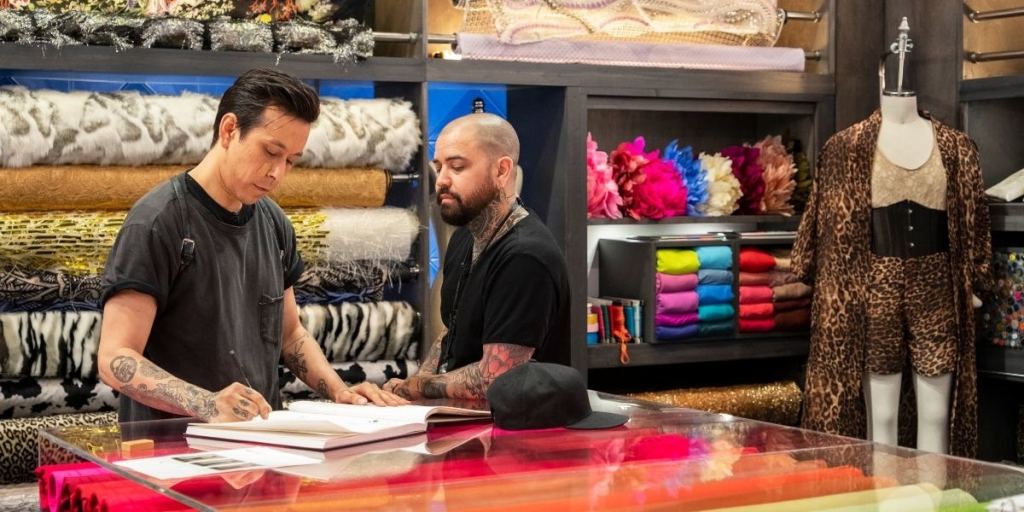
Top row, from left to right: Angel Chen, Ashton Hirota. Bottom row, left to right: Daniel Fletcher, Minju Kim.
The real strength of the show was the casting. The contestants came from all corners of the globe and had experienced varying levels of commercial success. Some owned and managed their own labels, others sold clothes out of their home studio or had only worked under the umbrella of other designer’s brands.
One particularly telling example of this diversity was the inclusion of contestant Angelo Cruciani, a delightfully batty and charmingly upbeat Italian designer. Angelo’s sewing skills were the weakest of all the participants, as he had gained commercial success as the creative director of his brand in Italy, and had never been forced to do the bulk of the own sewing work. Angelo was paired with Canadian designer (and garment-creator extraordinaire) Charles Lu. Angelo’s affinity for styling and developing an overall vision for collections, wonderfully balanced out Charles’ more direct approach.
Pictured: Angelo Cruciani (left) and Charles Lu (right)
It was refreshing to be reminded that there is no one right way to be creative. In the rich ecosystem of artists, we come in all shapes and sizes.
Similar to Project Runway, each episode brought a new design challenge. Each challenge contained a basic brief for two outfits made over two days. Some weeks it was denim, red carpet, military inspired-looks, or streetwear. The simplicity of the prompts meant that it was genuinely interesting to see how they were interpreted by the two-person design teams.
Pictured: Marco Morante (left) and Ashton Hirota (right)
An unforced element which stood out to me, was the camaraderie between the contestants. And not just between the designers who were on the same team. As the show progressed, the group of designers became more close-knit, sharing in the victories and challenges they experienced each week. Beyond a few minor creative disagreements between teammates, there was no sniping, bitching or sabotaging the efforts of the other teams.
This level of support and warmth only increased as the show approached its end. One moment which amazed me, occurred between the two designers who were competing against each other in the finale. One of them had come up against a logistical conundrum in incorporating a grand reveal into one of their pieces. Instead of letting them grapple with this on their own, the other designer quickly pointed out a way they could solve the problem. The incredible effect of this outfit on the catwalk arguably clinched the victory for the designer.
Lastly, as this show was a UK production, the backstories of the contestants were included but not exploited. As one could predict, many of the male designers on the show were part of the LGBTQI community and had their own unique coming-out stories; but these were incorporated as a part of their development as a designer, not juiced for all their sob-story potential. The same went for the equally diverse female designers. Imagine watching a skill-based competition where the skills and artistic viewpoints of the contestants are actually the main focus!
I found Next in Fashion an interesting mix of comforting and inspiring. It was a relief to be reminded that all artists struggle; the thing we love so passionately, often causes us stress and anxiety. I highly recommend it to all who are looking for a colourful and entertaining distraction in these troubling times.
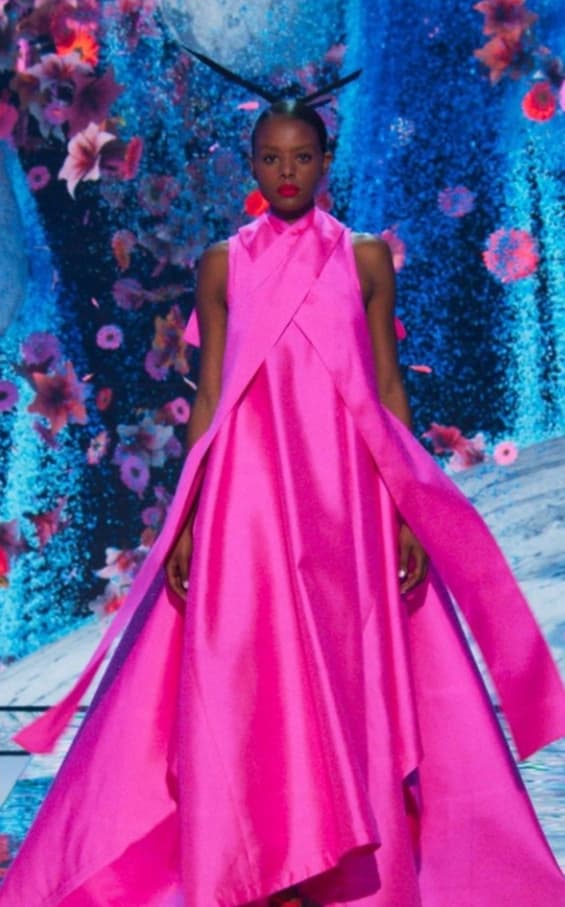
A red-carpet design from contestants Lorena Saravia Butcher and Narresh Kukreja.
I had the chance to speak to Sam Colcheedas, a busy pianist, teacher and composer. I first heard Sam’s work late last year, when I attended New Music Sounds Good, a concert of newly composed music held at Tempo Rubato. Sam’s piece Aromatic String Quartet was played with heartfelt feeling and nuance by Invictus Quartet. You can keep up to date with Sam’s work through his website, SoundCloud, or Facebook page.
When did you decide to pursue music performance more seriously?
It seeped into my life and slowly became my passion, without me realising it at first!
When I was studying engineering, I had about twenty-five hours contact hours a week. And they say as a general rule, you need to add another twenty-five to your week for study. And I was also doing my Diploma of Music, so trying to practice as well… Things were busy! I was still teaching a couple of piano students on the weekends. All the breaks I took from engineering were music related.
I think it was two years into engineering when I realised, oh I actually like music more than this engineering stuff! And I wasn’t seeing results from all my hours of study in engineering. Music just clicked more.
Do you find there’s any cross-over between the disciplines of engineering and music?
The mathematical brain is very similar. I actually love maths, I’ve often considered going back to university to do a maths degree. I like problem solving with equations. You look for patterns in equations and you do exactly the same thing in music. I can hear all the cogs ticking over in my brain when I start looking at music I haven’t seen before.
I learn by memorising patterns and shapes, because I have synaesthesia. [A dictionary definition of synaesthesia describes it as: “the production of a sense impression relating to one sense or part of the body, by stimulation of another sense or part of the body”. The condition varies widely depending on the individual, but for example, listening to a piece of music could produce sensations of particular smells, shapes and colours]
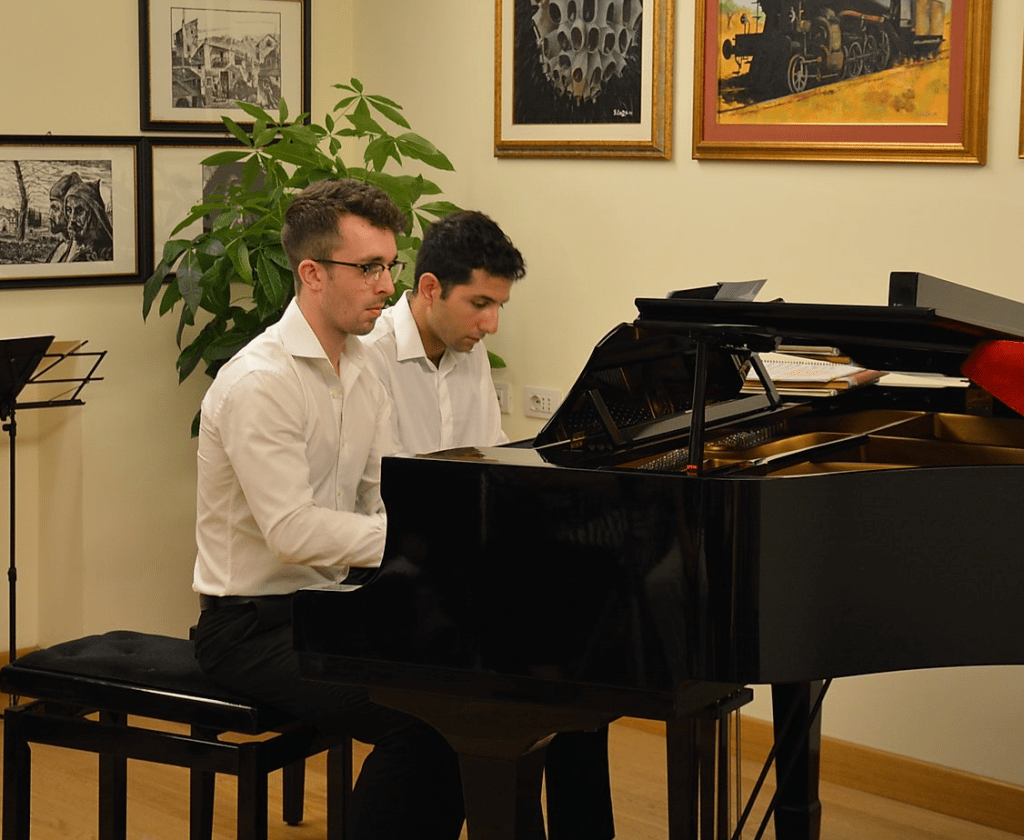
Secondo Piano concert with Edoardo Lenza. Sardegna, Italy, September 2019.
One of my last assessments in my music degree was a scales and modes test for Music Language 3. The day before the test I played through them all, and they all sounded like a particular colour. So I memorised the colours and I was sorted for the test! Synaesthesia is different for each person who has it, it’s so specific to the cross-wires in the brain of each person.
Alexander Scriabin was the same. He actually wrote pieces with the idea that when they were premiered, certain smells would be released to the audience via pipes under the seats, and colourful lights would be projected onto the stage.
So how did you begin composing music, was it a natural progression?
When I was younger, I wrote little doodles which only went for a line or two. I would have these ideas but would never finish them!
I think a lot of pianists fall into composing. A few years ago, I met a woman who was running Carlton Connect Initiative, a collaboration between University of Melbourne and a number of organisations in Carlton.
We had met up to chat about possible future projects, and she mentioned that they were putting together an exhibition called Naturophilia, about sustainability and urban design. I offered to write a piece for the exhibition and they ended up commissioning me! I spent about three or four months on it. It was a fifteen-minute work for solo piano, inspired by wind turbines. (You can listen to A Wayward Zephyr here)
I wasn’t seeking compositional projects for a while. But last year I was commissioned by them again as part of National Science Week. This time I was inspired by the Mars Rover ‘Opportunity’. The premiere was at Parliament House and it went really well! (You can listen to It’s Getting Dark here)
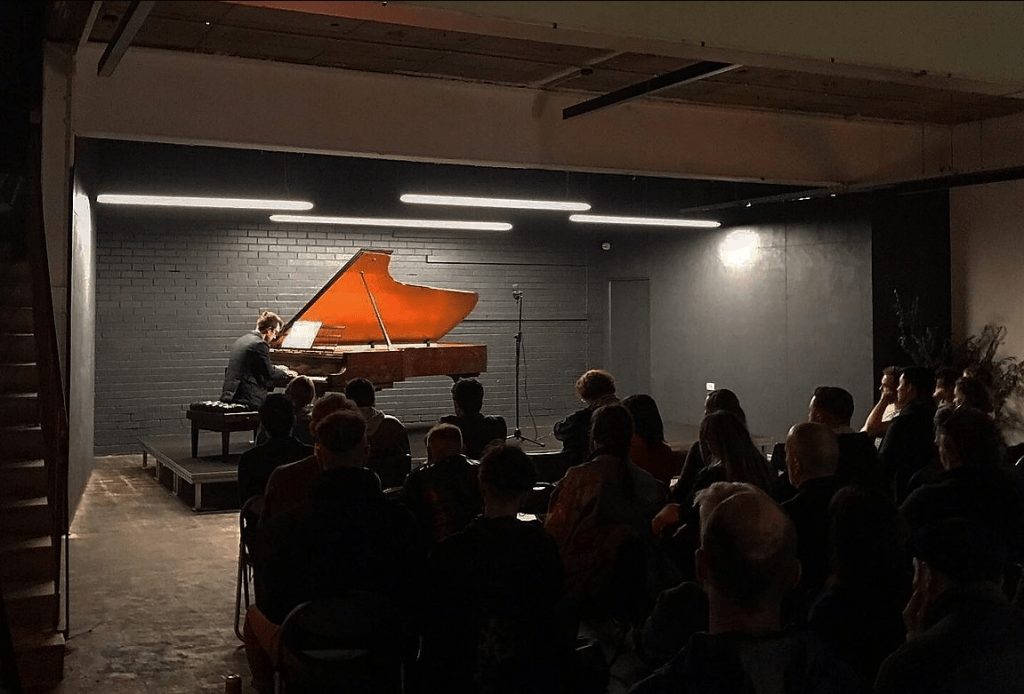
Premiere of It’s Getting Dark at Parliament House, August 2019.
The path to composing has been a really natural progression. I think if I started to force it too much, I wouldn’t churn out the right music. I think about it too mathematically, too systematically… I’ve started to become more comfortable with the idea of waiting for inspiration, and being patient. I’m not a patient person, at all!
When I was writing Aromatic String Quartet, I made a start on it, then left it alone for a month or two. Then I came back to it and finished it two weeks later.
When I was writing It’s Getting Dark, I hadn’t finished it yet and it was the week before it was due to be performed. I had hit a wall with it, I couldn’t figure out a way to transition between two sections of the piece.
I was away at the beach with some friends, and I randomly heard two chords in my head. There was no piano at their house so I had to write down what I thought they were! These chords just came out of thin air, and I checked them as soon as I got home… And they ended up being the perfect solution to that problem!
Who are some composers who inspire you?
I’ve always loved Rachmaninoff. I find him hard to play, because I don’t have large hands! And I don’t think I’m mature enough to properly dive into his music yet. I’ve played some of his pieces but nothing major. His style hasn’t completely ‘clicked’ with my fingers yet. You play a composer enough, your fingers start to get what’s next, you get good at predicting.
More recently, Scriabin has been a source of inspiration.
Solo piano recital at Tempo Rubato, August 2019.
Do you think the future is bright for young Australian composers, or do you think it’s a bit of an uphill battle to get new music performed?
I think it’s more of an uphill thing.
I was talking to a friend and fellow composer the other day, about how we thought Australian music has this weird taint to it, when compared to European music. It’s almost seen as ‘nice’ or ‘cute’ and not taken seriously. In Melbourne, I haven’t seen many concerts with all-Australian programs. I haven’t specifically looked, but it’s interesting that by contrast there are so many opportunities to play your music in Europe.
What does an ideal musical career look like to you?
This year I’ve done a lot of re-juggling of the pie chart. It used to be eighty percent teaching.
Now it’s more like sixty percent teaching, and a lot more playing and composing. And it would be great to do even more. I think I’ve found my niche with performing now. I love performing contemporary works and my own compositions, it’s what I feel more comfortable with. But that has also improved my performances of other works, by Beethoven or Rachmaninoff or other composers I love.
I finally understand how picky composers have to be in writing a score if they want other people to play it! I only realised that when I was writing Aromatic String Quartet for Invictus quartet. If I was performing it, I could just play it how I imagined it, but when someone else is performing your works, you have to tell them exactly what is in your head. I have a lot more respect for composers now!
I’d love to perform less selfishly as well. That’s one of my goals. To not be so self-centred and so nervous to share the music. We can definitely fall into this intrinsically inward way of thinking, as oppose to a mindset of just sharing the music.
You’re speaking my language! As a performer, you can get stressed out of your mind because you want do so well… but then you think, actually, the audience just wants to hear the music and have a nice time.
That’s where a lot of my own performance anxiety stemmed from. Thinking, me, me, me… I had an epiphany a few years ago, where I asked myself, why do I actually perform? Not for praise. But to share music I’ve discovered, music I really enjoy playing.
Initially studying Mechanical Engineering for three years at the University of Melbourne in 2014, his underlying passion was always the piano since he began learning the instrument at the age of six. He is currently resident pianist for the South Melbourne Symphony Orchestra. Sam’s first public recital was in 2009 with cellist Joanna Tidy, at the Warburton Arts Centre. Since then he has performed in and around Victoria as a soloist, orchestral pianist and chamber musician and also traveled more recently to Italy to perform alongside highly regarded Italian pianist Edoardo Lenza in a piano duo recital. He also has performed numerous times live on air for 3MBS as a soloist and an associate artist, most notably as a competitor for ‘The Talent’ series 2, 2018.
As an avid chamber musician, he works extensively with other pianists performing and recording the great piano duo repertoire such as Fauré’s Dolly Suite, Rachmaninov’s 6 Morceaux op.11 and Ravel’s Mother Goose Suite. He has performed in masterclasses with pianists such as Geoffry Saba, Professor Ian Holtham, Igor Machlak, Stephen McIntyre, Glen Riddle, to name a few. As a composer he has been commissioned organisations such as The Royal Society of Victoria, where in 2019 he premiered his solo piano work ‘It’s getting dark now’ at Parliament House Victoria for National Science Week. Other works include his climate change inspired piece ‘A wayward Zephyr’ (2017) that was commissioned by The Carlton Connect Initiative for the exhibition ‘Naturophilia’ with artist Peter Sharp. More recently, his Aromatic Fantasy for String Quartet (2019) was premiered by the Invictus Quartet and was said to be “…melodic and stunningly evocative” – FeverPitch Magazine (November, 2019).
He possesses his AMusA, DMus (MCM) and BMus (MCM) of Piano Performance at the Melbourne Conservatorium of Music where he studied under the tutelage of renowned Australian pianist, Caroline Almonte. He currently runs a busy private studio in Melbourne, composes and performs locally and internationally.
I had the chance to speak to Timothy Mallis, an emerging composer and pianist. Timothy is an experienced music teacher, offering lessons in piano, music theory and composition. If you are interested in online lessons, or would like to keep up to date with Timothy’s work, you can refer to his website, YouTube and SoundCloud.
I know it’s hard to sum up your entire sound world as a composer in a few snappy phrases, but what are some styles and genres that you are interested in?
I think the best way to answer this question is to say, I actually try to separate my influences from my style. The reason is, there are a lot of people and a lot of composers that I am inspired by, but I take it with a grain of salt. I think you can always have elements of really interesting compositional things that you are inspired by, such as the rhythm and harmony of Stravinsky, the theatricality of Britten operas… With all of those things, you can take a piece from each of them, and ask, well how can I take this interesting element and turn it into something that’s still going to be engaging for an audience.
My influences are really anything I listen to- anything from Greek folk music to English choral music. I think that question is quite tricky for most composers because the compositional processes is often very intuitive. How do you come up with a melody? It’s a very intuitive process. When you go back and ask, what were my influences in making that melody, it could be said that it’s everything that you’ve ever listened to, and now it’s become a genesis of something else.
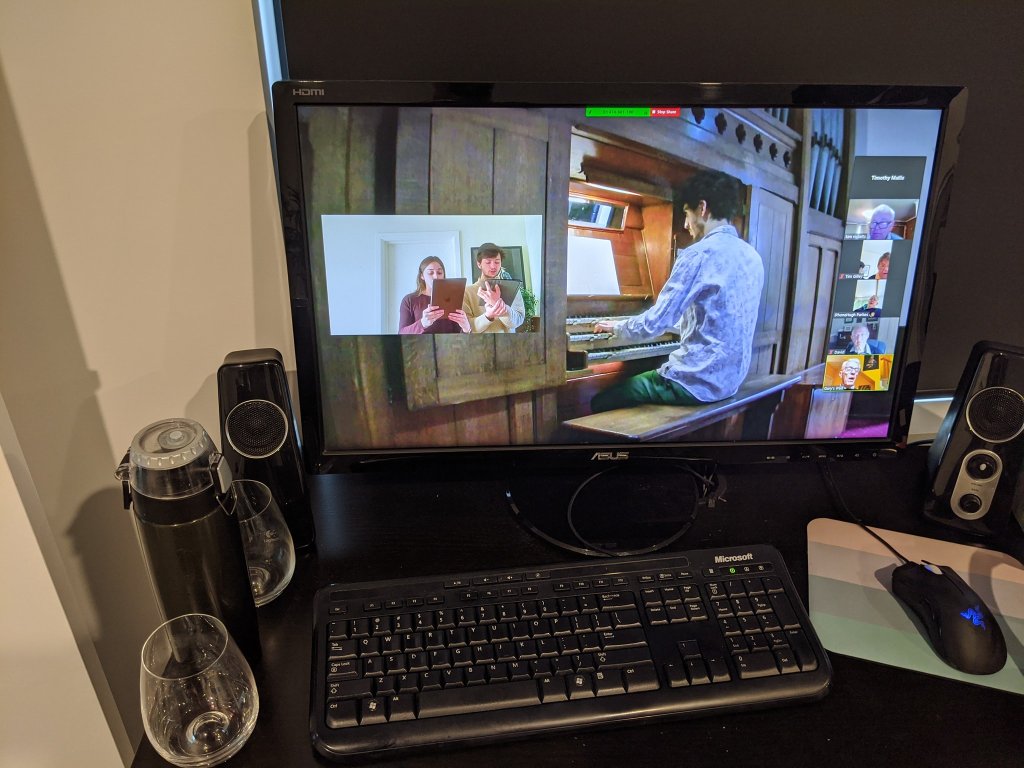
Timothy accompanying singers Jack Jordan and Eliza O’Connor, for a virtual combined St Stephen’s/St Bart’s service. April 2020.
How do you approach balancing teaching and other occupations, with putting time aside for actually writing music?
I work at the Australian Boys’ Choir with a number of different vocal ensembles and choirs. So that gives me an ‘in’ for writing compositions, I write pieces for them to perform. So my routine is really influenced by what they’re doing.
I grew up with the choir, so it has been lovely writing for the training ensembles! Recently the choir had its 80th birthday which was very exciting. I wrote a Sea Shantiesmedley for a combined training choir as part of the celebrations.
Apart from composing as part of my other jobs, a good tactic for motivating myself to compose, is entering competitions. There are pros and cons with competitions, because they have so much baggage associated with them. You put all the effort into creating something and there’s a competitive air around them… But that being said, it’s a really good thing because you have constraints, and they provide an opportunity for you to compose. And of course, there’s the possibility of a monetary prize or some kind of recording at the end.
I’m actually writing something for a competition at the moment, for St Mary’s Cathedral in Sydney. As part of their Christmas events each year they premiere a newly composed choral work. We’ve been given a text by Les Murray, Animal Nativity, a very Australian Christmas themed poem which is really nice. Other constraints are the time limit, the choir’s ability, and the fact there is an organ available.
Image by Giovanni Portelli Photography. A Choral Christmas Celebration concert at St Mary’s Cathedral in Sydney, December 2019.
[At the time of interviewing, Tim was in the process of writing his entry for this competition. In the months since, he submitted his piece, and went on to win first prize! His piece was premiered at St Mary’s Cathedral in Sydney during their A Choral Christmas Celebration concert in December 2019. Although I didn’t end up hearing the work, I was certainly not surprised when I found out this good news.]
I actually find as a choral and vocal composer, it’s not the texts that are the challenge, it’s finding the texts. Finding texts that, a) work for voices and b), actually speak to you. Of course, in addition to having permission to use it or it being out of copyright!
I will only start writing a vocal piece once I have found a text that really speaks to me. My compositional timeline is almost based on the amount of time I spend in the poetry section of bookshops or online. I was in Daylesford a few months ago and found a fantastic series of poems by C. J. Dennis, which I’d love to turn into something. As far as I know, the collection hasn’t been set to music before. That’s another thing, I think it’s important to try to find things that haven’t been set to music before, to bring to life.
Beyond browsing and book shops, which is a very sensible way to find texts, how do you go about finding texts, digging into texts, working out what you might use in your next project?
I’m a sucker for metre in poetry, so I tend to lean towards a particular kind of poetry. Australian Poetry Library is a great online resource. But I find it much more enjoyable just to walk into a bookshop or into a library.
But texts can find their way to you in surprising ways. I once came across a passage from a book by Aristotle. It was such a nonsense piece, and a brilliant look at what we have achieved in the fields of biology and science! It was Aristotle trying to figure out why fish don’t sleep… It was such a bizarre piece of text. But I thought, wouldn’t it be great to take it completely out of context, so I wrote an acapella arrangement of the text for a quintet of singers.
On a more serious note, I am very aware as a white male, there is a potential for cultural insensitivity in the way you approach certain texts. So I stay conscious of that. When it comes to the collaboration side of things, I think it’s important to be open to collaborating with a wide range of people. People who may not otherwise get a chance to be heard, or may be disadvantaged in some way. To not only be open to collaboration, but to actively pursue it.
Timothy accompanying tenor Douglas Kelly in a masterclass run by Elly Ameling in Baden, Austria. 2018.
I was involved in a project organised by the Arts Centre called 5x5x5. It was a collaborative project where five composers collaborated with five poets, to create pieces that were five minutes long. We were assigned the poets. I was really fortunate to work with writer Morgan Rose, who was initially based in the States but now works in Melbourne. Her poem was quite a brutal feminist work and it was really fantastic to work with. That’s another wonderful thing that’s happening in the Australian music scene: social progression through music.
[The Arts Centre has uploaded the pieces from 5x5x5 to their website for us all to enjoy. You can listen to Tim and Morgan’s creation Soapbox here]
What do you think are the essential qualities needed to persevere as a composer? Not to necessarily churn out work constantly, but to hang in there and continue to create, while obviously having other commitments.
Composing is a lot like literary writing. It’s not really that we’ve chosen to do it. It’s something that we have to do, an outlet of some kind. I think part of what keeps us going, is that we would be lost if we didn’t write!
If you’re feeling stuck, I think it’s important to remind yourself why it’s so essential to your being.
How do you approach having different works at different stages of development?
I was taught as a composition student that it’s better to have a few pieces in the works at the same time, ideally at different stages of the writing process, than just work solely on one piece. The reason is, you’re going to have an editing brain, a composing brain, an orchestration brain, maybe also a typesetting brain…
You can always tackle a different part of the composition process. You may be focusing on how the piece looks on the page, or just trying to come up with the initial genesis of ideas. The expansion of the ideas is usually the hardest part of the process.
I suppose time management in that sense, is making sure that you have explored each avenue of your time in your composition time. That helps a lot. That being said, I am a very deadline-oriented person and will finish about 50% of a project in the immediate lead up to the deadline. But I am aware of that, and I know that it helps me to work that way.
Photo credit: Jane Kupsch
How do you see the future of newly-composed, classically influenced works in Australia? Especially in terms of works composed by young musicians like yourself.
I think there are several elements to getting your works out there. One of them is your craft, one of them is the people you know and one of them is the marketing that you can do, how you can actually get your works performed. A lot of focus is on the first two, generally, with young composers such as myself. There’s a sense of craft because we go to university and get some training, and in the process you meet people who might want to perform your works.
But the third element, having your music heard by an audience who might not normally want to listen to it, so not your friends, is the challenge.
I think there is such a value in interdisciplinary performances, bringing together creatives from different areas. Even if a project isn’t a complete success from a craft perspective, there is always the sense that we’ve connected with a new audience who might come to another concert.
While I was still at university, I took part in a project organised by a fellow student Andrew Groch, which was a collaboration between creatives and the Ian Potter Gallery in Parkville. As part of the project, a number of us were able to perform inside the space, works which were inspired by the artworks in the gallery. The first part was more of an improvisatory installation inside the gallery, and the second part was a concert of five pieces which had been written for that specific concert. And a number of people came up to us after the performances and said that they had really enjoyed it, and would not have normally attended a concert like that.
Another good example would be the collaboration between Victorian Opera and Circus Oz, with the 2016 production of Pagliacci (pictured below).
Timothy Mallis is a Melbourne-based, multi-disciplinary musician specialising in composition and piano accompaniment. Timothy is a passionate advocate for bringing new Australian compositions to life.
As a composer and graduate of the Melbourne Conservatorium of Music, Timothy has written for some of Australia’s finest choral and instrumental ensembles and is frequently commissioned for works by local artists. His music has graced the stages of the Melbourne Recital Centre and Melba Hall, and has cultivated a digital presence with more than 70,000 views on his YouTube channel. He has maintained a partnership with Melbourne-based composer Juliana Kay to create music for the award-nominated Stories from the Choir as well as educational music for Australian children’s choirs.
Timothy teaches privately from his Melbourne-based studio. As well as piano performance, he has an intimate knowledge with the most recent AMEB, VCE, and Melbourne University curricula. His students have achieved outstanding results in all fields.
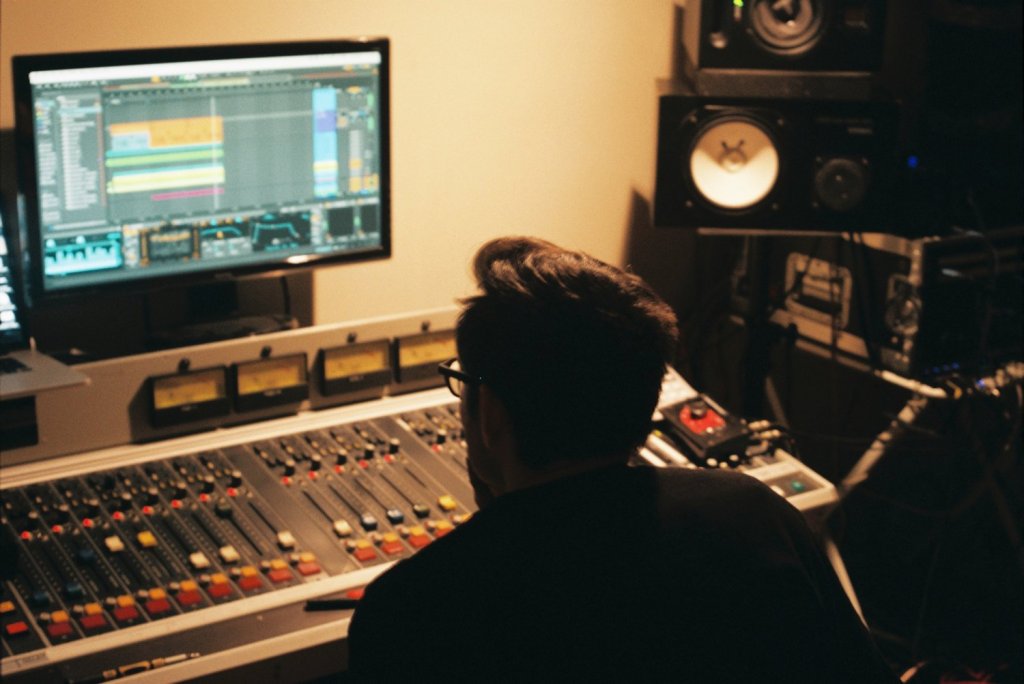
I had the chance to speak to the co-directors of HyperDynamic studio, emerging composers Alex Olijnyk and Hamish Keen. Alex and Hamish describe HyperDynamic as a ‘collaborative audio creations agency’, which can produce all the sound-related work needed in audio-visual projects, not only the score or the sound effects. Alex is a classically-trained cellist and Hamish approaches composition from a sound design background. You can keep up with HyperDynamic’s work through their website, Facebook and Instagram.
How did you two meet?
HK: We met while we were studying interactive composition at the Melbourne Conservatorium of Music, although we didn’t start working together outside of uni until the beginning of second year. I had just been commissioned to write my first orchestral film score and I had always been interested in using improvisation as a form of composition. Cello fit the bill, so I dragged Alex into the studio with the director for five hours. While the director described scenes over the talkback, we wrote and recorded the score. I guess for me this was an introduction to both working with Alex and to a new style of writing.
AO: It was similar experience for me too. I had previously only worked on documentaries, and composed mostly through notation, so this was a huge new step, in collaborating, working in an improvisatory style and composing for narrative film. When Hamish invited me onto the project I was thrilled. In the end, we both found the project very rewarding and have continued to work together since.
For those who aren’t familiar, what distinguishes an interactive composition degree?
AO: Interactive Composition, as opposed to a traditional compositional degree, is more about collaboration than anything.
HK: Yeah, it’s a really personal answer, because everyone gets something quite different from it, but at its core, it’s a degree that teaches how to respond with music. When you make a film, a theatre work or even art more generally, you’re asking a question, providing a brief. When you write music for media, it’s about helping to answer that question…
AO: Interactive Composition really teaches you to respond to a brief, or maybe even just to think about the context in which your music sits. What is the role of your composition in a project, how is it being heard, when, where etc, how can you make a more holistic experience.
HK: Context and collaboration is the key.
What prompted you both to start HyperDynamic?
HK: I can’t really think of a moment when it was decided that we would start a company.
AO: It was an idea that evolved over time as Hamish and I worked together.
HK: But there was a point when we called it HyperDynamic. We saw gaps in the way that sound for media was being created around us. We would often get projects with a disconnect between sound and vision where foresight could have made a huge difference to the film.
AO: There is so much to sound within a film that a lot of people rarely think about. Most of it’s not taught and much of it is invisible. You often don’t know precisely what it is you don’t know. We believe we can bridge those gaps.
For those reading who don’t know- what services do you offer through the studio?
HK: HyperDynamic takes care of everything that you hear in the projects we work on. At the most basic level, films have three kinds of sound: what we hear from the characters, what we hear in the world, and music that accompanies the story. Between these is a complex system of fundamental links in the chain; location recording, dialogue editing, sound design, music direction and scoring. When these links fail or don’t exist, the magic of film can disappear. At HyperDynamic, it’s our job to plan, forge and maintain these links to build beautiful sound worlds that elevate every film.
AO: On a typical project this means we’re engaged from script to screen. We listen, advise and match the people to the project, from location recordist to sound designer, composer to re-recording mixer. During the process we work hard to make sure everyone is on the same page, working towards the same goal.
HK: We advise on location, script, budget and post-production workflows as they relate to sound. We want clients to be able to work freely and creatively, inspired by ideas and the film, knowing that everything else is taken care of.
AO: This collaboration is a big part of what we do; however, we are also working composers and sound designers and we love to create. We have been the primary composers and sound designers on many of our projects.
What excites you most about sound production/composition?
HK: I’ll take sound production, though I do love to compose. For me, it’s about world building. Sound is our first and most primary sense, it can move us beyond words and it can disturb us beyond image. This primacy is so important to film. The sounds we create around an image can change everything; a bright field with terrifying music can be just as unsettling as a murder set to a nursery rhyme. This malleability, sound’s ability to play with subtext, can create truly incredible cinematic experiences. Music and sound elevate film, sure, but film also elevates music, and that’s what excites me most about producing sound and music for film. It’s amazing to be able to play a role in bringing affecting stories to life.
AO: My answer is actually be very similar to Hamish’s. Musical scores take us into the hearts and minds of the characters. They tell us about the world – when or where we are. They can reveal secrets and unveil themes. They can reinforce an emotional moment, or change it completely, or maybe even lead the entire film in a slightly different direction.
An interesting part of composing for film, is watching films without any music at all, before anything has been written. I don’t think many people would realise how strange it is, how much we rely on the music to tell us what is going on, to understand the implication of certain moments, to fill out the world itself. What I love about composing for film is being able use all these musical possibilities to tell a story and bring every moment to its full potential. I love being able to work on a narrative bigger than any one person could have created alone – a culmination of the quirks and inclinations of all the people who have worked on it.
How do you determine the division of labour/creative direction of commissions?
AO: It differs from project to project. Sometimes I’ll take on the role of composer and Hamish will be the sound designer. Sometimes I will be the music director, and Hamish will compose. Sometimes our roles are simply to find people that fit the brief for these roles and simply make sure everyone is on task. Creatively, we often work together quite closely.
HK: It must be funny for directors to sit in the room with us when we’re composing together because we’re very open and honest – lots of agreeing, but also lots of challenging each other. The good thing is that we have very similar sensibilities when it comes to sound, music and what the project needs.
AO: When it comes to running a project from a technical standpoint, we have different roles. I’m in charge of finding, hiring and organising session musicians, while Hamish takes on the role of recording engineer and mixer etc. Musically, I will often work with theme and harmony, while Hamish works on timbre and design.
HK: Exactly! I guess I generally I take care of nitty-gritty technical work whilst Alex works more with score/notation. Where Alex grew up in orchestras, I learnt my trade staring at computer screens. We balance each other out.
For someone wanting to begin experimenting with sound mixing/ sound production, are there any beginner online courses/ particular software programs that you would recommend to start with?
HK: Sound is a very practical discipline. Often the best way to start is by choosing whatever program you can afford and just spend the time to get to know it. When I was thirteen, I downloaded Ableton LIVE and pressed all the buttons until sounds I liked came out! There are however many structured courses around to help give you a head start. If you can access a face to face class, that can be a very good way of staying motivated (structure always helps).
How do you tackle time management, with both of you having other jobs, and perhaps not always being able to predict how many hours of work a new commission will involve?
AO: At the beginning, there were a lot of late nights! We both worked during the day, and often went straight from work to the studio. The nature of working in film, is that thing itself is always changing, which means that something always has to be done. The trick is being there from the start of the project. If you are on the same page as the director, and are in constant contact, you can respond to complications much more easily that if you just come onto the project once the final cut is finished.
HK: Learning to anticipate the workload is something we have become a lot better at, but that comes with time and practice. New jobs present their own unique issues. Becoming more adaptable is a big part of meeting these demands. As we’ve grown, we’ve put systems and processes in place to help streamline the process.
Have you got any projects coming up?
HK: There are always a few things coming up and we’d love to keep it that way! We have a South Australian short film currently in pre-production and a variety of corporate and advertising work to keep us busy.
AO: We’re also in the process of mixing and mastering scores from previous projects that we will be releasing as original sound tracks, which is exciting! We also have some personal work in the pipeline.
HK: Obviously, recent developments around COVID-19 have had significant impacts across the arts sector which will delay film productions for a number of months. Once this all clears up, we look forward to things returning to normal.
AO: I think this crisis has made a lot of people realise how important film and television is to their lives. I know so many people self-isolating who rely on movies to keep them entertained throughout the day or take their minds off the news. It’s a good reminder that when this is all over, we should all to go to the cinema and support an Australian film.