Sometimes, I don’t even like music. Those reading this will either instantly know what I mean, or will be really confused. What do you mean, sometimes you don’t even like music?You’ve done a degree in music, you work in the industry, and you maintain a music blog in your SPARE TIME! How could you possibly not like it, you liar!
Saying that sometimes I don’t even like music is hardly as controversial as bringing up politics at the dinner table or debating the meaning of life. But I think it’s a bit of an open secret- when you live, eat and breathe music, sometimes that means you really, really don’t want to go to a classical music gig. (Or any gig.)
I guess the more correct way to put it is, sometimes I don’t have the energy to immerse myself in music. That’s how I function normally. I listen to a piece of music and if it rustles my jimmies, aurally speaking, it really gets into my bones.
But if I am exhausted, which has been my usual state during this pandemic, I don’t want to listen to richly layered or challenging music. I don’t have the space in my brain to process a Bach cantata or a Verdi opera. As much as I love that kind of thing when I am in the mood!
For many musicians, the act of learning and performing music is one of their major life passions. But funnily enough, this exists alongside listening to music to simply unwind. I know that many classically trained musicians listen to other genres when they want to relax, because if they listen to classical music, they inevitably put their ‘I want to dissect and perform this piece’ thinking caps on. And because variety is the spice of life!
Anyway, long story short: Please don’t feel like you are any less of a motivated, insightful, considered musician if you enjoy listening to structurally-simple pop music to unwind. Or if you find yourself definitively not in the mood to listen to a piece of music incorporating guttural sounds and experimental non-linear landscapes. You’re only human.
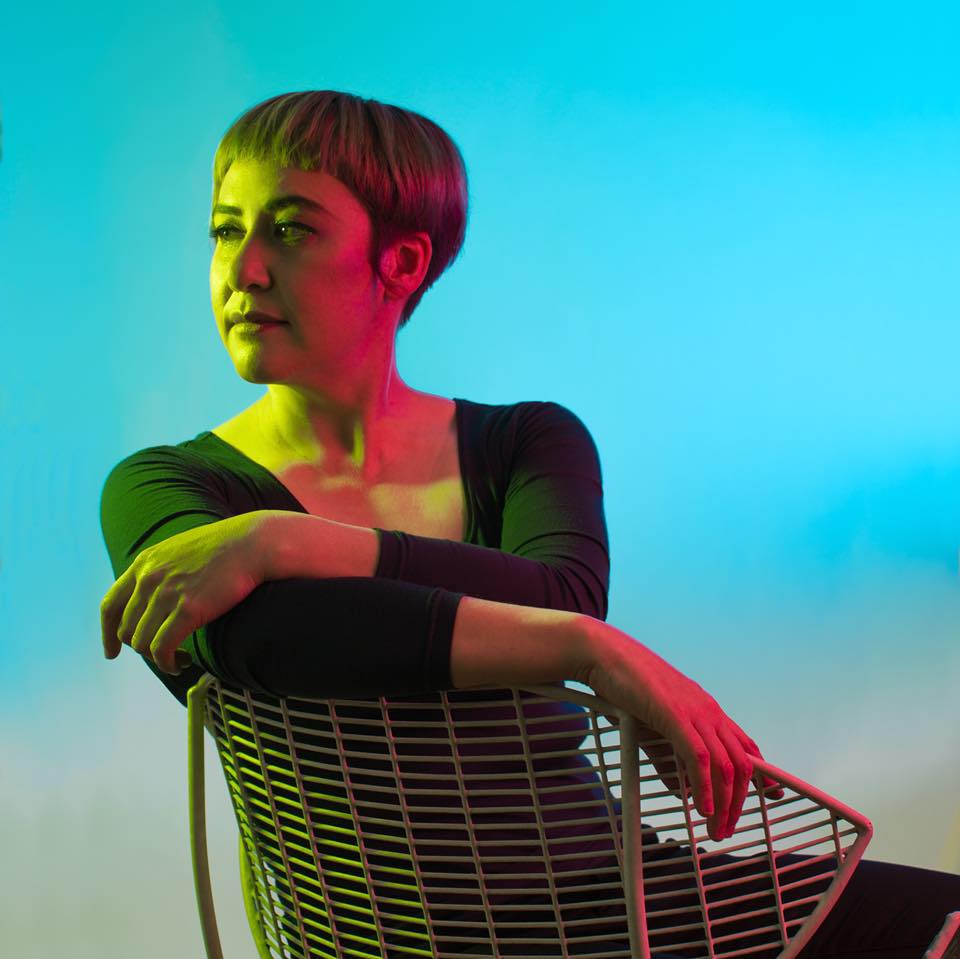
I had the chance to speak to Natalie Nicolas, an emerging composer, performer and music educator. I first came across Natalie’s work during my time interning with the team at Making Waves New Music, a website promoting the work of Australian composers. Natalie’s lush and filmic piece for string quartet, The Rose That Wept, was included in a monthly playlist. If you’d like to keep up with Natalie’s work, you can follow her through her website, Instagram or Facebook page.
How did you first find yourself composing music? When did you first realise performing and composing was something you wanted to pursue more seriously?
I’ve been writing music since I was a young girl, though it was predominantly in a popular style- because that made up the bulk of what I was listening to at the time. I learnt piano from a young age, and loved listening to artists like Alicia Keys, so naturally I started learning her songs on the piano and found I also loved to sing along. This seemed to progress really naturally for me, and my ten years of piano and theory tuition kept me accountable. It wasn’t until the end of high school that I knew I wanted to compose full time. But I always knew that music had an insurmountable hold on my attention, and it was something I would be silly not to follow through with to spend my life’s work on.
Photo credit: Paul Stanhope
What styles of composition are you particularly attracted to? Related question, who are some composers who particularly inspire you?
I’m really attracted to composing music that emotionally evokes, and/or drives the listener- whether rhythmically, emotionally or both. I’ve been particularly inspired by composers like Ludovico Einaudi, Peter Sculthorpe, Johan Johansson, Hans Zimmer, Yann Tiersen, but all for really different reasons. Also, I have to say that my musical background is incredibly diverse, and I’m equally inspired by musicians like Asgeir Trausti, Gang of Youths, Radiohead, and Sigur Ross. Music of almost every genre inspires me, and I love to draw influence from anything I align with. I have a pretty mixed bag of inspirations, and it seems to nary follow a pattern! I actually feel pretty lucky about that.
What do you think are some of the essential qualities required to be a resilient composer? (Not necessarily to keep churning out pieces, but to keep creating and putting your work out there)
Some of the essential qualities to being a resilient composer I believe, revolve around authenticity, grit, and staying on top of your headspace. Composition is largely an expression of self… if you don’t take care of yourself, that has the propensity to terribly inhibit your creative output. Authenticity and intent are qualities that shine through in your composition, and I believe audiences are really perceptive to these things. Every note, gesture or sentiment in your music needs to be real and purposeful.
Photo credit: Joseph Franklin
Some of the most incredible music I hear addresses the composer’s own voice foremost, and the performing ensemble/performance situation next. Both facets are so important, but make sure not to sacrifice the former for the latter! It’s an easy pitfall to encounter as an emerging composer.
I think as a composer you need to strive to find your voice. This is your ultimate tool in your career, and something that will enable you to be gritty through the inevitable criticism, highs and lows of your compositional career.
Lastly- always work on your craft. You will never stop learning as a musician, and this is such a wonderful aspect of what we do. I love learning from my fellow composers too- we’re all in this together. Stay humble, keep an open mind, try anything that interests you, and stay hungry for knowledge!
I noticed you have written a number of pieces for string instruments, whether for string quartets or chamber orchestras. What are some things that particularly excite you in composing for strings, is there anything unique about the experience when compared to writing for other ensembles?
I write a lot for strings mostly because I find them so incredibly versatile. You can create texture in ways seemingly unbounded, and I find it so exciting to try and emanate rhythmic drive, melody, countermelody, harmony and atmospheric quality that would often require a full orchestra or a sophisticated synthesised setup, with a surprisingly limited number and group of players.
I suppose I could also attribute this passion to some wonderful, early-career tuition I had in writing for string. I’ve always aligned with the timbre of purely stringed ensembles, but back in 2013, I won a place in what was then called the ‘National Composers’ Forum’- a competition run by the Australian String Quartet and mentored by Andrew Ford. Essentially, they gave an emerging composer the opportunity to workshop an existing SQ piece with them over a few days, and then premiered and recorded the work. It was a huge learning curve for me- confronting, humbling, exciting- and at such an impressionable stage of my writing career, really sparked a fire in me for exploring writing for these beautiful instruments. To date, the fire’s still burning! I’m up to my ninth string quartet, and I feel like the more I write for strings, the more I have to learn. It’s a wonderful feeling!
Any projects in the works that you’d like to share?
I’m currently undergoing a PhD that revolves around music and virtual reality for emotional evocation (namely calm) for children. The idea is to use music and VR written specifically to help sick children feel better in various hospital environments- it utilises compositional concepts I coined in my Masters thesis. I really love the work! I’m also excited to be writing for the SSO’s 50 fanfares project. It’s a fantastic initiative for commissioning Australian composers, and I’m chuffed to be a part of it.
Sydney composer, PhD candidate, and music educator Natalie Nicolas completed her Master of Music (Composition) degree under scholarship at the Sydney Conservatorium of Music. Nicolas is a tutor/lecturer at Sydney Conservatorium of Music, a HSC composition tutor, vocalist/pianist in gigs, and owns/runs a piano tuition school. She has written for artists such as the Australian String Quartet, Claire Edwardes, the Goldner String Quartet, the Muses Trio, the Tasmanian Symphony Orchestra, Sydney Philharmonia Choirs, Canberra Symphony Orchestra, the Australian Chamber Orchestra, and others.
In 2020, the Sydney Symphony Orchestra commissioned Nicolas, alongside the Hills Symphony Orchestra. Nicolas awon the prestigious Harold and Gwenneth Harris Endowment for Medical Humanities Harris Award 2019/20, for her doctoral work with music and healthcare. In February, she found herself featured on ABC Classic FM’s ‘Best of Australian Classical Music, and on the International Women’s Day ‘Women of Note’ vol. 2 album, also released by ABC Classic FM.
Music can cater to almost any mood. However, I sometimes struggle to find music which feels comforting when I am particular kind of anxious and restless. Personally, a lot of the time I prefer silence to ambient forest sounds and whale calls.
There are a handful of songs I listen to on chronic repeat whenever I want music with an active pulse or groove, but that is still ‘chilled-out’ enough to listen to while concentrating on other things. These are the songs that I still love dearly after listening sessions of an hour straight (of the same song). I thought it worthwhile to list them in case anyone else’s brain works like mine.
Most of these songs are a particular brand of head-bopping, slickly produced, relaxed pop music which will not be to everyone’s taste, and I make no apologies for that. Here they are in no particular order:
Lost in Japan- Shawn Mendes
An all-round excellent disco-esque pop song with hooks galore.
Dance to This- Troye Sivan feat. Ariana Grande
A beaut pop song with a unique atmospheric quality.
Wildest Dreams- Taylor Swift
I once listened to this over and over while editing an important document for work for the first time. I was pretty stressed and this song did the trick.
Delicate- Taylor Swift
I wasn’t a fan of this song at first. One day it suddenly clicked in my brain and I couldn’t get enough of it after that.
Hard Place- H.E.R.
Just stunning. I really want to check out more music from this singer-songwriter.
thank u, next- Ariana Grande
A masterpiece, that is all.
Achilles Come Down- Gang of Youths
Another masterpiece from one of my favourite bands. This entire album is incredibly well-crafted, containing a variety of meaty rock textures and evocative lyrics. This song has a hypnotic quality that pulls you in, and you don’t even notice it goes for seven minutes.
A note from the editor: I recently came across Sally’s piece on finding a new creative outletduring COVID-19, and was eager to feature it on Fever Pitch Magazine.
Sally credits her renewed energy during these difficult times, to learning to tap dance as a complete beginner. Sally has been using an online course by Bill Simpson called Just Tap, which can be accessed here
You can keep up to date with Sally’s composing and tap adventures through her Facebook page, website, and Instagram– Stella Joseph-Jarecki (Enquiries: stellamusicwriter.wordpress.com)
I wanted to write a few words on my new hobby, learning to tap dance, and how it has helped me to be creative again.
Every day since the 2nd of April I’ve been practising tap dancing.
Tap dancing? Yes. I’m popping on the metronome, slipping on the tap shoes, drilling all the steps.
Ball Heel.
Shuffle Ball Heel.
Paradiddle Shuffle Ball Heel.
Now, when I started out on this lark, I believed myself to be a reasonably coordinated human, enjoying many years of ballet training in my youth. The trouble is that there are places where you hold tension in ballet, particularly in your ankles to keep from injuring yourself in pointe shoes. These tensions appear to be the opposite to tap. So I’m very much a beginner again, which is hard for me because in my profession as a musician, I am so accustomed to always being the expert in the room. My faltering baby tap steps are causing me both hilarity and frustration, fortunately much more of the former than the latter!
My little digital metronome has that feature where you can set it to increase speed automatically, notch by notch, after a particular number of bars. So I don’t need to stop and change it all the time to practise getting faster, it kind of speeds me up by stealth! It’s a feature I use frequently in my piano practise. In fact, I find myself instinctively employing many of the same practise techniques here that I do in my piano playing. Negotiating tricky weight shifts between tap steps is not dissimilar to negotiating large leaps between chords on the piano. Can’t say I imagined that my practise concepts would be transferable thus, but here we are.
And it’s a very similar state of mind, dancing and playing music. My psych tells me it’s called flow state, that feeling of being completely in the present moment. She says I’m lucky to have in my life, but that I associate it too much with my profession. So she then suggested, as a foil for my current levels of anxiety about COVID-19, that it might be a good idea to try to find flow state away from my profession…
She recommended various options:
Yoga — nope, too hippie
Meditation — nope, too static
Cardio workout — feck no! Too many plastic smiles, ponytails and abominable music.
But this tap dancing thing I found… it’s the best! And it is so similar to the things I love most about performing music, particularly minimalist music.
I love the pulse of it. Pulse gives life. The mathematical precision of how the dots line up in a piece of minimalist music gives me the same feeling as this tap thing. Look, I’m not winning any awards for choreography, but the first time I worked out how to put four of these beginner tap steps together into a routine that had no breaks in the pulse… what an amazing feeling! It’s the same feeling that attracts me to the music of the minimalists, post-minimalists, and various electronic dance music genres.
It is harder to get that feeling if you’re not actively engaged. Passively listening or watching just doesn’t cut it. I’m reminded of notable times when I really felt this deeply…
On the dance floor at Mardi Gras (quite a few times!)
As a student, listening to Terry Riley’s In C for the first time ever
During a live performance of Philip Glass’s opera Einstein on the Beach
I find it deeply emotional to play this repetitive minimalist stuff; the way it locks together, being a small part of a bigger machine. It kind of reminds me how I’m just an infinitesimal speck in an infinite universe. I guess that’s why I just really don’t like Puccini operas, because the pulse disappears all the time so the singers can have a big wank on stage. I will never understand why people find that more emotional. It’s annoying, self aggrandising behaviour, forcing the amazing machine of musicians who are supporting you to wait around while you get your jollies singing that high note. Ugh. As I say to my piano students all the time, what happens when your heart stops beating? You die. It’s the same in music. Keep the pulse moving.
This whole experience is bringing me back to my creativity, after a month in lockdown caused me to think I’d never find it again. I finally feel like composing. Maybe I can initiate a project that brings together minimalism and tap? Hm, interesting.
I love it when my worlds collide!
Fever Pitch Magazine enquiries can be sent to Stella Joseph-Jarecki through stellamusicwriter.wordpress.com
Award winning musician Sally Whitwell maintains a busy freelance career as pianist performer, conductor, composer and educator from her base in Sydney, Australia.
Recent solo concert appearances for Sally have included the world premiere of the Philip Glass Complete Piano Etudes for Perth International Arts Festival and Ten Tiny Dancers, an all-singing-all-playing-all-dancing cabaret piano recital for the Famous Spiegeltent season at Arts Centre Melbourne. In 2014 Sally travelled to Los Angeles and New York City to perform again with Philip Glass, his complete piano Etudes, in addition to performances for the Museum of Contemporary Art in Sydney Australia as part of their recent exhibition of portraits by American artist Chuck Close.
As a solo recording artist, Sally has four albums to her name. Her debut album Mad Rush: solo piano music of Philip Glass won her the 2011 ARIA for Best Classical Album. Her sophomore album The Good, the Bad and the Awkward is a truly unique compilation of film music where she played not only piano but toy piano, harpsichord, recorder and melodica. All Imperfect Things; solo piano music of Michael Nyman won the 2013 ARIA Award for Best Classical Album as well as Best Engineer for ABC Classics very own tonmeister Virginia Read, the first time that a woman has ever won this award. Her most recent release I was flying is a collection of her own compositions in the art song, choral and chamber music genres, which enjoyed five weeks in the top ten of the ARIA Core Classical Charts, was nominated for the 2015 ARIA Award for Best Classical Album.
Sally is very active as a conductor, composer and accompanist in choral music. In 2015 she has enjoyed an extensive tour of China, Hong Kong and Inner Mongolia with Sydney Children’s Choir, with whom she regularly works. She also presented at the International Federation of Choral Music World Choral Expo in Macau in November and is currently enjoying her first subscription season as Music Director of Sydney based community chamber choir Coro Innominata. Her choral and vocal ensemble compositions have been performed by Juice vocal ensemble, Gondwana Choirs, VOX (Sydney Philharmonia Choirs’ youth ensemble), Moorambilla Voices, Leichhardt Espresso Chorus, Luminescence, Hunter Singers and the Woden Valley Youth Choir.
Currently, Sally is concentrating on a number of composition projects, with several commissioned works soon to be premiered by Acacia Quartet, Ensemble Offspring, Gondwana Voices and Hunter Singers
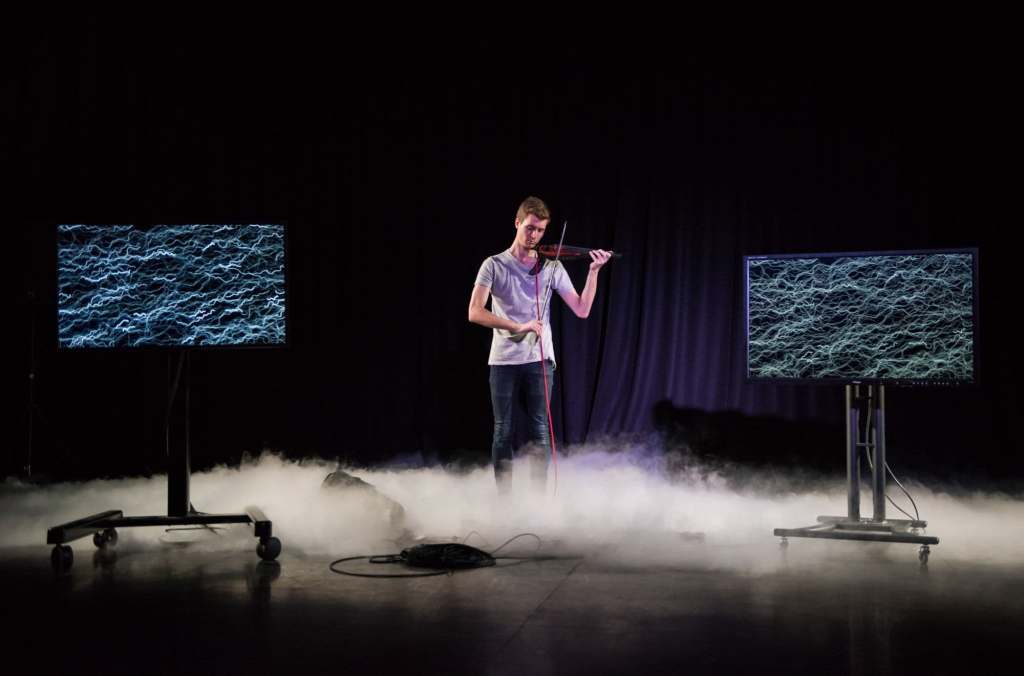
I had the chance to fire some questions at Jackson Fumberger, violinist and graduate of a BMus in Interactive Composition. Jackson plays both traditional and electric violin and has a number of composition projects in the works. You can follow Jackson’s work through his website and Instagram.
What prompted you to pick up the violin?
I decided as a ten-year-old that the violin was a cool instrument. Yikes… I remember wanting to play drums when I was little – possibly after my older cousins put me up on a drum stool and let me bash away on their kit. Then in early primary school I had a couple of friends who played guitar, which prompted me to pick up the violin because obviously guitars are far too popular and I had to be special.
At this point in time, what does your ideal mix of musical careers look like? (Balancing performing/ composing, etc)
There are so many things I want to try but haven’t been motivated to start, so I guess my ideal balance would include teaching and gigging but would leave some time for new ideas every week. It’s very much a jack-of-all trades/master of none kind of mentality, but the allure of something different and intriguing is too good to pass up.
What kind of repertoire do you enjoy performing?
Folk music is absolutely the most fun a string player can have in a concert. When there’s a combination of energy and ease, you have that brief window to let go of any inhibitions and really have fun. Playing in a big orchestra used to feel like that, but that spark can quickly fade in a professional environment where every minute of call time counts.
What kind of composition are you interested in?
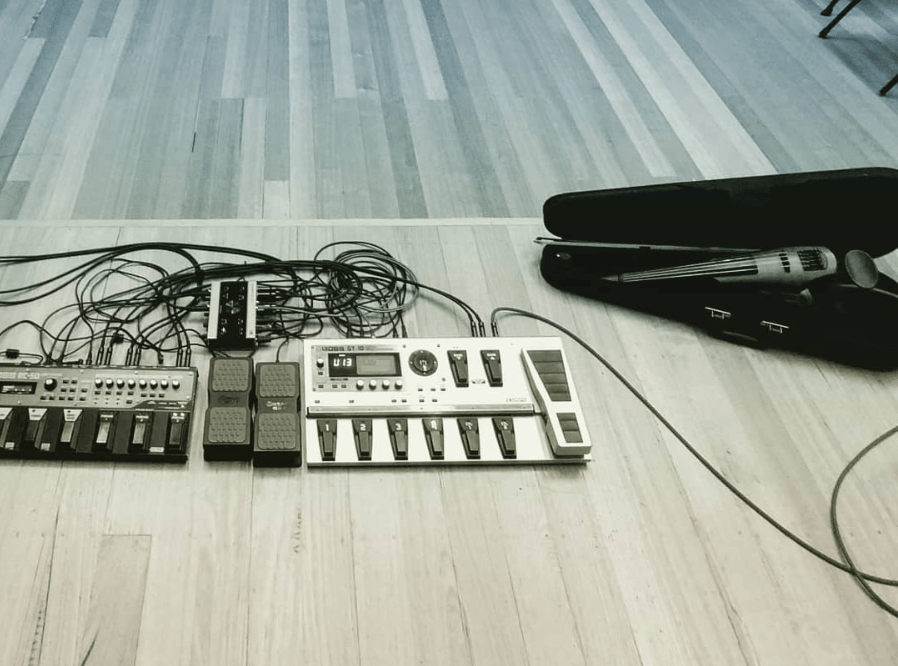
I’m particularly interested in using lots of effects and loops to make music, so my music is often a big collage of orchestral strings and ambient soundscapes. I’d love to be more creative with harmony or rhythm like one of those fancy real composers, but I enjoy music that sounds nice and that’s enough for me.
Do you have any projects in the works?
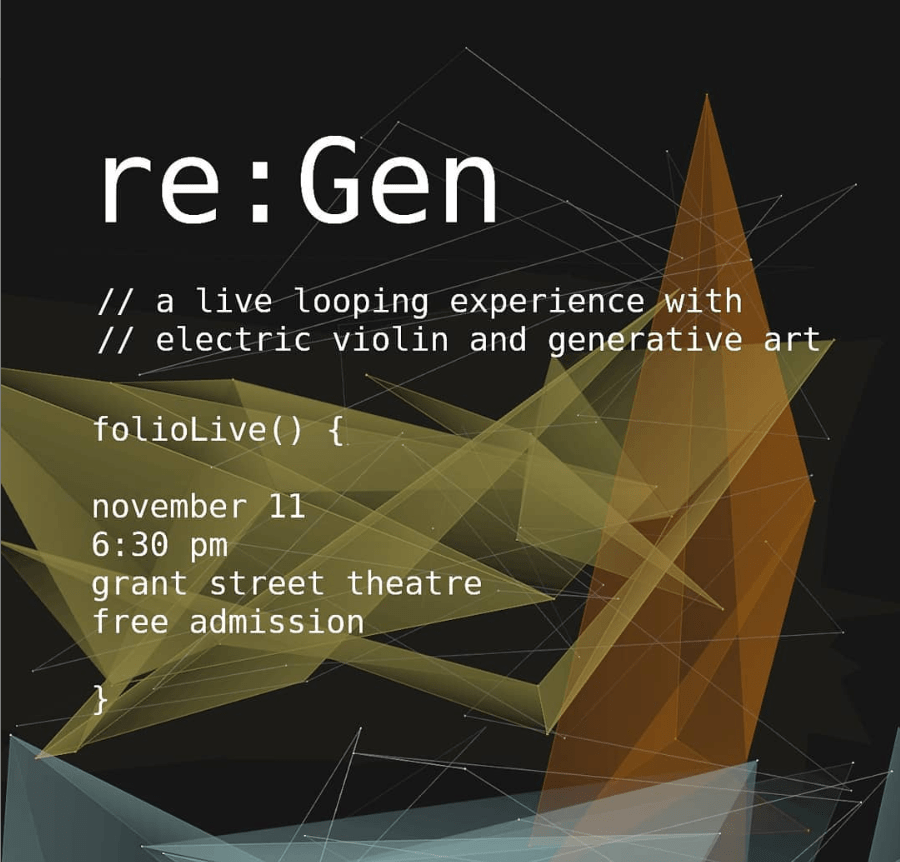
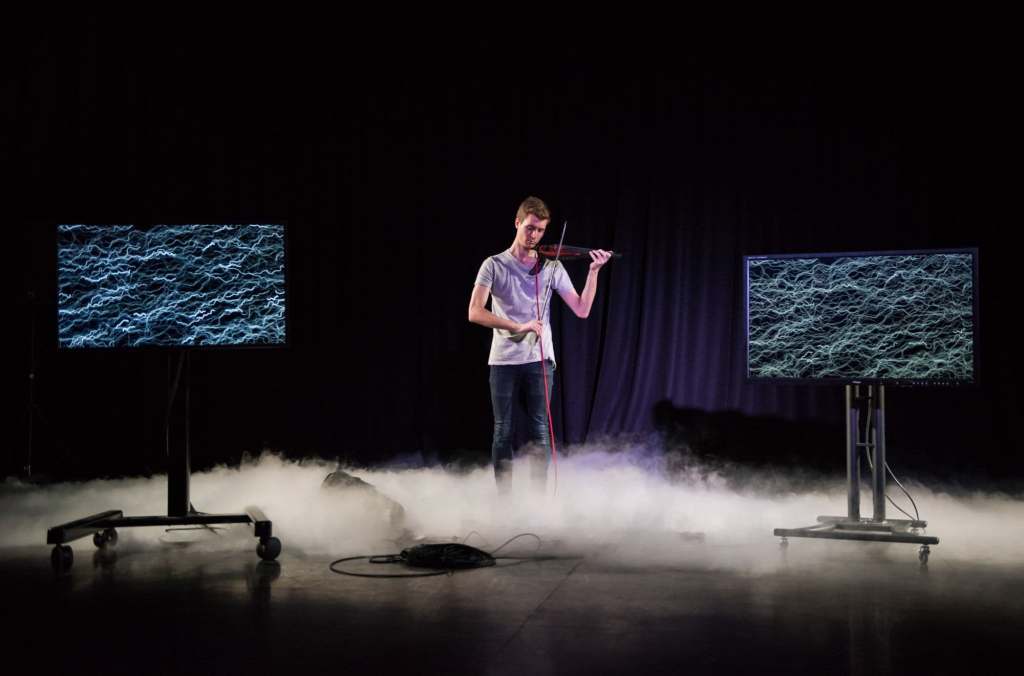
I have a few group collaborations coming together now that have been really fun. One is a minimalism and process music ensemble currently working through some Steve Reich arrangements, and another is an EP I’m co-writing with pianist and synth player Reuben Leng. In the future I’d like to reboot my solo project reGen, which combined live surround sound looping with code art – maybe not until I’ve figured how the heck this coding stuff works.
How has your life as a musician and teacher changed in this temporary COVID-19 environment?
I’m actually way more productive when I work from home, especially when there’s no work! Seriously though, I’m glad that I haven’t been adversely affected by the situation and can still work and stay occupied by making music. I could be far worse off and I’m very grateful for that.
Jackson is an ex-classical violinist and composer based in Melbourne with a love for orchestral music and music tech. With a 5-string electric violin and guitar pedals he creates soundscapes of texture and colour live, layer-by-layer.
His latest project is a collection of pieces centered around different ways of using live looping to create music that unfolds and reveals itself over time, combining strings, beats and anything in between.
I have worked out something about my personality. Many of our psychological responses in life are shaped by what motivates us at our core. For example, I am the least competitive person I know. When I took part in team sports during high school PE, I was so apathetic at the prospect of ‘winning’ I could barely be bothered to try my best. (I also didn’t really like sport.)
And hypothetically, if I had been told that every month the top student in English class would earn a trophy, I still wouldn’t have put in any extra effort. I am completely uninterested in trophies. I’m not trying to sound noble, either. I would have tried my best regardless because it’s a personal point of pride that I enjoy writing and work hard at being good at it. But I would have logically understood that there was only one trophy, and that it could easily be won by a member of my class if they submitted better work that month. And that wouldn’t change the fact I am objectively very good at writing.
I don’t want to insult those who are motivated by ‘winning’, or topping a scoreboard. We need all kinds of personalities in this world. And without the kind of scarily disciplined individuals who win Olympic medals, or get up at 5am to train for marathons (and pay money to take part in them!), I suspect a whole lot less would get done.
I think it’s important to work out what motivates you. During a high school psychology unit, we looked at the theory of personality types divided into A, B, C and D. The first two classifications made a lot of sense to me, especially in working out why I have always been so bamboozled by people who are fiercely goal-orientated (I’m more of a Type B personality, happy to chug along in my own lane, and people who are competitive and overtly goal-orientated are usually more Type A). No classification method is perfect though, and the remaining two types seemed to me a strange mix of leftover qualities.
There are many different kinds of personality tests out there. I don’t think there’s anything wrong with picking and choosing elements from the ones you’ve tried, if you’re simply trying to identify characteristics you can relate to. (On that topic, can you tell I’m a Libra, constantly weighing up the different sides of an argument? That even extends to the topic of horoscopes…)
I’ve realised that I am most motivated by a desire to be challenged, and to acquire knowledge. (Sounds lame, but I am a Ravenclaw through and through). That’s why I decided to pursue classical singing, because it allowed me to sharpen different parts of my brain simultaneously. I was learning the sounds and structures of foreign languages, the cultural and dramatic history behind opera, as well as taking on the physical and emotional challenge of the singing itself!
That’s also the reason I am not devoting myself to singing full-time. There are so many other things I want to explore. I want to do a music history research Masters and PhD, something that seems totally normal in my brain, but I suspect most of the singers I’ve met through my studies would rather eat rusty nails.
A characteristic that goes hand in hand with wanting to challenge yourself and fill your brain with more and more information, is a voice inside your head that constantly says “You don’t know enough to express your opinion yet”. It’s not necessarily that I think I’m an impostor, but that I get overwhelmed with all of the things I won’t get a chance to learn.
When someone asks me why I love a particular composer, I’ve realised I usually answer with my emotional responses to their music, not an appreciation of what they achieved with chordal harmony and form. That’s because music theory isn’t my forte. But that makes me doubt my opinions in the area which I am confident in, the relationship between music and drama.
I think it’s a variant of impostor syndrome- when in a room with people who are intimidatingly, amazingly knowledgeable in their field, I don’t doubt that I have interesting things to say, but I definitely wish I that knew more!
But now I have worked this out, I am ready for that voice when it comes. I’m never going to be satisfied with my level of expertise so I am just going to keep ploughing ahead, focusing on the things that I can change.
I hope my indulgent self-reflection has given you cause to navel-gaze upon your own personality and motivations. There is probably no better time to do so, than when we are trapped inside self-isolating.
This article contains general ideas to support mental health. If you are currently in crisis or need immediate assistance, phone services like Lifeline (13 11 14) and Kids Helpline (1800 55 1800; for young people aged 5-25) operate 24/7, and websites like https://www.beyondblue.org.au/ and https://www.healthdirect.gov.au/mental-health-helplines contain additional supportive information.
This article was created as a personal resource for anyone who is feeling emotionally impacted by COVID-19, but the ideas here can be used, altered, or expanded upon in so many ways to support general wellbeing and mental health at any time. You don’t need to be in the middle of a global crisis to want more ideas in your self-care kit!
Brede Davis is a music therapy student with professional and personal experience primarily in fields of disability and mental health. She also plays and writes music as Brede Alanna Music on YouTube, Instagram, and Facebook. For information on music therapy, please see https://www.austmta.org.au/content/what-music-therapy
Covid-19 has been the catalyst for unprecedented changes worldwide. Right now, your life might look entirely different to what you’re used to. Or it might be relatively unchanged. This situation is prompting a range of reactions, thoughts, and feelings. You may feel like you’re thriving, barely surviving, or somewhere in the middle.
There are many valid ways to feel about all of this. With so much change and uncertainty, it can be difficult to know how to look after yourself right now. One way to address this is by considering “What am I feeling right now?” and “What do I need right now?”, then moving to “How can I address that need?”. When considering creative ways to support our wellbeing, music can be an invaluable resource. The following sections include some feelings and needs you may be experiencing, alongside ways you could use music to help address these. As you read, note what feels relevant or useful to you. Or use this as inspiration to develop your own ideas using your preferred ways of engaging with music (eg. listening, playing, composing, recording, producing).
Create a playlist of favourite/familiar songs – consider adding songs which remind you of places or times where you’ve felt safe or comfortable.
Play music you know by heart – music you don’t even need to think about. If comfortable, try closing your eyes to reduce external distractions.
Learn “easy” pieces – music that feels comfortable and not challenging.
Try a guided relaxation or meditation – search through suggestions on YouTube or other platforms and look for something with a voice and background music you find soothing.
Sing anything – anxious breathing typically involves rapid breaths with longer inhalation and shorter exhalation, leading to increased heart rate and adrenaline. Calm breathing involves slower breaths, where exhalation lasts longer than inhalation. This naturally occurs when singing as you typically breathe in quickly, then release air slowly over the length of a phrase. You can use any song you feel comfortable singing. To further encourage calm in your body, gradually slow your singing until your tempo approximately matches your resting heart rate.
Feeling: Uncomfortable or Distressing Emotions
Potential Needs: Emotional expression, Increased understanding of thoughts and feelings, A more comfortable emotional state
Musical Resources:
Songwriting – Songwriting is such a versatile activity: the purpose of your songwriting, the way you write the song, and what you do with the completed song all influence which needs are addressed through songwriting. In this case, turning intangible thoughts and feelings into specific written lyrics can help you understand and process what you are thinking and feeling. Use whatever structure suits the kind of processing you need to do: a single chorus line over and over to emphasise a particular thought? 36 verses because you’ve got a lot to say? There are no hard and fast rules here! If you would like to use a more structured approach, try:
Chorus: emphasise your central theme/feeling/message.
2-3 Verses: expand upon your theme. For example: how do you feel about it? What thoughts are you having about it? How do you want to be feeling instead? What does this theme mean to you?
Bridge: reflect on what you’ve covered in the song and/or consider “where to next?”
You can further personalise your song by using the accompanying music to process or express your thoughts non-verbally. If you’re not sure where to start, try a standard chord progression like I-IV-vi-V, or find a backing track online.
Create a mood-shifting playlist – this playlist starts with songs that reflect your current feelings, and gradually shifts towards songs which reflect your desired feelings. Consider how different your current and desired mood states are, and what states you may need to pass through to get from A to B. For example, moving from “really sad” to “happier” might look like really sad > sad > a little sad > content > a little happier > happier, so your playlist could include a few songs that you associate with each of those mood states. This can be a more tolerable way of changing mood states than trying to force an immediate shift. It might be hard to think of more “positive” songs while you’re feeling difficult emotions, so this could be something you make in advance so that it’s ready to go when you need it.
Musical improvisation – play however you’re feeling. For example, if you feel stressed you might play fast, loud, dissonant sounds to expend some of that stressed energy, feel the physical feedback of the instrument, and hear a representation of how you’re feeling. This may help you transition to a less intense emotional state.
Use someone else’s words – if you’re having difficulty articulating your situation, look for songs with lyrics that resonate with you or reflect what you’re experiencing. You can piece together lyrics from different songs and use these to construct a clearer understanding or expression of your own feelings.
Feeling: Lack of control, Helplessness
Potential Needs: Control, Autonomy
Musical Resources:
Add your influence to existing music – cover a song in your style, remix some songs, re-orchestrate a piece, transpose something to better suit you. Change whatever you want to change: pitch, tonality, instrumentation, harmonic structure, lyrics, genre, etc!
Organise your music library in a way that suits you – for example: clean up weird file names on iTunes, organise your Spotify library, sort that pile of sheet music, rearrange your physical music collection.
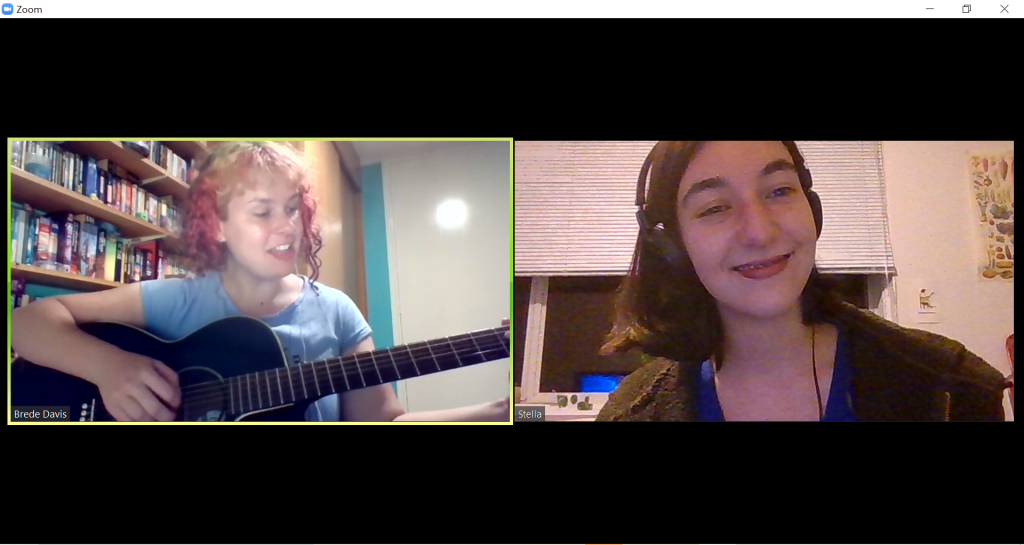
Brede and Stella sharing songs through Zoom
Assert autonomy and experience control through making opportunities for choice – choose what music you want to listen to. Or choose not to listen to music. Choose to play or not play certain pieces. Choose how you engage with music at any moment.
Feeling: Stagnant, Purposeless
Potential Needs: Mastery, Achievement, “Evidence” of progress
Musical Resources:
Play music you know well – remind yourself of skills you have.
Set yourself goals that are achievable over a short timeframe – Learn something that’s just beyond your current ability level/comfort zone. Perhaps it’s a piece that contains mostly familiar chords, but one or two that you’re unfamiliar with; or a passage that’s just a little faster than what you can do easily. This creates opportunities for you to experience the sense of achievement that follows noticeable progress.
Break your songwriting into smaller parts like choosing a genre/style, choosing instrumentation, writing chorus lyrics, choosing verse chords, creating a bassline, etc. For each part of the process, acknowledge your progress and achievement, and recognise that you have created something. You don’t need to save those feelings of accomplishment for when you’ve fully completed the song!
Brede and Stella sharing songs through Zoom
Feeling: Under-stimulated, Bored
Potential Needs: Challenge, Engagement, Novelty
Musical Resources:
Start learning a piece that really challenges you – challenge yourself to increase what you’re musically capable of. This is meant to be a generally enjoyable experience, so if you’re feeling frustrated by the difficulty level, take a break or switch to a different piece!
Learn the basics of a new instrument.
Explore extended techniques on your main instrument.
Learn a song in an unfamiliar language, or a piece from a genre or time-period you don’t specialise in.
Listen to music you haven’t heard before – expose yourself to different sounds.
Explore free music apps like Bandlab (ios and android) or Garageband (ios).
Create music from unconventional sources – for example, sampling and altering every-day sounds for an electronic composition.
Feeling: Isolated, Alone
Potential Needs: Social connection, Shared experience, Community
Note: In line with the current climate, the following suggestions are all distanced ways of sharing music and using music to connect with loved ones.
Musical Resources:
Make someone a playlist – It could be music that you think they’d enjoy, or music which reminds you of them!
Make a collaborative playlist where everyone in the group adds a few songs.
Share an artist you’ve recently discovered or ask for recommendations.
Choose an album to all listen to and then come together as a group online to discuss your favourite songs from it
Play for friends via video apps, or send someone a recording of something you’ve been working on
Join/form an online songwriting group where you share your individual songs, or write together as a group
Follow musicians you like on social media to feel more connected to them and their communities
Talk about music with friends – use music as an excuse to connect and see what you can learn about each other through music-related conversations. What music do they like/dislike and why? How is the music they listen to today different (or similar) to the music they listened to at different life stages? Why are certain songs meaningful to them? What is the last song they listened to?
Join a virtual choir
Watch a livestream – so many artists and event organisers have been running livestreams as a way of engaging in real-time with their communities. To add another dimension of shared experience here, see if any friends want to watch as well. You could have a call running while you watch, or message about the highlights.
Fever Pitch Magazine enquiries can be sent to Stella Joseph-Jarecki through stellamusicwriter.wordpress.com