We all struggle to process constructive criticism. Particularly when the feedback is harsh or if it concerns an area of your life which you are passionate about.
But if you are going to fall apart whenever a teacher or director criticises you, you shouldn’t bother becoming a performer. The one constant factor in an incredibly unstable field, is that you will never stop receiving negative feedback and/ or rejection. The steel rod in the spine of a truly successful performer is the ability to absorb feedback, and bounce back from particularly harsh responses from teachers and critics.
I have come across some suggestions from teachers and music students on how to become more resilient in the face of critique. I thought it would be worthwhile to list the approaches I have found helpful.
Find mentors whose opinions you respect
It’s impossible to please everyone at once. But if you find a mentor who shares your artistic outlook and who vibes well with your learning style, you can trust their opinions. This will help you separate the helpful pieces of advice, from the white noise of hundreds of clashing opinions.
Separating your artistic practice from your self-worth
Think of your artistic practice as something you can work towards improving, like your fitness level. It is not indicative of your worth as a human being, only of your progress in certain areas.
Try to think of ‘being musical’ or a being a ‘powerful performer’ as more like a set of skills you can always work towards improving, not some intrinsically magical ability that is central to your value as a person.
I found it hard to hear constructive criticism concerning my singing voice because I treasured being able to sing, and thought of my voice as a special quality that I possessed. Almost as if it was a precious trinket I kept safe in a jewellery box. What helped me move forward was de-mystifying my voice. I got so overwhelmed thinking about my artistic interpretation of songs, when I really just needed to start by drilling the notes and learning the words.
By making the process as logical and practical as possible, I was able detach my emotional ego (mostly!) and think of constructive criticism as pointers to help me best use my instrument. Depending on who gave me the advice, I would commit to following it, experiment with it, or ignore it.
You are not an inexhaustible robot, aka take time for yourself
The high achievers in my life would often mention in passing that they didn’t understand why they were so tired, or why they couldn’t simply keep practising/ studying for hours on end.
Take breaks and rest days when you need them. It really helps to learn the difference between truly immovable deadlines, and jobs/ projects which can wait a day or two.
If you feel particularly rattled, investigate what exactly is bothering you
Introspection can be pretty uncomfortable because it forces you to confront your weaknesses and insecurities. But it is so important. Persistent feelings of anxiety or fatigue are often symptoms of an underlying issue.
Maybe you need a break from music and are scared of what that might mean, or maybe you’re feeling frazzled because you haven’t been able to establish a steady routine of work and study. Try to work out exactly what’s bothering you. Take some time to talk to trusted friends or family members, or a psychologist.
Take the diligence and enthusiasm of your work ethic, and apply it to the idea of accepting the natural role of mistakes and setbacks
You’re dedicated to becoming the best performer you can be. So apply that same dedication to understanding that the creative process is messy. It doesn’t move in a straight line.
With time and experience, you will become more comfortable with the idea that setbacks will happen (and are almost guaranteed). As long as you respond to bumps along the road with a cool head and dose of logic, things will work out.
Appreciate the fact that your artistic taste and instincts may be more advanced than your current capabilities as a performer
It’s so frustrating- you have a list a mile long of pieces you want to perform. But you know you’re not ready for them yet. Or you know that you’re capable of learning the pieces, but only capable of interpreting them at the most rough, rudimentary level. This is particularly true for young classical singers, who have to wait for their hardware development to catch up with their software development.
Constantly delaying gratification as a performer is tough. You have to learn to walk before you can run, but it’s only fair to want reminders of why you’re bothering to learn these skills at all. All I can say is, listen to your favourite music, listen to your dream roles, experiment performing and learning different kinds of music purely for fun. Remember why you enjoy music at all, and then you’ll be able to work out whether you can make the sacrifices required to perform music at an elite level.
I had the chance to speak to Bethany Clarkson, a young pianist and piano teacher currently studying at Melbourne Conservatorium of Music. In September 2019, Bethany organised and staged an interactive music gameshow for children called The Treblemakers. This show was made possible through the efforts of a team of like-minded music students, and a grant from careers and entrepreneurship program MCM Ignite Lab.
I was so impressed by Bethany’s passion for music education when I saw her present at the 2019 Ignite Lab showcase, that I knew I wanted to interview her for Fever Pitch Magazine. Bethany currently offers piano lessons in Narre Warren along with a range of accompanying services. You can find her details on her website.
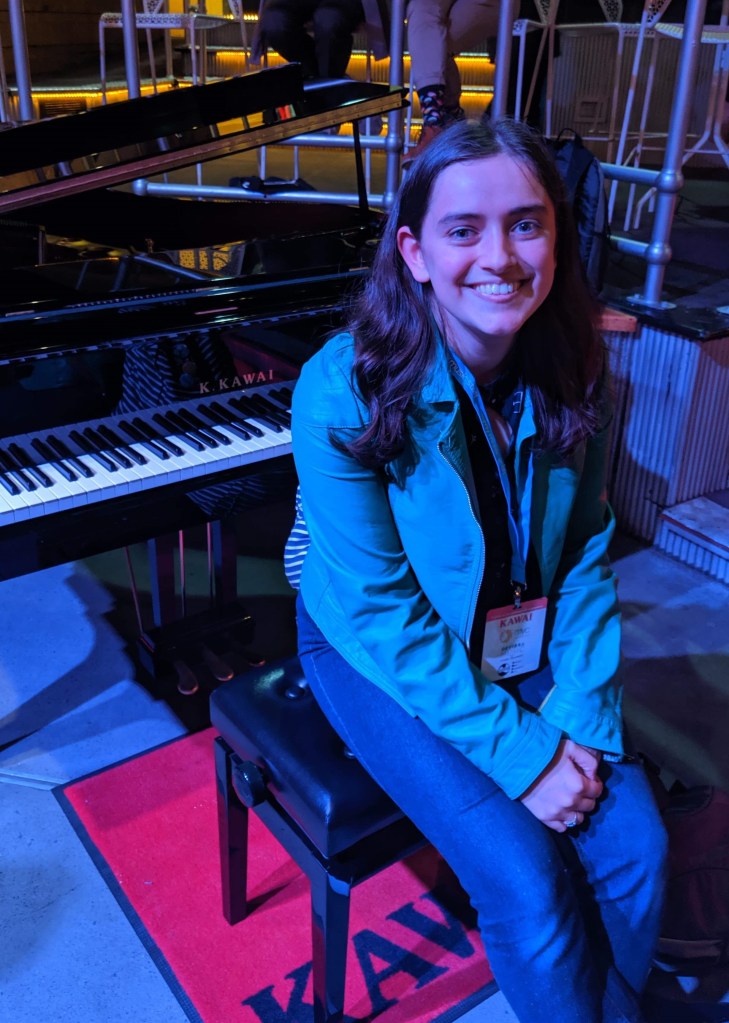
Bethany at piano teaching conference Piano Pivot Live 2020.
When did you start to realize that you wanted to pursue music more seriously than a hobby?
It was actually quite late for me. I initially thought I wanted to be an artist, because I liked to draw. Which is a questionable reason to want to take it to university!
My circumstances changed a lot when my own piano teacher passed on some students to me. She would always do stuff like that, she was forever a learner. So I took on the students. I was terrified at first, but I really enjoyed myself. And by the end of the third lesson I realized, this is what I have to be doing with my life. I was like, yeah, that’s it!
Then I was like, okay, what do I do now, where do I go now? I had to really assess where I would be studying next based on what was going to be profitable for me. I think I entered university with a different mindset to a lot of other students because I was very career-oriented. And focused on what was absolutely essential for me to become a music teacher. I’ve been sculpting my study experience that way.
So for you, a career in music education is definitely what you are striving for?
Yes! Even with my undergrad subjects, I’ve been very specific with selecting subjects with the focus of, what is going to be more useful to me. So no gamelan ensemble, stuff like that…
A lot of young people get thrust into the idea of, okay, you’ve got to go to uni now, while they’re still working out who they are as people. But thankfully I was given a bit more of a vision.
Are there particular areas of music education that you’re really interested, perhaps focusing more on the instrumental teaching side of things, or classroom teaching alongside instrumental teaching?
I love teaching from home because I love the connection that you can have with children. When their face lights up because they learnt something new and it was really cool to them. I’m also a massive music history nerd, I grew up listening to classical music from a very young age. My mum would just stick it on just as background music and I ended up getting really obsessed. So I love the chance to bring that to young students.
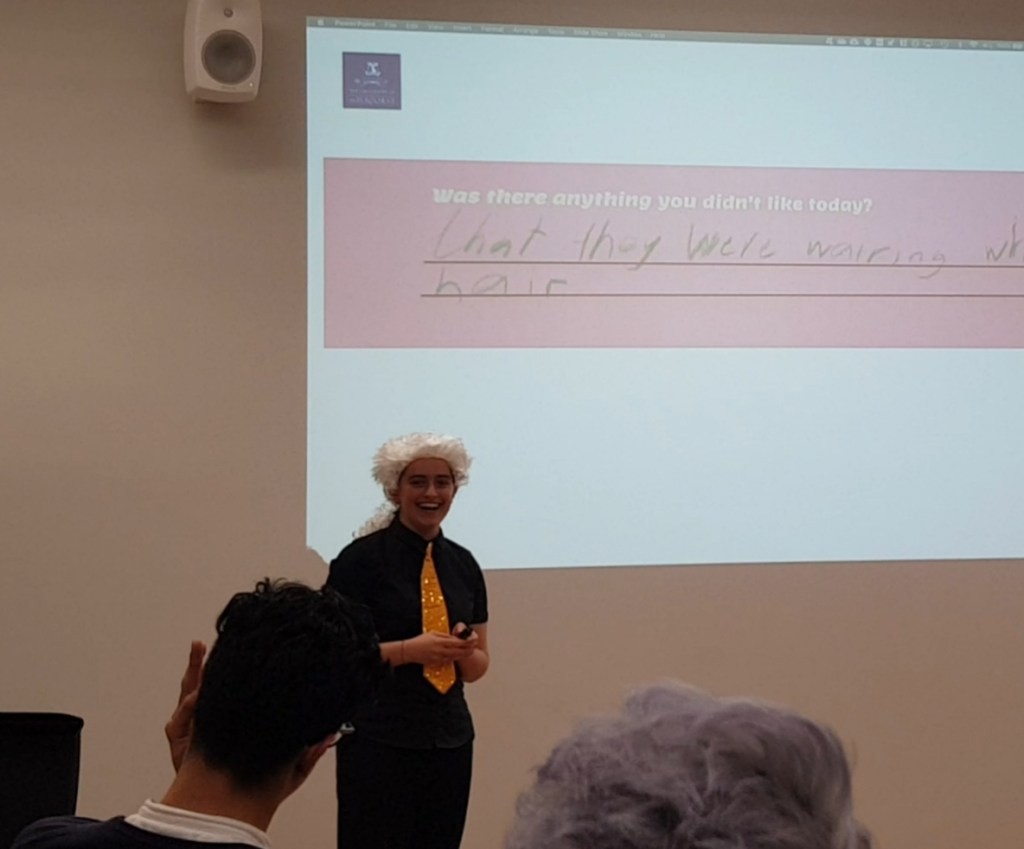
Bethany presenting at the 2019 MCM Ignite Lab showcase, where recipients of Ignite Lab grants presented a reflection on their projects and what they learnt during the process. She is pictured wearing the costume which she wore during the show.
I would love to hear more about the interactive music show you created for children. You mounted a performance of this show in September 2019 with the help of a grant from Melbourne University’s Ignite Lab program (then run by Susan Eldridge).
So the show was called The Treblemakers, and it combined what I was speaking about before, the idea of music and music history being fun and interesting. I wanted to present those things to children in the form of an interactive games-filled show, incorporating fun characters and a lot of silliness.
The first hour was broken up into fifteen minute chunks. Each chunk was devoted to a different category of classical music. For the Baroque section we talked about Bach, the development of opera, stuff like that. And then we had a game where the children would all contribute their own sound effect, like a fart noise or clapping their hands or whatever they wanted, and then our sound engineer Dan Johnson turned it into music. Which they adored!
One little boy was hilarious, as soon as he heard his own voice being played back, he quickly blocked his eyes and ducked his head down. I was so nervous during the show, but one thing which cheered me up was hearing some child singing Hallelujah, *fart noise*, Hallelujah, fart noise* as their chosen sound!
For the Romantic era game we did a quiz where we played excerpts and the kids had to pick what the pieces were called from a list of names. So we played Chopin’s Winter Wind, which starts out peacefully and then it goes nuts, and the options for possible titles were Sleeping Peacefully, The HappyLittle Thing, Winter Wind and Getting in Trouble, that sort of thing.
The show was made possible through the efforts of a fantastic team. Everyone had their own job and put in an amazing effort.
Uma Dobia (Creative Design lead, scriptwriter)
Athaya Anaduta (Creative Design team member, Powerpoint designer)
Dan Johnson (Sound Design lead, game technician)
Holly Defina (Sound Design member, accompanist)
Malak Usama (Marketing Design lead, basically all design work!)
Rosie Yang (Marketing Design member, Facebook management)
Anji Dang (Production member, helped me with everything, especially team management)
Isaac Williams, Allen Ru, Esther Battersby (performers)
I had a representative from every instrument family. At the end of the show, we had a miniature recital where everyone played two pieces, one from the classical canon and one from pop culture. We tried to link the pieces with a theme. Uma’s pieces were Hadel’s Lascia ch’io pianga, which is about someone who wants to be somewhere else, and Somewhere Over the Rainbow which is also about someone who wants to be somewhere else! We tried to make it really clever.
Almost all of the children who saw the show expressed an interest in learning an instrument and could choose their favourite era of music. I heard from one adult in the audience that their child had been struggling after their parents’ divorce and had grown very shy. However during the show they were having a great time and even volunteered to come on stage!
What did the project teach you logistically? Because there’s so much involved in getting a project that size off the ground. And the amount of work that you have to do to wrangle/ work with other people, with no matter how fabulous or committed they are…
I’d never actually run a group of people like that before. Being a team leader is one of those things, as Susan would say, where you just have to do it! You say to yourself, I’m a team leader now.
There was a learning curve when it came to delegating tasks, and how that affected the group dynamic. Overall, I learnt the importance of being professional in everything that you do, in how you speak to people, in keeping really accurate lists… One thing I could have done better on the day would be the to-do list I kept, because some things got left out because I was just so stressed.
Bethany performing with fellow Melbourne Conservatorium of Music students. Piece composed by Bethany, ‘Thus Sings My Soul’.
How do you approach time management as a student?
I put everything in a mental box. During the Treblemakers project I put everyone in teams, so that made keeping track of things much easier. So I would think to myself, okay, what is the marketing team doing right now? Then I’d move onto the creative design team.
Also, keeping to-do lists, not just on your phone, actually writing them down. I have a daily planner on my desk which I fill in every single day. Even if it’s just a day where I go to university, I put it there. So keeping lists and compartmentalizing.
What do you think are the essential qualities to be a switched on teacher who truly sees each student as an individual person?
It can be tricky with some students, if it feels like they’re not into it. So I needed to learn how to generate that enthusiasm myself so that I could pass that on to them. Regardless of how the student is tracking, I try to always be passionate about what they’re learning. Even if it’s a simple little nursery rhyme.
It’s important to know what you want your student to be. Which sounds controlling, but if you are only focusing on their exams at the expense of everything else, you’re going to stress out the student. I want my students to be well-rounded musicians who do music because they enjoy it.
I try to be there for my students as people. Coming to their music exams to help them stay calm, or helping a student organise a talent show… I’ve seen the same advice on a lot of teaching blogs, to listen to your students, be someone they can trust. I’ve had some lovely moments with my students, like when a student learnt a piece secretly to surprise me and played it for me during a lesson!
Bethany performing at Melbourne Conservatorium of Music. Videos of her performances can be found here
Did you have any teaching books that you would recommend for aspiring instrumental teachers or music teachers?
Melody Payne’s book Teach Piano Today. When it comes to dealing with performance anxiety, it’s got to be Bulletproof Musician. Tim Topham has also written some excellent resources.
Any final pieces of advice you’d like to add?
For anyone reading this interview, who might feel similarly to how I felt three years ago… thinking, I love music, I love working with children, I want to combine the two. The advice that I’ve received from Susan and from lots of other people, is to make your own opportunities. Try to be different in some way. I want to go above and beyond what the norm is. And to work with other people.
What tends to happen is, people go to university thinking their options are performer or nothing. And then they finish uni as a pianist, and there are four billion other pianists out there, so they can’t find work. So they settle for being a teacher, with little to no training in it.
It’s a very important job, it requires a lot of thought and training, but a lot of people just end up settling for it. I don’t want to be like that. I don’t want to think, ‘Oh I can kind of do this, I’ll get them through some exams and their parents will give me thirty bucks’.
I really love is the idea of the piano getting out of the studio, working with other instruments. AMEB recently updated their exam structure so that from grade five to grade eight you can do collaborative exams. So a pianist and a flautist can be examined together, or a pianist and violinist, etc. And that’s just so useful. Before I got to uni, I’d never played piano with anyone else.
I would love to see more interaction between music teachers, more of a sense of community. I know a local flute saxophone and clarinet teacher, and I collaborate with her. I’ll accompany her student’s exams, and we may do a recital with our combined students at the end of next year. It’s fantastic when music educators can work together to teach students to think creatively.
Bethany Clarkson is a piano teacher working in Victoria with the aim of passing on a love for music and all it encompasses to the next generation. Inspired to foster lifelong musicianship, she feels called to create an impact in her students’ lives that includes — but also exceeds — learning how to play piano.
I had the chance to speak to James Farrough, trombonist and co-director of emerging jazz arts organisation, Jazz Melbourne. James co-directs Jazz Melbourne with fellow musician Toshi Clinch, and together they run multiple youth Big Band programs, as well as numerous educational workshops with Australian and international jazz artists. It’s wonderful to see the vast range of opportunities they are offering to young and developing jazz musicians, out in the real world.
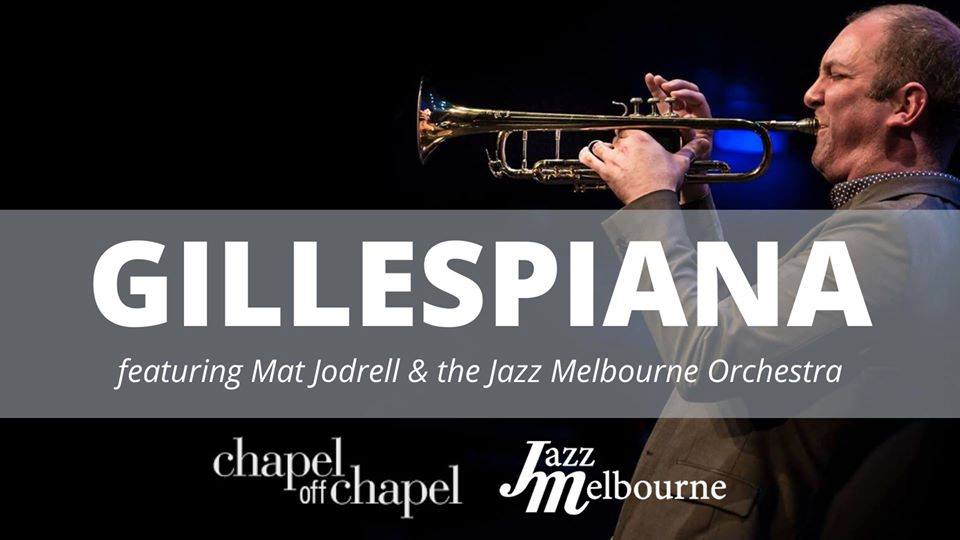
Jazz Melbourne have a number of events coming up: their major professional jazz ensemble, The Jazz Melbourne Orchestra, will be making their debut at Chapel Off Chapel presenting the music of Dizzy Gillespie. Performances on Feb 28th and 29th, tickets and more information can be found here.
Both Youth Studio Big Bands will be performing soon at the Paris Cat Jazz Club: Band 2 will be presenting a program of video game music arrangements on Feb 23rd and 26th, more information can be found on the Facebook event. Band 1 will be performing a selection of famous film music on March 6th and 7th, Facebook event.
If you enjoy what you read in the interview below, you can sign up to Jazz Melbourne’s newsletter by emailing info@jazzmelbourne.org
How did you find yourself playing trombone?
I started playing trombone because I was lucky enough to go to a primary school that had a fantastic instrumental band program. The director there at the time, Daniel Neal, was a fabulous teacher and he gave everyone the opportunity to start learning an instrument from grade three. So I began playing the trombone in the school band program when I was eight years old.
I initially applied to learn trumpet rather than trombone, as being a typical eight year old boy, I thought it was the coolest instrument of the symphonic band. For whatever reason I ended up being assigned the trombone instead, but I think I was so excited to start playing an instrument that I didn’t mind not getting my first pick (and now I know that trombone players are in fact the coolest people in any band).
Did you have a moment, or series of moments, when you realised you wanted to pursue music more seriously?
I don’t think there was a particular moment that made me decide to take on a career in music. I certainly enjoyed playing trombone from the beginning, but it wasn’t until year eleven, when I was really started to get into practicing and improving on my instrument, that I truly felt like I had a passion for music.
There have certainly been highlights throughout the years which have inspired me. My high school, Eltham High, had a great instrumental music program, so I got to compete in Generations in Jazz every year, and go on international band tours with the school which exposed me to some amazing music and performers. The Australian Youth Orchestra’s National Music Camp this year was also a fantastic experience. Two weeks of meeting amazing musicians from all around Australia, working with inspiring tutors, putting on stellar performances, all while having a great time!
Saxophonist Drew Zaremba (centre) after performing two shows with Youth Studio Big Band 1 in June 2019
Can you describe the inspiration behind establishing Jazz Melbourne?
Jazz Melbourne began as an idea I had with my friend and fellow musician Toshi Clinch. We wanted to create a high level youth Big Band program, where the best students from Melbourne’s high schools and universities could come together to put on performances in a professional setting.
A key element of the program was that the students would get to workshop and perform with professional jazz artists from Australia as well as overseas. One of the international artists we brought to Melbourne was Rich De Rosa, director of jazz composition and arranging at The University of North Texas. While he was here, he worked with our youth bands and ran a personal development session on jazz improvisation which was very popular.
From the success of that workshop, we started hosting more educational courses. As the number of events in our calendar started to grow, we decided that we should become an official entity: Jazz Melbourne. From there we got involved with Ignite Lab, a great entrepreneurship program run through the University of Melbourne. After receiving a grant through one of Ignite Lab’s programs we were able to have a number of consultations with industry professionals on running a successful business model.
What kind of programs do you offer through the company?
Youth Studio Big Band Program:
The Jazz Melbourne Youth Studio Big Band program brings together some of Melbourne’s highest-level jazz students to work on professional sets of music, alongside local and international jazz artists. Currently the program includes two 17-piece big bands which are comprised of students ranging from the age of 16 to 21. The youth bands feature students from a wide range of schools and institutions around Melbourne, who are selected through an audition process.
Each band has five unique projects throughout the year, with each project including five rehearsals and two performances. This format creates a short time frame for the students to learn the required pieces, which lies between a normal school scenario and a professional scenario. Additionally, various projects feature local and international artists working with the bands.
Youth Studio Big Band 1 rehearsing Disney’s ‘Zero to Hero’ for their upcoming concerts of film music, 6th and 7th March at the Paris Cat Jazz Club.
Not So Big Band Program:
The Not So Big Band program is a scholarship program that features the top four students from the Youth Studio Big Band program, working alongside industry professionals in one small-group ensemble. Every month they play a different themed concert and to date have performed 12 different themes from Disney to Broadway, Classic Rock to Film Scores, and many more. In the summer of 2018/2019 the band recorded their debut album “The Hills are Alive”.
Educative Workshops/Courses:
Jazz Melbourne runs a number of different single workshops and short courses, ranging from Sibelius notation program workshops, big band arranging courses, music business skills workshops, to jazz improvisation workshops. A number of these are run by Jazz Melbourne’s staff, but we also aim to bring in high quality artists to share their knowledge in workshop settings. To keep up to date on the workshops running in 2020, sign up to our mailing list or follow our website to keep in the loop.
Jazz Melbourne Orchestra:
Like the Jazz at Lincoln Centre structure, Jazz Melbourne has aspired to create a world class professional big band ensemble that will regularly perform new and classic big band repertoire here in Melbourne. We are very excited to announce that the inaugural performance of the Jazz Melbourne Orchestra will be on February 28th and 29th, feat. Matt Jodrell playing the music of Dizzy Gillespie. The orchestra is made up of some of Melbourne’s finest jazz musicians including Ross Irwin, Nick Mulder, Rob Simone, and many more. Don’t miss the biggest big band event of the year: Jazz Melbourne Orchestra plays: Gillespiana!
What are some things you have learnt through running and organising the company?
One of the major things I’ve learnt through the process of starting up and co-directing Jazz Melbourne is to not be afraid of asking questions, no matter how silly they seem. When Toshi and I began the process of setting up Jazz Melbourne, there were so many logistical issues that we had had no idea how to deal with. But rather than be embarrassed or try to avoid the issues, we were honest about what we did and didn’t know and asked for help. We didn’t encounter a single person who snubbed us for our limited knowledge. Everyone we talked to was very generous with their support, which is a testament to the supportive arts network we have here in Melbourne.
I’ve also gained a new appreciation for the management teams of the music programs I’ve previously been a part of. It might seem obvious to us as musicians (and decent people!) that it’s important to be punctual, communicate absences and return release forms. But after working as the main manager for a youth band program and professional jazz ensemble, I’ve really come to understand how much of a nightmare it can be when people aren’t on top of these issues. I think musicians need to understand that if they are turning up late, or not communicating clearly with the management team, it doesn’t just affect the ensemble, but your employability in the eyes of the management. It’s something we’re told about in classes, but it doesn’t seem to carry the same weight until you’ve been on the other end.
Any projects coming up?
One of our first ambitions for Jazz Melbourne was to create a professional big band to eventually be similar in stature to the MSO. We are starting this process with the inaugural performance of the Jazz Melbourne Orchestra at the end of February. (More information can be found on Jazz Melbourne website here)
What do you love about the jazz scene in Melbourne?
I have found it really heart-warming to see how supportive most of the professional jazz community is towards younger players. From my own experience, as well as through watching professionals work with our youth programs, I’ve found that Melbourne’s professional jazz musicians are ecstatic to hear young players play great music, which shows how genuine their love for music really is. Most of the great players have had great teachers who guided them. I think it’s so important to continue to foster positive relationships between students and professionals, not only for the current generation of students, but to help maintain a tradition that can be carried on when these students become teachers themselves.
Born and raised in Melbourne, Australia, James Farrough is an emerging young composer, arranger, and trombonist. Drawing from his years of experience playing within various ensembles, James composes for a diverse range of instrumental genres from contemporary classical music to big band ensemble writing. Alongside his work as a composer, James has been involved in the Melbourne music scene as a performer for many years, playing in big bands, small groups, wind symphonies, and orchestral ensembles. James is actively involved in furthering the development of Melbourne’s music scene, having established and currently co-directing the jazz education and performance company Jazz Melbourne alongside composer and arranger Toshi Clinch. Currently studying Composition and Performance at the Melbourne Conservatorium of Music, James is working towards a career in film and video game composition.
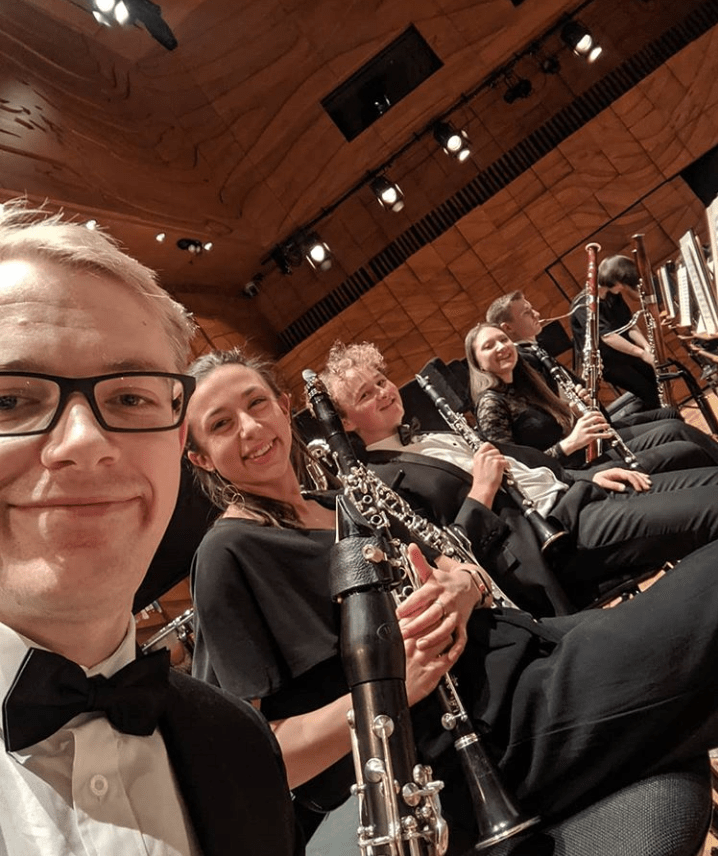
I had the opportunity to speak to Tom D’Ath, a clarinetist who is currently completing his Masters of Orchestral Performance at the Melbourne Conservatorium of Music. As part of this degree, Tom has had the chance to perform in several concerts with the Melbourne Symphony Orchestra.
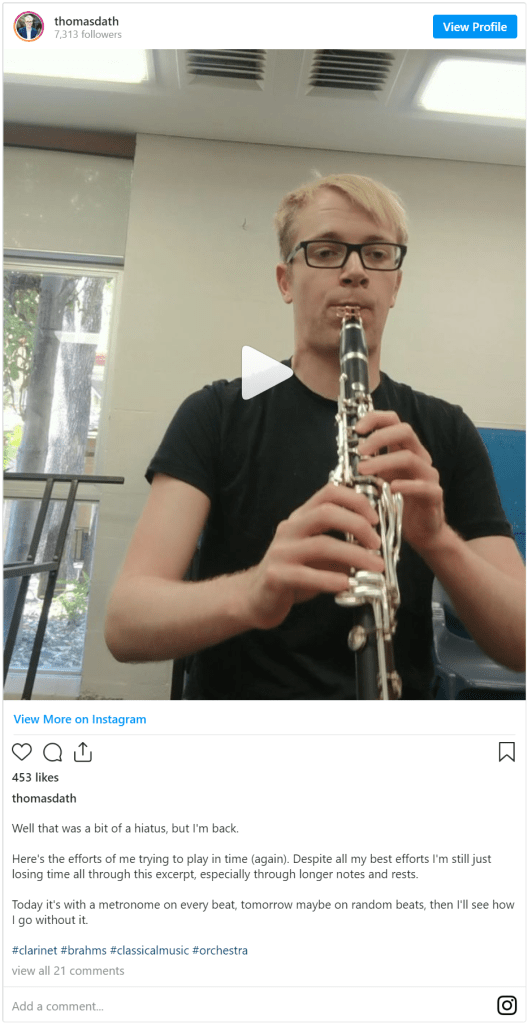
In addition to playing in traditional chamber groups and orchestras, Tom performs newly composed works in six-four ensemble, alongside five other instrumentalists. Tom has amassed over 7,000 followers on his clarinetist Instagram, where he chronicles his progress learning repertoire and drilling his technique.
When did you realize that you wanted to pursue music performance more seriously?
I don’t know if there was a specific point where I went, okay, I’m going to apply to a music degree… it was sort of just the thing to do. I went to Eltham High, which has a very strong music program.
I got towards the end of high school and the decision was, was I going to take the jump into the music and study music properly, or follow IT, which was the other thing I could do. And really it came down to, I could do IT whenever I want… and I do. My IT job is the job that brings me money regularly. But I knew I needed to focus on music straight out of high school if I wanted to make it work.
In terms of when I got really, really serious about things- that didn’t happen until second year. After I went on a trip to the States to study saxophone. During that trip I met a whole lot of people that were really good at the saxophone and I made the assessment that I couldn’t do classical clarinet and jazz saxophone at the same time. So I had put the foot down on clarinet.
It was also around that time that I read Steven Pressfield’s The War of Art, which is the book that really made something click. It made me think, if I’m coming up with excuses to not work on the clarinet, then I shouldn’t be pursuing it. And that’s a book that I try to read once a year because every time you read it, you’re like oh, yep, that’s clicked back into place.
And so, once that happened people seemed to be like, ‘Oh Tom’s in practice rooms at dumb o’clock in the morning’. I’m a little more lax on it now that I’m further away from uni. But generally if I’m having a good day, I’m in a practice room at 7am. And then I’ll clock off at midday. And then I’m done. It’s not necessarily that I’m insane and practicing 7am till 7pm.
If you set your priorities, the practice comes first. Then you’ve gotten the stuff you need to do out of the way, and rehearsals can come up in the evening once you’ve had a rest.
You play in orchestras, chamber groups which explore more standard repertoire, as well as an ensemble dedicated to playing newly composed music, six-four. Do you have an idea of how you might like to combine these different kinds of music performance in your future?
I would love to hold some sort of orchestral position… To some extent, you have to take what you’re given. I’d take a principal clarinet job if I was offered one, but I wouldn’t be against the idea of a smaller, second clarinet position or bass clarinet position. Or even a job in a smaller orchestra where I am not necessarily required full time, so that I can do things like travel, have a chamber music series, or put on solo recitals, or teach… I really enjoy doing all of them!
I don’t want to get ahead of myself, but there are things you need to be conscious of. Like getting a job in Melbourne would be very different to getting an orchestral gig in the middle of the United States, where there isn’t as much funding for the arts, and there aren’t tonnes of musicians around who are prepared to invest in a chamber music concert series with me.
In Melbourne I can obviously be like, ‘I want to do gigs, I want to have a weekly residency where I play chamber music outside of orchestra gigs’. And I’d say that’s a fairly tangible thing to achieve if I wanted it.
One thing that has been amazing recently is, alongside the Melbourne University orchestra and doing a bit of work with ANAM and the MSO, I’ve still managed to take part in chamber music gigs and solo recitals, with something almost every week. Which has been really fun! How am I going to make it work long-term? I don’t know. Part of it is, how seriously do I pursue the orchestral job, alongside regular chamber gigs.
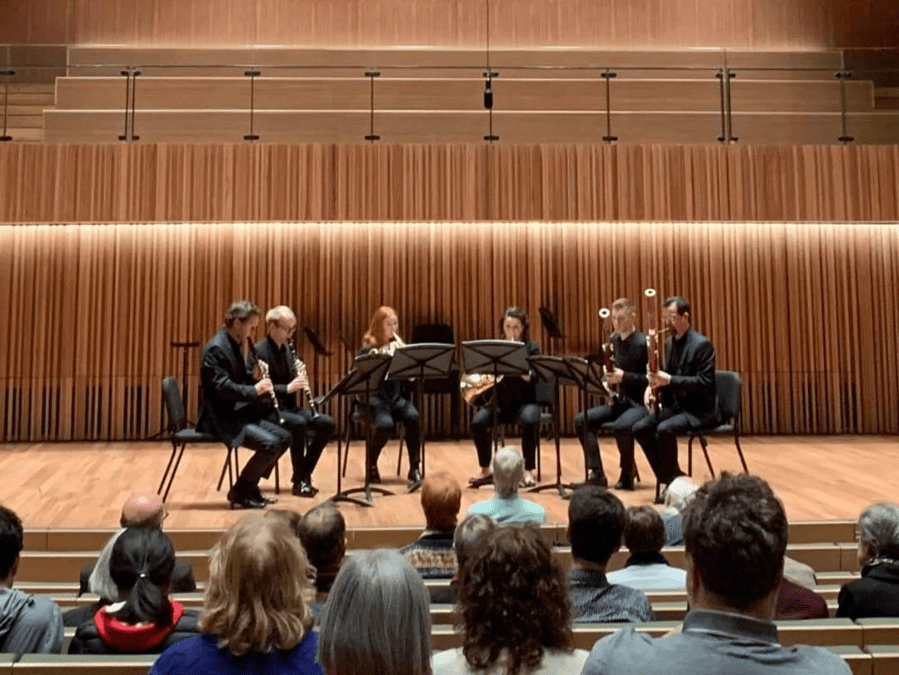
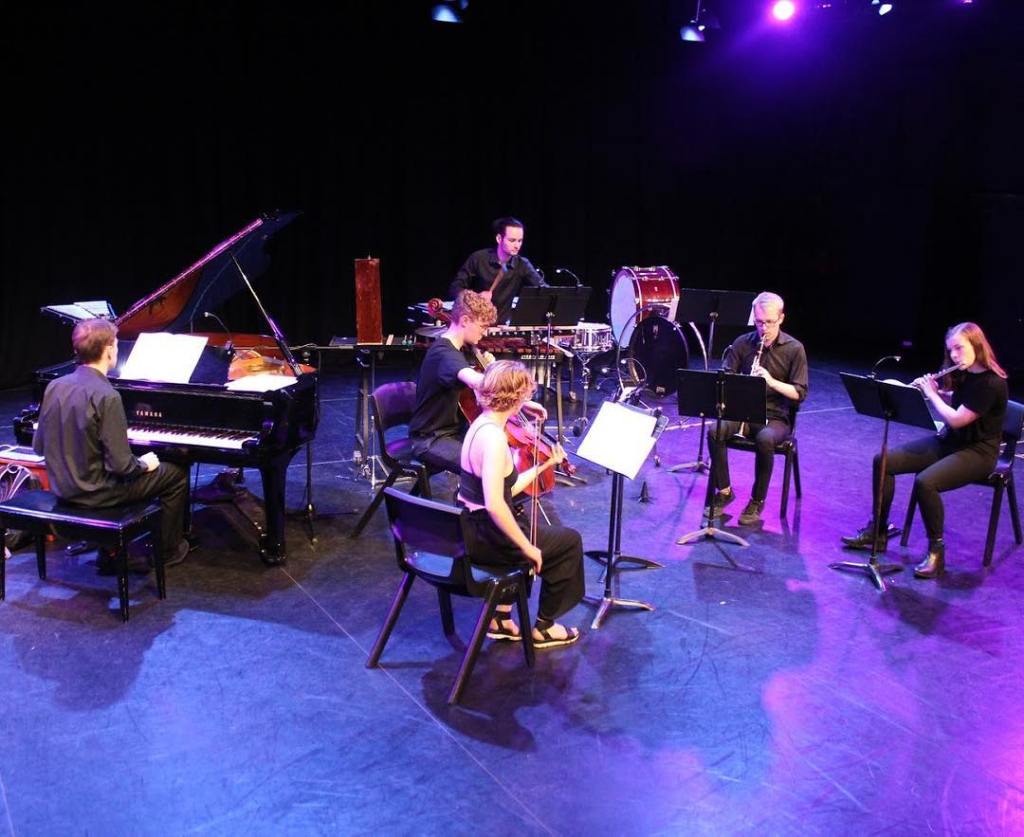
six-four in 2018. From left to right: Alex Clayton, Chloe Sanger, Oscar Woinarski, Ollie Iacono, Thomas D’Ath, Anna Telfer.
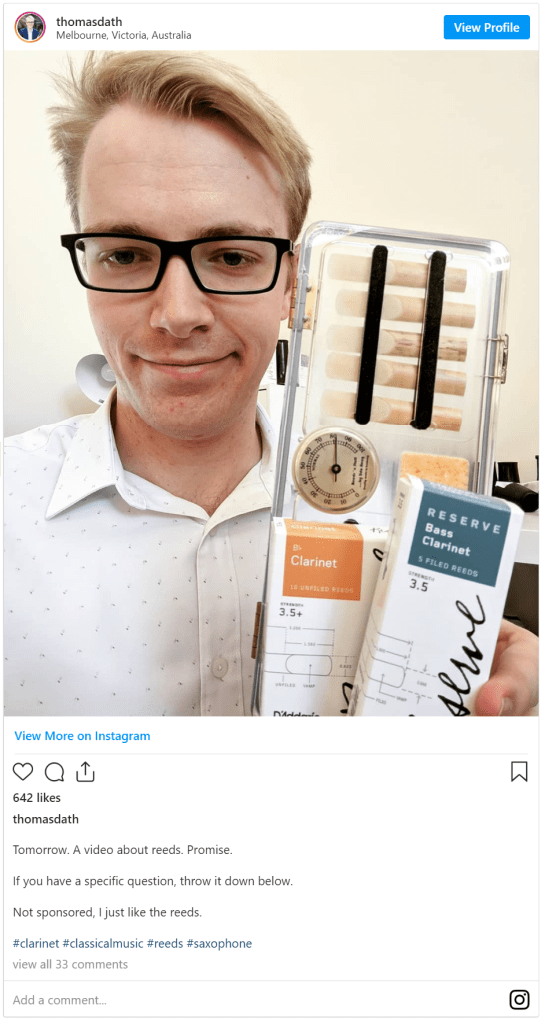
So you have a thriving Instagram account as a clarinettist, with around 7,500 followers. I’ve seen that you post videos of you playing, you’ve done Q & A segments, and its built up quite the community! Has that account challenged you in particular ways, or encouraged you to do things you wouldn’t normally do, or meet people you wouldn’t have met otherwise?
I would say it’s a double-edged sword. That’s not to say that I don’t like it, or don’t appreciate the fact I have a cool following of people who are interested in the stuff that I do… But there are definite challenges which come up, in choosing to be so public about everything.
If you read the description for that account, it was created as a means for me to document the progress I make on the clarinet. And already, I’ve found it very interesting, every once in a while a video will pop up that I posted a year ago, and I can go back and see how different my playing is… so it’s a bit of a selfish thing!
But then it turned out that people actually liked seeing stuff that I was working on. And I started gathering a bit of a following, which was super cool. Things opened up from there, like when D’Addario sent me the new mouthpiece they released at the start of 2019. Along with a couple of boxes of their reeds to try out.
The tricky bit comes with having your name turn into your own personal brand. A lot of criticism starts flying around, am I getting paid to represent a particular brand… so you have to be conscious of that, of not coming across like someone who’s just shilling for a particular reed or clarinet. I have to try to steer clear of too much ‘gear talk’, even though I genuinely love talking about gear, anyone who’s sat down to chat to me about it knows that.
There have been a couple of teachers around the place that I’ve been able to get in contact with. Which may or may not lead to something in the future, but no guarantees there. And being able to speak to other performers about their craft.
I used to use it as something that kept me really honest, as I would be trying to post something before 8am… so I would get to a practise room, warm up for half an hour, then try find something to play and post before 8am. I’m a lot less regimented about it now!
And now that I’ve had that account for a little while, the question becomes, how do I differentiate myself? How efficient can I become in producing things are relevant and coherent? I’ve been thinking that over and I have a podcast in the works…
What is your take on where classical music in Australia sits? Do you think there are younger audiences naturally coming in, or do you think some things need to change?
It’s a difficult question, and I don’t think Australia is the only one struggling with it. It’s really interesting to see how it functions over in the US, because it’s such a commercial operation.
As for the stats for symphony orchestras here: There are three types of funding that organisations get. Public funding from the government, private funding from business, so philanthropic, commercial, sponsorship… And lastly, ticket sales. Currently the MSO are aiming for funding to be split equally between those three sources. All of the state orchestras would have similar goals. The only orchestra in Australia that is different, is the Australian Chamber Orchestra. They are 90% privately funded.
But in saying that, it’s really interesting to go and take a look at all the US orchestras, because they are all privately funded. There is very little government funding available for orchestras over in the States. And so they have to take a very hard look at what is and isn’t working.
There’s a clarinetist over in States, Zac Manzi, who has done a whole lot of design thinking around concerts and audiences. He’s posted some of his findings online, about designing concerts for audiences. I would say that maybe the problem we have, is that we take ourselves incredibly seriously. Most of our venues have a very formal atmosphere. I believe there is an audience out there, but I think we need to casual-ise at least some parts of the classical musical performance experience.
Six-four ensemble have experimented with this, we had some concerts at the Classic Cinema in Elsternwick. I’m going to try and make that happen a bit more. It’s a lovely space to play in, and it can be formal or more casual. For some of those concerts we had really great turnouts.
Developing your audience outside of the stage is imperative. Invictus Quartet basically sold out the place when they came to play at the Classic cinemas. So I’d say it’s a two-way street with individual performers going out of their way to engage with people to come to their performance, and organizations choosing to engage with audiences in a more casual way through their social channels. To focus on actually engaging with an audience, talking to them about things, actively cultivating the art… not just churning out a lot of content.
When I played Olivier Messiaen’s Quartet for the End of Time, we did a small explanation of some of the features of the work. Firstly, because it’s confronting and long. And because we wanted to contextualise the piece for the people who may only know it as the work that was written in a concentration camp. The instrumentation came from the instruments available, a whole lot of the thematic material came from the fact that Messiaen really loved birdsong. It’s not inherently that he was in that particular space, but it’s a feature of his composition. Talking to the audience about those facets of the work was really important.
So how do you persevere through self-doubt? And what do you think of the qualities that are essential to be a resilient musician and a successful musician?
I’ll take it back to that book The War of Art. During one of the chapters, Steven Pressfield explains what he does on a daily basis, the small rituals he performs each morning before he commits to doing work. One of them is pointing a toy cannon at his keyboard so it can shoot inspiration. And then he says that he sits down and writes, for a certain amount of time until the words stop making sense. Which is probably a little overboard…
His sentiment is, I don’t care what I’ve done, I purely care that I’m done. And that’s how I try to work through any difficulty that I’m having, and keep myself focused on ‘the game’.
I can be super excited about the concerts that I’ve done. And I am! The performances I have been a part of the last few months have been super fun. And I’ve been reasonably pleased with how I’ve been playing.
But at the end of the day, I have to get up the next day. And put my face up against the grindstone and keep improving. Part of me gets a little concerned that if I end up with a job, I might get a little lazy with trying to improve. Or the opposite might happen, that I might go way overboard and shoot myself in the foot.
I can have all the doubts in the world about auditions, but I know I will feel better if I’ve done the work leading up to it. That’s what gets me through the darker periods. In terms of stuff on a micro scale, like messing up in auditions, you just have to let the mistakes go as they happen.
And breathe properly! If you breathe properly, you might have nerves but they won’t seriously affect you.
Born in New Zealand before moving to Melbourne at the age of 5, clarinetist Tom D’Ath is currently studying a Master of Music (Orchestral Performance) at the Melbourne Conservatorium of Music, providing him with rich performance experiences with the Melbourne Symphony Orchestra. Tom’s rigorous and diverse musical experiences through his childhood at Melbourne Youth Music and Eltham High School has given him the flexibility to enter any musical situation.
As an undergraduate at the Melbourne Conservatorium, 2018 saw Tom tour to Singapore and Shanghai with the University of Melbourne Symphony Orchestra, attend the Australian Festival of Chamber Music Winterschool as a part of Ensemble Contineo, perform as a part of the Australian National Academy of Music Orchestra, and commission and perform new Australian works as a member of six-four. Outside of Tom’s busy performance schedule, he maintains a small private teaching studio, and records audio and video for many of his colleagues.
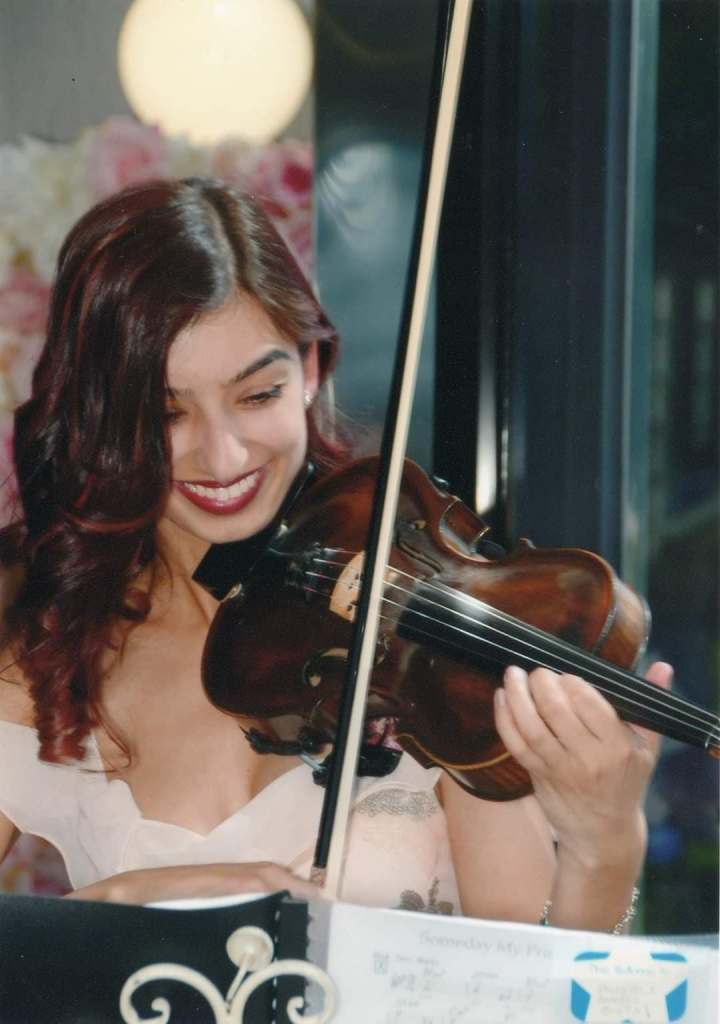
Method Behind the Melody is a new series which will present stories and interviews from the world of music education. I had the opportunity to speak to Bridgitte Arancibia, a recent graduate of the Masters of Performance Teaching at Melbourne University. Bridgitte currently works full-time teaching violin across two Grammar schools in Melbourne. Bridgitte also performs in a violin and guitar duo with her husband, and fellow Performance Teaching Masters graduate, Daniel Arancibia. You can follow their work through their Instagram and Facebook
How did you tackle balancing a Masters of Performance Teaching while working in the area you were studying in? I imagine lesson prep takes time, alongside assessments and classes at uni… what were some strategies you used to manage your time?
The major tactic that helped me, was keeping a really up-to-date diary and taking it with me everywhere. And good food and coffee! My husband, then my fiancé, went through the degree at the same time as me. So talking to him and my other classmates was so helpful, and provided a lot of emotional support.
Another strategy was setting aside time for each commitment, and having clear boundaries between them. When I was at work teaching, it was about the work, the students, communicating with parents. University had to fit in around work. It’s a big responsibility being a teacher and in the grand scheme of things, the students I teach are more important.
But I did occasionally have to say no to taking on more work, so I could complete my degree to the best of my ability.
At what point did you realize you wanted to pursue teaching more seriously, as opposed to a purely performance-based path?
I started a casual teaching job at the end of my first year of university. I was working at Coles at the time and I didn’t really like it, and I thought that I should start doing something related to music. When I started teaching it just felt natural. I’d always known I’d be a teacher, but I wasn’t sure if it would be the main thing I did. Towards the end of third year I started to realise I was leaning more towards teaching than performing.
I love performing but I knew for myself personally, it wasn’t the road I wanted to take. You have to give up quite a lot of your life in order to be a performer purely, and I realised I wasn’t willing to do that. After my Bachelor degree I applied for the Masters of Performance Teaching. I knew it would help me gain the skills to become a good teacher but at the same time, a better performer. The degree seemed like a smart decision because it combined something I loved doing with ability to earn a stable income.
What’s the most rewarding thing about teaching music?
The most rewarding thing about teaching music is introducing a beautiful set of skills and experiences into my student’s lives. The process of learning music helps them strive to do their best. Learning to play a musical instrument also teaches them to become aware of the finer details and develop sensitivity, and see the greater impact that music has to those around them.
I love seeing my students work towards their goals and their reactions when they accomplish them, whether it’s a performance, playing in an ensemble helping others, or a tricky note they want to play well. They can translate those skills into everything in their life as they grow up. So it’s my hope is that learning violin helps my students become more inquisitive, creative, kind, intelligent and happier human beings.
One of the most challenging things you come up against as a teacher of young children, particularly of violin?
I would say one of the most challenging things is to teach a child how to take care of their violin, and how to produce a nice tone. Violins can certainly be nice and scratchy, particularly if you have a three year old playing one!
That sensitivity towards the instrument is one of the trickiest thing to teach. But there are different ways of approaching it, depending on the student. The key is to be able to critically assess the student and their character as quickly as possible, in order to guide them in the right direction.
Do you find that you can get quite technical with some children, or with some children you have to keep things light and fun all the time, like a game?
Absolutely, every student is different. You might have one particular thing to teach them, but there are a hundred different ways you could teach that one thing.
Being a teacher, you have to learn to be student-focused. In lessons, you need to figure out their learning style as soon as you can, or try out different ways for them to understand. Because if they don’t understand you, that’s because you’re not explaining it in a way that’s right for them. Some students are very technical, some are very visual. Some students learn best by ear or through a mixture of methods.
How do you see yourself incorporating performance into a future career? If you could ideally dictate how much time spent on performing, teaching, etc?
Ideally, it would be full-time teaching, and doing my own projects around that. I’m still working out what those may be, but right now I’m a freelance violinist alongside the full-time teaching.
Ideally in the future, I would love to perform some small chamber works, the kind of music I enjoy. Growing up playing in orchestras and in the Melbourne University orchestra, I learnt that I didn’t enjoy those experiences as much as I thought I would. And that was a big reason in realising that the full time route of performing classical music wasn’t for me.
What pieces of repertoire would you like to perform in the future?
I’d prefer to do new works, and modern pop pieces! Pieces from movie soundtracks. Being a performer, in my eyes, we need to be able to relate to non-musicians and merge our two worlds together. I myself enjoy modern takes on chamber music, acts like 2Cellos, Lindsey Stirling… Musicians who merge electronic with classical, the fusion repertoire. There’s a whole world of music outside of university.
But I do love the more classical repertoire alongside that. I love the Bruch violin concerto, the Korngold one… I love Beethoven, Sarasate, but then I also love Bach as well! All its rawness.
I like to make sure my students aren’t exclusively playing classical music. I ensure they have proper technique when they play, but that they’re able to play their favourite song, the songs they love doing. One student wants to learn the Titanic themes, and I’ll give it to them while they’re learning a Mozart piece! Or the soundtrack from Moana.
What do you think makes the violin unique as an instrument?
It has been written that the violin is supposed to imitate the voice. So we have a lot of freedom on the violin to create any pitch, we can create micro-tones, but we also have the freedom to be more expressive. With the strings, you can make a really harsh sound, or a ringing tone… we have that level of expression that we can convey, a bit more flexibility with the tone colour. The sound can be warm, bright, all different sorts of sounds. That’s what I really love.
Did you have any advice for a young violinist just starting out in their performance degree?
I would say, to try to think of themselves after the degree has finished. Where they would imagine themselves going, so they’re working towards that throughout their degree. So no matter what they’re told in their degree, they know where they’re going personally.
Each instrumentalist will have their own path. No one specific path is the one right path. Especially being a violinist, there is no way everyone is only going to become orchestral players. There are hundreds of different careers you can undertake as a musician.
So I’d advise that they have perspective on all the options they have. To know that the skills they’re going to learn in the degree, will help with many different careers.
To do research on other musicians, and what they did after uni… many famous performers have done many different things, they didn’t just finish uni and then all of a sudden they were a full-time performer. It’s a process. And to know that it’s a process.
And to ask themselves, if they’re willing to not have stability in their first decade of life.
Do you have any pointers more specifically for anyone reading this who is considering the path of full time instrumental music teaching?
My first piece of advice is to get into teaching privately during their degree, so they’re getting experience. And to make sure that they know that they enjoy it.
I would also urge them to consider doing an education degree of some sort. Because having a knowledge of music alone is not enough to be able to teach well. You need to know the developmental stages of children, how to approach them, you’ve got to be open minded. That’s what a study in education can teach you.
So that’s what I recommend. Sharpen your skills in your instrument so you yourself are the best musician you can be, and then undertake further study in education. You have a responsibility to teach a student well. Get it wrong, and you can make someone think they can’t learn music. All it takes is a teacher teaching their student they way they were taught, because that’s the only way they know how, and saying ‘oh well, you just don’t get it’ when the student doesn’t understand the concept.
It’s so important as a teacher to have an open mind, to be willing to look at different perspectives, to have patience and understanding. If you know exactly why you are pursuing teaching, you will love it, and your students will love music.
Bridgitte grew up loving everything creative, especially in music and art. Her passion for playing the violin lead her to study a Bachelor of Music and Masters of Music (Performance Teaching) with Primary Suzuki Violin Accreditation at The University of Melbourne.
Her fascination with music’s ability to inspire and bring joy to others as it did to her has influenced her career as a violin teacher and freelance performer today. She most enjoys teaching her students and developing their skills in music, knowing these skills also help in many other aspects of their lives.
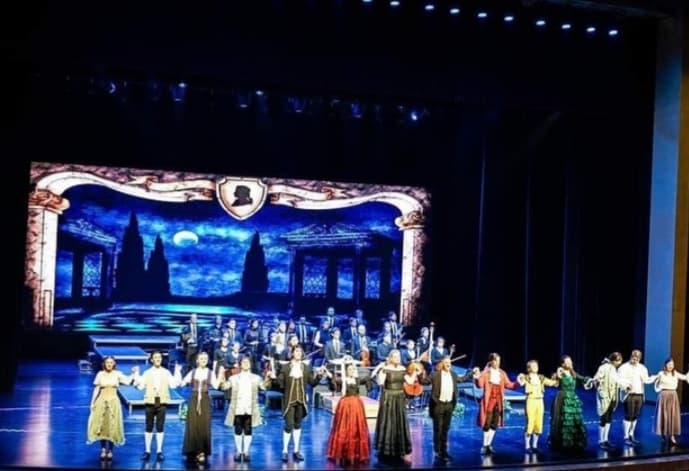
I had the chance to speak to soprano Jordan Auld, whose first year out of her music degree saw her tour China as part of the ensemble of Australian International Opera Company’s production of The Marriage of Figaro. During this tour she also covered the role of Susanna. Later in the year, Jordan performed the role of Musetta in BK Opera’s season of La Boheme.
Jordan will next be seen on stage during Opera Scholars Australia’s Opera in the Market event at Victoria Market on February 17th. She will be one of the three finalists competing in the Scholar of the Year Aria competition. More information and tickets can be found here You can follow Jordan’s projects through her Instagram and Facebook.
When did you realise you wanted to pursue classical singing more seriously than a hobby?
It’s quite a funny topic, because when I think about going into music performance seriously, there was never really a definitive decision of ‘right, this is going to happen’. I was performing a lot as I grew up, after my mum put me into a little toddler class of dance, drama and music.
So I went to that class, I loved it, and I mellowed out a bit. I kept it up almost all the way through my schooling. So when it got towards the end of year twelve with talk of career paths, it was pretty inevitable… I was slightly leaning towards pursuing medicine, but really that was because I wanted to be on Grey’s Anatomy, as an actor!
With classical music in particular, I came to classical singing really late. I got told at thirteen that I had a classical sounding voice, but I was pretty adamant that I would be the next Beyoncé because of my dancing! My teacher at the time really thought I should look into classical, but me being a thirteen year old and feeling like I knew better, I danced around it and didn’t come back to it until year eleven. For my IB (International Baccalaureate) music subject, I had to present a wide range of genres. My teacher said to me if I wanted to do well, I was going to have to engage with classical voice. So I finally did.
But I feel like the more that you open yourself up to the world of classical music and opera, the more you fall in love with it. And it has gotten to the point that there’s nothing I would rather do.
What excites you about opera?
Everything about it! It’s the culmination of so many different art forms and the grandest form of storytelling.
While opera is carried by the voice, I feel like as performers, we are actors first. I feel like I have failed my job if I haven’t portrayed the events convincingly. You can sing through an opera, but if you don’t show the emotional side and the intentions of the characters, you’ve lost what opera is about. While you need to be convincing, you need to be vulnerable as well.
When it all comes together, as an audience member I almost feel fireworks in my chest.
So you’re currently working full time alongside performing with Opera Scholars Australia, how do you approach time management and self-care?
During year eleven and twelve I completed IB, the International Baccalaureate. IB is probably the biggest mammoth of a multi-task you can possibly endure at the one time. You’re juggling a lot of stuff for a really small outcome, which feels like the be-all and end-all at the time.
So in year eleven my parents sat me down and instilled in me importance of time management. Prioritising things that were due the next day over things that were due in a week. At the time I didn’t warm to it, because I was one of those people who thought I could do everything, all the time.
In regards to juggling performing and working, I got my first job at fourteen and have never not had a job. So the over time, balancing musical commitments with study and work has become a normal thing for me.
In regards to self-care… being a dancer, I’m able to listen very closely to my body and work out when I really need rest. I find small things like going for a walk or having a bath are helpful. Baths really help, that feeling of lying down and shutting your mind off.
Could you talk to us about the tour of China, which you undertook in March of 2019 with the Australian International Opera Company?
So we toured a version of The Marriage of Figaro, cut down from four hours to ninety minutes. We took the show across China on a schedule similar to what you would see for a typical musical theatre season. For opera singers, that’s quite uncommon, as seasons normally have rest days between shows. And rest days are so important!
So it was a matter of trying to build up the stamina to be performing either once a day and having the following day off, or doing a double show… That was definitely a learning experience. And when you put the travel on top of that too! You really learn that you have to pace yourself, because you really can’t sprint in a situation like that.
It got to a point where we surrounded by so many people all the time, and I’m such an extravert, but there were times where I just wanted a little time to myself… so I’d get up and go to the gym really early in the morning. Listening to what I needed was important. Because we were travelling together, performing together, going out together, exploring the cities together… I did need a bit of extra time reading, having a bath, working out at the gym, going to breakfast early.
Looking back at it, during the tour you’re so in the thick of it, everything’s happening. But when a couple of months have passed and you’re looking back, it’s like, oh my god, I can’t believe we got through that and we were all sane at the end!
The beauty of opera and live performance is, depending on how everyone is feeling, each show is different. When you are on a tour, you have a bit of freedom with things changing and adapting. Coming straight out of university, it was such an exciting time to have that as my first big professional engagement.
It was an insanely packed six months… I basically had about a month and a half to learn Marriage of Figaro, which we then performed for about a month, while I was simultaneously learning Musetta from La Bohéme.
What were some of the most challenging moments of your Bachelor of Music and Honours year?
The transition from high school to university can be quite challenging. You get to the end of year twelve and you feel like a big fish in a small pond. Then you get to university and you realise that your pond has expanded… it’s a bit of a cultural shock, but it’s a healthy thing too. So navigating that and allowing myself to step back was challenging. Especially as I moved down from Sydney, I knew it was going to be hard in some ways.
I remember in second year, I was becoming so emotionally attached to my music, that it was hindering my progress because I was becoming so possessive of what I was producing. And it was becoming quite detrimental and unhealthy. So I realised I had to reach out, and I had a chat to Dr. Margaret Osbourne, who runs the subject Peak Performance Under Pressure. And that was when I noticed I had to step back and realise who I was, outside of a singer.
Because when you are at school, you try so many subjects and you also have extra-curricular stuff. And from that, you pick your favourites, and your favourites become your career, and it’s almost as if you’ve lost that extra-curricular element because it’s now your life. Sometimes you need to take a break and do something else.
And what were some of the most rewarding moments of your degree?
I did the Chamber Ensemble performance subject during my Honours year, and I absolutely cherished being able to work intensely with instrumentalists. When you’re making music with a small group, the sensory experience is so heighted. For me that was really rewarding.
In semester one I got to work with a cellist. I remember there was a time the group was rehearsing and there was something I wasn’t communicating musically. And Andrea said, put your hand on the back of the cello, sing and then listen to Josh while he’s playing. And it completely changed how I was looking at the piece.
A bit of a mean question, but could you tell me some of your favourite composers for the voice?
I’ve been listening to a lot of bel canto opera lately, which I’ve been loving. It can be a little daunting and scary to listen to because there’s typically a lot of coloratura! (Fast-paced virtuosic vocalisations). I’ve really warmed to Rossini in particular. I love Il Viaggioa Reims, which I saw in Melbourne. I felt like it really changed me. His style is florid and virtuosic, which I see as a bit of a challenge.
I am a sucker for Puccini. I think every soprano is! He writes such beautiful music. And all of his operas somehow connected in a way, so listening to La Boheme and going back and listening to parts of Suor Angelica, there are elements that are really similar. I really love how connected they are. Those are the sort of things you only find out when you get to perform a lot of his works.
Another composer I really love, but haven’t had the opportunity to perform much of his work, is Fromental Halévy. I saw his opera La Juive in Munich and it was life-changing.
Do you have a handful of dream roles?
It’s funny thing, actually thinking about dream roles. During uni I went through a period of having to find out who I was apart from a performer. So you start to detach yourself a little and come to peace with the idea that some things may not happen for you.
I think a dream role would be Rachel in La Juive, that would be amazing. I would love to do Violetta from La Traviata. She’s such a multi-dimensional character and to bring her to life requires so much… I really see that as brilliance.