Benjamin is a musician and writer from Melbourne. He loves to perform, improvise and write stories on the side. He enjoys teaches cello and guitar to young musicians, and loves to perform the music and dances of his ancestors to eager audiences. He plays and dances in a folk group and travels to Europe to perform at events and festivals. He also loves to write, and is working on his debut novel, a story based on his time studying at the Melbourne Conservatorium of Music.
A note from the editor:The piece you will be reading below has been written by James Hodson, guitarist and composer. James contacted me after seeing Fever Pitch Magazine mentioned in a Facebook group for Melbourne University music graduates and current students.
James is the creator and director of a successful YouTube channel, The Stringdom. Through his channel, James has interviewed masters and inventors of string instruments from all over the world, and had the chance to learn about the stories behind these unique instruments. Currently The Stringdom has over six thousand subscribers, and some videos have amassed over 180,000 views. You can keep up to date with James’ work through The Stringdom Facebook page and YouTube channel. Please enjoy this engaging taster of his work.
It’s not every day that you get to meet the person who invented a musical instrument. I found myself driving through sloping snow-covered hills outside Baltimore in the United States to meet Tim Meeks, the inventor of the Harpejji. It’s an instrument that looks like an elongated chess board, covered with strings running away from the player over a matrix of frets. The instrument benefited from having a sleek design, being instantly appealing to youtube-savvy music makers, and also had the endorsement of the incomparable Stevie Wonder. It was only eighteen months earlier that I’d started interviewing musicians who played interesting string instruments, and I was quickly amazed at the variety, enthusiasm, mastery and generosity that my guests provided.
I was able to travel widely for work, and I wanted to have something to show for the places I’d been, something more tangible and documentary. Growing up in the Western Classical musical tradition, I had only a passing appreciation of folk music and how it worked. The backdrop of suburbia compounded the lack of knowledge of this way of making music: the organic, flexible and dynamic nature of ‘folk music’: the music of the ‘people’. And honestly, it didn’t much interest me. I listened to a lot of different (Western) music, and I was also excited by language, culture, history, and travel. Looking back, it was inevitable that music and international cultures would intersect at some point.
My first interview for The Stringdom was prompted purely by my own curiosity. I was in Italy, and I managed to get the number of a mandolin player. The mandolin is a familiar instrument, but I wanted to know more: about the history, about what kinds of music are played on the mandolin in Tuscany, and about the musicians themselves, and their relationship with the instrument and its culture. I reasoned that other people might be interested in the same kinds of interviews, so I set up a camera and microphone to record as I sat down with Mauro Redini, who would be the first interviewee for the then-untitled interview series The Stringdom.
Finland was next on my itinerary. Having been there multiple times and even at some point torturing myself with attempting to learn the language, it’s probably fair to say I learnt more about Finland than most Australians care to know. However, I had no idea about the Finnish national instrument, the kantele. Asking other Finnish friends, it was clear they knew little about it as well. When I sought out Pauliina Syrjälä, one of the modern masters of the instrument, I was truly astounded by her passion and energy for promoting her overlooked instrument.
James (right) interviewing Johannes Geworkian Hellman, pictured with his hurdy-gurdy. Stockholm, 2017. Video interview can be found here: https://www.youtube.com/watch?v=jEk_DbLMbLI
This openness, generosity and evangelical enthusiasm for these instruments was present in every interview I recorded, from Latvia, Lithuania and Sweden, to Sri Lanka, India and South America. Most of the musicians were very aware of their inheritance of a tradition, and an identity, such as the saz player Ulaş Özdemir in Turkey. Others were buoyed by the excitement of reinventing the tradition with their own style and their own music, such as cigar box guitarist Joe Jung in New York.
Posting anything on the internet to do with culture and national identity is always inviting a flame war. I quickly realised it was best to find passionate players of interesting string instruments and let them share their own story of their music, their instrument, and how their musical environment works. I’m sure you’ll agree that their energy, and music, is contagious.
James studied guitar with Lucas Michaelidis, and composition at the University of Melbourne under Dr Stuart Greenbaum and Dr Elliott Gyger. He won the Trio Anima Mundi International Composition Competition in 2010 with his piece Ardipithecus.
Under the direction of Professor Stephen Lias, James participated in the inaugural program Composing in the Wilderness in Fairbanks, Alaska. While living in Edinburgh, Scotland, James completed a quartet for steel-string guitars.
In addition to his composition work, James runs the online interview series The Stringdom, featuring interviews with musicians from all around the world who play interesting or unusual string instruments. The Stringdom has now covered four continents, featured thirty interviews, and clocked up almost one million minutes of viewing time on YouTube.
Currently, James is working on trio arrangements featuring 10-string mandolin, as well as exploring pieces involving live looping and electronic manipulation.
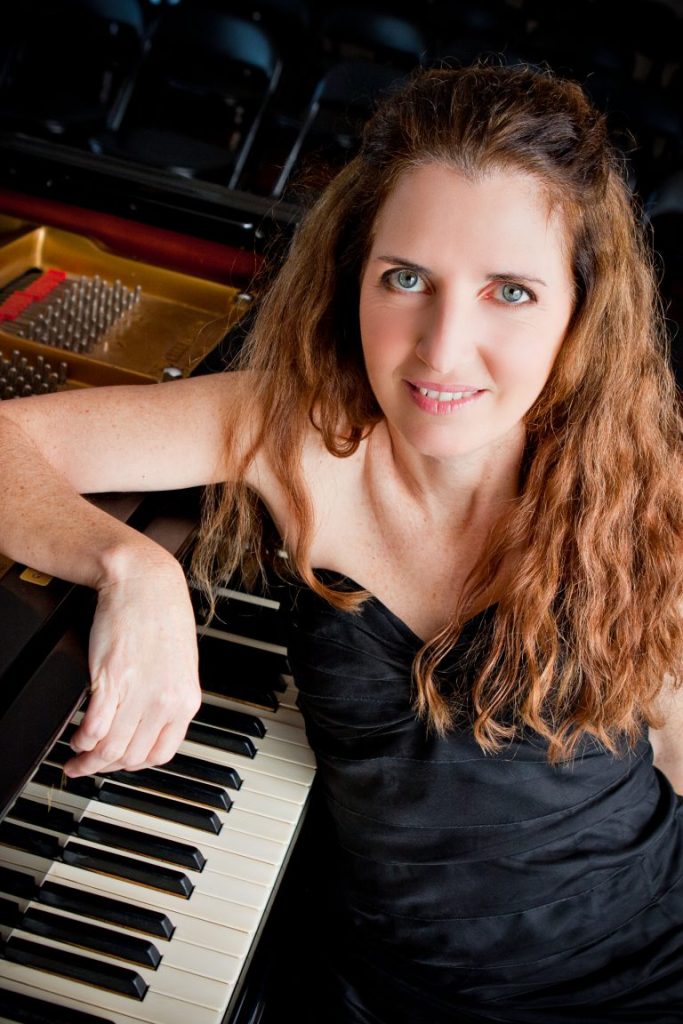
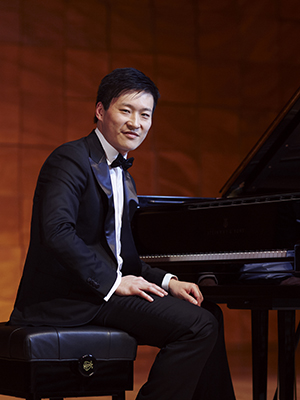
I had the chance to speak to Caterina Turnbull, who established her own music business in 2019 after completing a Bachelor of Music and a Masters in Arts and Cultural Management. Panoramic Music is a concert provider focused on empowering emerging university-level performers. To date, Panoramic Music has presented recitals from young artists such as pianists Jenny Lu, Chloe Lee, James Zhong, and clarinetist Laura Campbell. You can keep up to date with Panoramic Music through their website here, Facebook page here and their Instagram page here
So you run Panoramic Music. What prompted you to start up the business?
It’s was an idea that I’d been playing with for a couple of years. I’m operating as a sole trader- I contract performers and people who help us out with photography, etc. I would describe Panoramic Music as a concert provider. I’d love to be able to branch out in the future and offer mentorship to younger performers.
I wanted to get performers out there, particularly university level performers. Entry-level performers seem to be more covered when it comes to the spheres of jazz and pop- or maybe they’re more proactive at organising their own gigs. Whereas I don’t see that happening as much in regards to classical concerts.
Can you give me a bit of an insight into your own musical background, and how that informed this idea?
I did my Bachelor of Music in composition at Monash University. Funnily enough I applied after my husband suggested I try writing my own music- I had auditioned for the performance streams in piano and voice and hadn’t gotten in. Things kind of fell in to place once I gave composition a go. It felt surprisingly comfortable.
During my time at Monash I helped to organise a concert of student compositions. That year, we hadn’t been given any performance opportunities and one of our lecturers had said, if you want opportunities, go and make some! So we did. Actually, that concert has become an annual tradition at Monash since I’ve left.
I’ve just finished my Masters in Arts and Cultural Management at Melbourne University. You could describe it as a ‘bit’ course. They teach a range of different subjects and the idea is instead of being exceptional in one area, you have the ability to talk to lawyers and understand what you need to know, or talk to accountants and understand what you need to know.
What are some of your aims?
I want entry level musicians to be able to have work. Achieving that involves a few other aims- I want more people to attend classical music concerts. Or to even be present, we’ve been experimenting with live-streaming concerts. In the future, I’d love to put on a series of new music concerts.
How does Panoramic Music work in terms of programming- do you curate programs in collaboration with the artists, or do they come to you with proposals?
For the first few concerts in our calendar, I approached the musicians myself. I essentially recruited my friends! But it’s one of those things where knowing people is important, networking is important… I hate the idea that you only get jobs because you know people, but I’m guilty of the same thing.
I think as long as you do your work with dedication and skill, it’s not a bad thing to use the connections you have! Especially as in the classical music world, it’s a bit of a fishbowl and everyone knows everyone. So you might as well use that!
I need the artists to be paid first, so the model is that the artists get a set rate, as well as a percentage of any profits on top of that. So essentially if I break even, I get paid.
What are some challenges that you can come up against in events management?
Generally, the money! But that’s nothing new. It’s really a matter of, do enough people want to come, do I have enough of an audience, is there enough funding out there for us? That has been my biggest challenge.
The actual putting stuff out there isn’t too bad- I suppose knowing how effective it is can be challenging. Having proper evaluation processes in place is something I want to work on, so I can see where the audience members are coming from. There’s a method I haven’t used yet, where you can use a number of unique links to buy tickets. They allow you to see exactly which forms of social media are connecting you to your audience.
Videomaker turned digital designer turned composer turned arts manager, Caterina Turnbull is the founder and director of Panoramic Music. Having studied composition at Monash University and arts management at the University of Melbourne, she enjoys utilising all of her skills in order to give other creatives the opportunity to do what they do best. She has taught private music for over 10 years, was the president of the Monash Music Students’ Society, has been commissioned by Julian Burnside AO QC, and is currently teaching ear training at Monash University. In her spare time, she designs websites, sings with choirs, and plays far too much sudoku.
I had the chance to speak to Cailin Howarth, who established her own performance coaching studio The Performer’s Edge in 2019. Cailin has a Bachelor of Music in classical singing under her belt, along with Graduate and Post Graduate Diplomas in Psychology. This background gives her an insight into the unique challenges faced by developing performers. Cailin offers a free ninety minute coaching session to anyone curious as to what coaching sessions with her might be like.
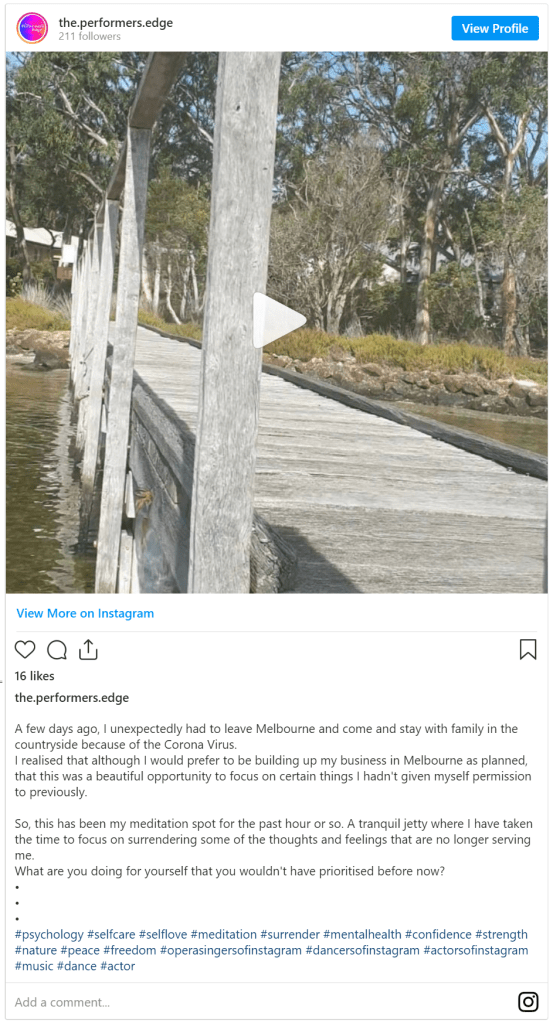
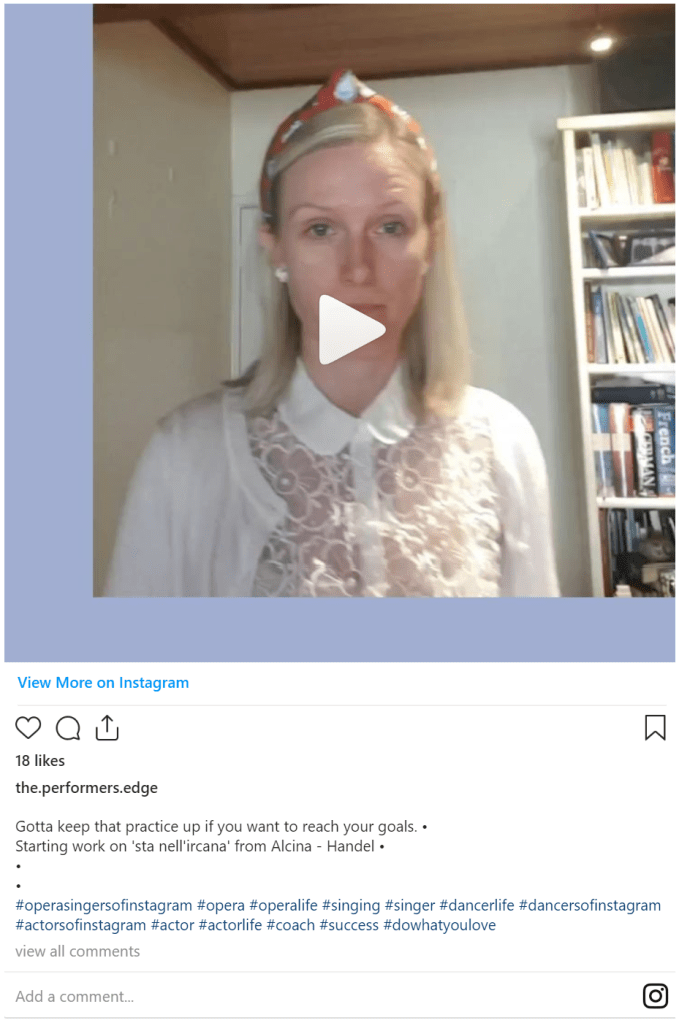
Further information can be found on her website here, Instagram page here, or on her Facebook page here. In response to COVID-19 isolation measures, Cailin will be releasing a number of talks through Instagram and Facebook live feeds on a variety of topics from Friday 27th March. Cailin recently accepted a place in a Masters of Science (Performance Science) at the Royal College of Music in London, to deepen her knowledge in this field.
What prompted you to establish The Performer’s Edge?
During my music degree, I didn’t fit the classic mold of what a quintessential classical singer was supposed to do. I always had a range of other interests. And I got the impression that because I had other interests, I was less of a singer, or something like that… Because of that I started doubting whether it was the right path for me. I know a lot of people have gone through a similar experience. Some of the people I work with say things like ‘Oh, but I have other interests, I like comedy, or finance…’
It’s taught in musical institutions is that there’s only one ‘proper’ way to do things. Perhaps it needs to be that way if you want to be right at the top tier, I don’t know… But I knew it wasn’t quite the right path for me.
I’m quite a practical person, and I wanted to make sure that I wasn’t pigeon-holing myself into an area that realistically, you probably have very little chance of getting far in, unless you absolutely dedicate your life to it.
The main reason I started the business is when I was in university, there was almost nothing taught about the psychological side of performance and how to deal with the pressures that are apparent when you pursue a career in this area. No one is really prepared for those issues. It’s fantastic that I got so many singing lessons, and masterclasses, and got to learn all about singing singing. But so much about being a performer is the idea of, can you deal with the life which comes along with it, which is not like a ‘normal’ life.
You have to learn your resilience skills in the real world, but you absolutely should have some training in that beforehand.
Exactly. I know a lot of sports psychologists, and if you look at the industry of sports, some AFL teams have three sports psychologists who work exclusively with the players! I’ve been living in London up until recently, and all of the big soccer teams over there have so many people working for them, just focusing on the psychological side of things. And somehow it’s not in any way a focus for the performing arts industry! It’s really strange.
I want to shake up the university system, and make what I am working on with my individual clients, something that is taught in the very early stages of performance careers, so performers can go on to have prosperous and successful careers. So many people burn out. They don’t pursue it to the extent that they want, and that means the world doesn’t get to see what they have to offer.
People working in the arts industry tend to have a higher rate of mental health issues than the average population. Which makes the fact there aren’t many targeted resources available is kind of baffling to me.
One of the first specialists I encountered in this field was Dr. Don Greene. He presented a one-off workshop at the Melbourne Conservatorium back when I was a student there. Later I took part in the Lisa Gasteen Opera School in Brisbane in 2013, and they had Dr. Phil Jouncey come in, another expert in performance psychology. He had worked predominantly in the sports industry. He did a workshop with us on personality types and how your personality might affect your performance. I found that really interesting. It was from there that my initial interest in the area turned into, this is something I could actually see myself doing.
At the Royal College of Music in London, they have two core subjects for the undergraduate students that are wholly devoted to performance psychology. That’s probably as good as it gets anywhere in the world. And even though that’s fantastic, that’s still only two subjects out of their entire degree.
I know the Masters in Orchestral Performance at Melbourne Conservatorium of Music has a performance psychology class called Peak Performance Under Pressure. I believe it was devised by Dr. Margaret Osborne. I’ve heard from friends of mine who have taken that subject, that it has really transformed their approach to their instrument.
Yes, Dr. Margaret Osborne is a major figure world-wide in the field of performance psychology. My hope for the future is that performance psychology is not seen as an additional nice extra, but rather as an integral part of forging a successful career in the arts. The people who I’ve been working with have said it’s made a big difference in their approach.
So what experiences did you gain over the years that led you to the field of performance psychology?
Starting the business was something I had wanted to do for a long time. A few years after I graduated from my music and arts degree, I went back to uni and studied psychology. I did that with the long-term goal of working in performance psychology. So I finished in 2015.
Over the past few years I have been working more so in business psychology- doing similar things to what I do now, but with a different audience. It turned out that way because I wanted to go overseas and work in London, and I was getting to the age where I wasn’t going to be able to do that anymore. So I decided I would investigate the performance psychology on the side, while spending most of my time doing something that was more profitable in the short term. But then it got to the point where I realised that performance psychology was really what I wanted to do.
So I ended up going to see a career coach of my own! He’s a serial entrepreneur and helps people get their businesses off the ground. And that was really, really helpful. I don’t know how I would have gone about doing it if it wasn’t for that support, because there was so much stuff I just didn’t know what to do!
Over the past few months, my business has gone from being a pipe dream, to something that I am earning an income from. And I am really enjoying it, and feeling like I’m making a positive contribution to this community that I’m so passionate about.
Over your first six months of being a coach, what have been some rewarding moments in helping your clients?
A lot of people come to me with similar challenges that they are experiencing in their performances, which are can be apparent in their general life as well.
I think the most rewarding thing, is hearing that people feel as though they can pursue the things they thought they weren’t good enough to do before. As performers we’re put under so much pressure to be perfect. It’s an impossible goal.
I want to help people to be kind to themselves. People often see themselves very differently to how other people see them. We tend to be our own harshest critics by far! What I’ve found rewarding is helping people see that they’re actually doing a lot better than they thought they were. And when they see that, they gain the bravery to try things they perhaps haven’t done before.
Do you feel that artists in the classically trained realm are particularly susceptible to these issues?
Up until this point, I have mainly worked with classically trained musicians or actors, purely because that’s the community I come from. Eventually I want to be working with a whole range of creatives: drag queens, writers…
But in answer to your question, yes, I do think this particular area has its own stresses. There is such a focus on perfection, and not necessarily as much creativity afforded to people. There’s such an emphasis on the idea of, it’s always been done this way, this is the right way…
Whereas with other kinds of music-making, there’s more of an openness and ability to explore. I wouldn’t say classical music is any more stressful than any other performing area, but there are very specific challenges that are apparent in only the more classical world. As long as you play well, that’s the only thing.
It’s okay to talk about the challenges you are having. The conversations I have with clients really vary. Some people have specific problems with concentration, others with their levels of performance anxiety. Others have had some more personal things which are impacting their ability to perform. There’s no specific right or wrong as to how coaching is meant to go. As I see it, my work is to help people work out what they want to achieve and create a plan with them, and support them in order to help them get wherever they want to be.
That goal might be, they want to perform and not feeling like throwing up from anxiousness beforehand, or perhaps they want to simply enjoying performing more. Some people have specific concerns, but other people come to me and say, I don’t really know what the problem is, I’m just looking for someone to help me figure out what it is I need to do to fulfill my potential.
A lot of people I’ve spoken to feel quite similarly to how I felt. They say things like, I feel like I don’t really feel like I fit in here, so should I stop? Having a place where people can speak openly is so important. And being able to assure people that despite what they might be told at uni, there is no right or wrong way to pursue a career in this area.
As the world changes, so too will the way people interact with arts and culture. The old school way of going to see an opera at the opera house is not as much a part of the culture as it used to be.
Cailin also writes a blog which can be accessed on her website. I found her post on the concept of cognitive interference theory particularly interesting. I have included a snippet of this post below:
Throughout university, no one ever really spoke about what to do about performance anxiety. I knew everyone was suffering from it, but the extent of the advice I ever got was, “Take a few deep breaths; you’ll be fine.” I wasn’t fine.
I would go into a state of panic, and that panic would only subside about three-quarters of the way through a performance, by which point I hadn’t sung anywhere near my best. I would leave the stage feeling like I’d let myself down.
Cognitive interference theory proposes that cognitive anxiety, in the form of worry, is resource intensive; in other words, it’s mentally exhausting.”
Cailin goes on to describe how a session with a performance coach identified the fact she was a natural ‘over-thinker’. If she followed the conventional wisdom of sitting by herself without any distractions before an audition, she would only increase her own performance anxiety. After experimenting with other methods such as completing a distracting puzzle or talking to a friend on the phone before her audition, she experienced far more positive results.
Cailin Howarth trained as a classical singer at the The Conservatorium of Music at The University of Melbourne before performing in Australia and Europe. As a performer, Cailin saw the need for skilled practitioners who understood the specific challenges of the performing arts, and subsequently returned to study psychology in order to be the change she wanted to see in the industry. Cailin has created The Performer’s Edge to support creatives and performers reach their full potential through bespoke coaching utilising best practise performance psychology.
Scrolling through Facebook as a musician, and as a friend of musicians, has been sobering of late. It is integral that we take social distancing measures seriously, but understanding that doesn’t necessarily make the mass cancellations any easier.
But there are some bright rays of hope emerging during this disconcerting time. A notable example is Melbourne Digital Concert Hall, an organisation created by seasoned arts professionals Chris Howlett and Adele Schonhardt in response to the unfolding COVID-19 health crisis. From its website, the Melbourne Digital Concert Hall will be broadcasting a number of concerts which were scheduled to go ahead during this time, transmitted to the comfort of your living room thanks to the magic of the internet. Tickets can be purchased online and can be booked up to one minute before the scheduled start time of the concert.
Melbourne Digital Concert Hall’s first season has been copied below. Full artist biographies and ticket links can be found at http://melbournedigitalconcerthall.com/
ARCADIA WINDS – FRIDAY 27TH MARCH AT 7PM
Arcadia Winds are trailblazers for Australian wind music.
Awarded a fellowship at the Australian National Academy of Music upon their formation in late 2013, they became Musica Viva Australia’s inaugural FutureMakers musicians from 2015–17. They have brought their brand of energetic, joyful and spontaneous performance to festival stages in almost every state and territory in the country; concert halls across mainland China; and listeners around the world through broadcasts of the BBC Proms Australia chamber music series.
A desire to celebrate and promote Australian music has led Arcadia Winds to commission and perform works by prominent Australian composers.
STEFAN CASSOMENOS – FRIDAY 27TH MARCH AT 8.30PM
Melbourne pianist and composer Stefan Cassomenos is one of Australia’s most vibrant and versatile musicians. He has been performing internationally since the age of 10, and is now established as one of Australia’s leading pianists.
Cassomenos is a founding member of chamber ensemble PLEXUS, which since launching in 2014 has commissioned and premiered over100 new works. Cassomenos’ own compositions are regularly commissioned and performed throughout Australia. Cassomenos and violinist Monica Curro have recently been announced as Artistic Directors of the Port Fairy Spring Music Festival from 2019. Cassomenos is generously supported by Kawai Australia.
TRISTAN LEE – SATURDAY 28TH MARCH AT 5PM
Tristan Lee is an Australian pianist internationally recognized, and critically acclaimed, for his distinctive and moving recital programmes and recordings. He has played in major venues in Australia, Europe and China, including the Wigmore Hall, and St Martin in the Fields, London, amongst many others.
His mentors and teachers have included François-Frédéric Guy, Leslie Howard, Glenn Riddle, and Ian Holtham. Tristan Lee has extensively performed, researched, and recorded the music of Beethoven, Brahms, and Liszt.
LATITUDE 37, SATURDAY 28TH MARCH AT 7PM
Latitude 37 is an exciting baroque trio whose members were drawn together by their passion for historically informed performance of 17th– and 18th-century music. The distinctive combination of baroque violin, viola da gamba and harpsichord, opens up a wealth of repertoire that is rarely explored by other Australian ensembles. Over the past ten years they have become firm favourites on the Australasian early music scene. Their critically acclaimed performances are characterised by the marriage of scholarship and keen sense of historical style with virtuosity, creative flair and a warm rapport with audiences.
Laura Vaughan and Donald Nicolson have been performing as a duo since their student years at the Royal Conservatorium in The Hague. The music of seventeenth-century France, especially Marin Marais, is treasured by them both. They have explored many works, ranging from the well-known sonatas by JS Bach, to more exquisite rarities from the time of Henry VIII.
ZOE KNIGHTON, SATURDAY 28TH MARCH AT 8.30PM
Zoe is a founding member of Flinders Quartet, one of Australia’s finest chamber ensembles.
With pianist Amir Farid, she has recorded for ABC, performed throughout Australia and released 5 CDs on the MOVE label. Their partnership will be reignited in 2020 with performances throughout Australia and New York.
Zoe is currently fortyfive downstairs musician in residence and artistic patron of Resonance String Ensemble in Woodend.
ELYANE LAUSSADE, THURSDAY 2ND APRIL AT 7PM
A graduate of the Juilliard school in New York City, pianist Elyane Laussade has delighted audiences on five continents with her imaginative and strongly individual playing. The New York Times has said she is “a pianist with a powerful, polished technique and many an original interpretive notion….with an impeccable sense of style and dazzling power.”
Elyane’s most recent endeavour is the Mozart Project which will see her perform all 27 Mozart piano concertos with orchestras around Australia. Her love for the musical experience as a close encounter has inspired her to run a special series of intimate recitals at the Laussade Studio in Melbourne.
SONGMAKERS AUSTRALIA – THURSDAY 2ND APRIL AT 8.30PM
Unique in the musical landscape of Australia, Songmakers Australia brings together some of the country’s leading singers and instrumentalists in a diverse repertoire comprising some of the pinnacles of chamber music.
Under the artistic patronage of Graham Johnson, founding director of the acclaimed London-based Songmakers Almanac, pianist Andrea Katz teams with soprano Merlyn Quaife, mezzo-soprano Christina Wilson, tenor Brenton Spiteri and bass-baritone Nicholas Dinopoulos in inspired programs that feature a dynamic interplay of song and chamber music.
KRISTIAN CHONG – FRIDAY 3RD APRIL AT 7PM
One of Australia’s leading pianists, Kristian Chong has performed throughout Australia and the UK, and in China, France, New Zealand, Singapore, Hong Kong, Taiwan, USA, and Zimbabwe. His wide-ranging performance schedule finds him equally at home as concerto soloist, chamber musician and recitalist.
Described by The Age as ‘a true chamber musician at work’, his collaborations include the Tinalley and Australian String Quartets, violinist Vadim Gluzman, cellist Li-Wei Qin, flautist Megan Sterling and baritone Teddy Tahu Rhodes, with whom he has recorded with ABC-Classics. His festival appearances include the Australian Festival of Chamber Music, the Adelaide, Huntington Estate, Mimir and Bangalow Festivals.
The main characteristic distinguishing vocal music from instrumental music, is the text. Of course, singers can abandon words for ‘ooohhh’ and ‘aaaah’ and use extended techniques to create sound effects, but so can instrumentalists. Fundamentally, the ability to interpret words and bring an explicit story to life is what makes vocal music unique.
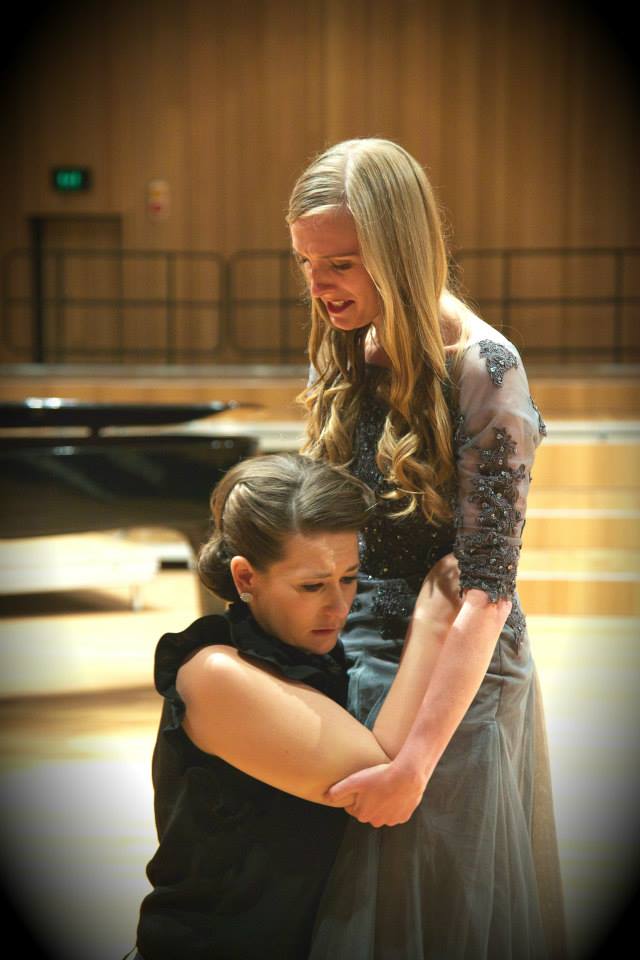
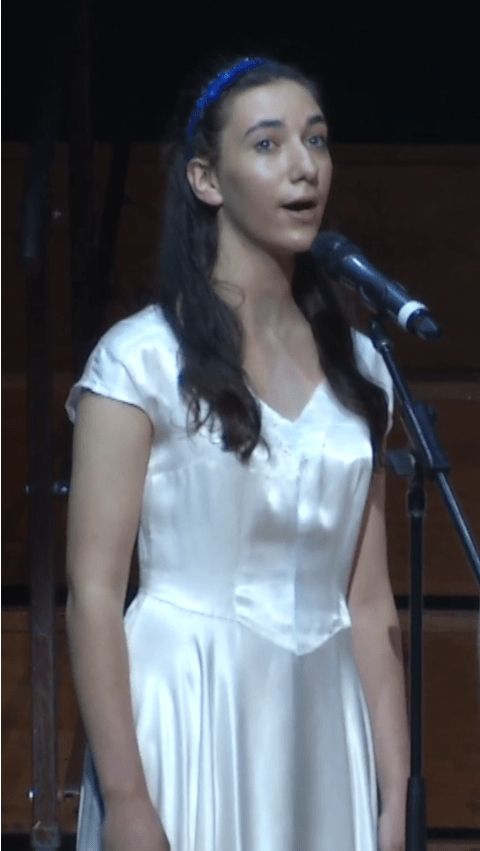
Performing during my high school’s annual Music Festival at Hamer Hall in 2013.
During my vocal studies at Melbourne Conservatorium of Music, I found the process of learning repertoire overwhelming. There were so many elements: learning the melody, refining the rhythms and phrasing, coordinating with the accompaniment, memorising the text, interpreting the text, and finally, creating a performance. Oh, and remembering to breathe…
Over the past two years I have distanced myself from rigorous vocal training, as part of a self-run campaign to find out what I am capable of when I am not constantly dedicating myself to singing. Because of that distance, I have begun to think over the process of learning music with a cooler head. It occurred to me that you could create a methodical rubric for learning repertoire, and separate many of the individual elements into their own category. (Sexy, I know).
Singers often have to learn multiple pieces at once, whether they’re memorising nine art songs simultaneously for their undergraduate recital (true story, unfortunately), or preparing a handful of auditions. It is all too easy to lose track of exactly where you have gotten up to with a particular song. This method will save you time, as you can start every practice session with a clear head, secure in the knowledge that you are charting your progress. As you conquer a particular phase of learning for each piece, you can tick the box or write accompanying notes.
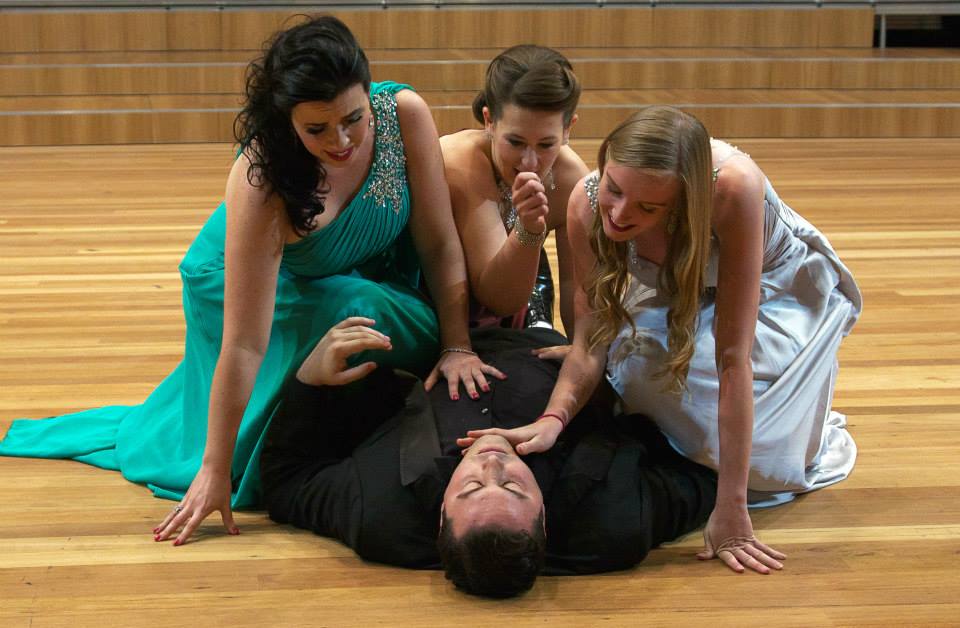
Performing Giulio Caccini’s ‘Ave Maria’ as part of a vocal trio in 2012. (Part of the same Music Festival)
The template below can be used in Excel or Word or whichever medium you prefer. Feel free to adjust the steps to reflect your own process.
The breakdown in detail:
Step 1. Literal translation
It has been shown that writing things down by hand helps to solidify the information in your brain. I think it’s essential to use this technique, and copy down a literal translation of each of your songs, word-for-word. It requires going into a tedious amount of detail which will pay off in the future. Perhaps you can get extra nerdy and use a blue pen for the original text, and a black pen for the English translation. Oh, and copy the whole thing down three times. Exciting stuff!
Step 2. Poetic translation
Just as it’s important to understand the exact words in the phrases of your song (the word ‘the’ is not as dramatically potent as the word ‘murder’), it’s also good to know how far the narrative progresses with each sentence. And if you repeat the same line of poetry twice, how will you set them apart vocally? So for good measure, copy down the poetic translation a few times too.
Step 3. Background research
We’ve all been there- you’re watching a masterclass at uni, a singer gets up on stage, and falls for the most basic ‘gotcha!’ question- ‘So what is this song about?’ Or, ‘Why did the composer set music to this particular text?’. ‘Uh… I don’t know.’
Don’t be that person. There’s always a story. Even if it’s as simple as, the composer really loved the poetry of a particular writer, and had an obsession with the idea of the afterlife and the symbolic nature of crows…
Step 4. Note learning
Well duh! Learn the notes!
Step 5. Fine tuning phrasing
Well duh! Don’t just learn the notes! Phrase them musically!
Speaking seriously though, this phase also includes working out how and where you’re going to breathe and identifying the most challenging phrases.
Step 6. Acting and Interpretation
Once you are no longer dependent on sheet music, you can experiment with your acting. Discuss with your teacher, workshop different approaches…
Step 7. Practicing performing
Make yourself nervous on purpose. See how you cope.
If you enlist your friends to come visit your practice room, and force yourself to perform entire songs for them without stopping, it will force you to confront all of the holes in your progress. Brutal, but necessary before the real performances!
I had the chance to speak to emerging soprano Sofia Laursen Habel, who staged a charity concert last year with help from a grant from the Ignite Lab program at Melbourne Conservatorium of Music. The Celebration of Spring concert took place in regional Victoria and raised funds for the Wimmera Healthcare Group.
At what point in primary school or high school did you realize you wanted to pursue music more seriously?
I think it was probably in high school, year seven. I remember we were doing a musical called Disco Inferno, made up of 70s hits… I was a bit shy, but I ended up singing Blame It on the Boogie by Michael Jackson. The concert was in a dingy little hall, but from that moment I was like, yep, I want be on stage, that’s what I want to do. That was the moment where I didn’t really consider another option. People would say, oh you should have a backup option, or you’re good at arts and languages, maybe you could study those… but I knew I had to give performance a go, and that I would regret it if I didn’t.
What is your favourite part of the entire experience of being a show? From the rehearsals down to the last performances?
That’s a hard question! I think one of my favourite moments would be when you’re waiting side stage, about to go on for the first time. Just that feeling of anticipation and excitement, of getting into character.
Can you tell me about the fundraising project you organised, the Celebration of Spring concert which took place in regional Victoria?
I’m originally from a grain farm in the Wimmera, which is in north-west Victoria. There isn’t lot of access to classical music out there. I ended up going to boarding school in year ten to study music, because otherwise I wouldn’t have had access to the subject.
I had been thinking of how I wanted to do a concert of classical musical or opera for a rural audience, to bridge the gap that exists for those communities. I started brainstorming where I could do that, and how the event could benefit the community. I wanted all of the funds raised to go to an organization that was doing really good work in the area.
I ended up teaming up with the Wimmera Healthcare Group who are based in Horsham and Dimboola. They were on board straight away, which was fantastic. I applied for funding for the project through the Ignite Lab program at Melbourne University.
[The Ignite Lab program at Melbourne Conservatorium of Music offers a ‘Creativity Fund’ grant program to current students, as well as career consulting and workshops relating to the business side of being a music professional. 2020 will be the fifth year the fund has run. The program has granted over $60,000 across more than thirty student projects. Applications are open to current MCM students for two more weeks, find out more here]
I was hoping that the funding would cover the cost of the event, so that way everything raised could go straight to the organisation. Luckily I was able to get a grant, and it did end up covering all the costs- and testing my budgeting skills! I had a wonderful team around me from the Wimmera Healthcare Group helping me to plan the event. Robyn Lardner was my mentor for the project.
Because the event for was for charity, we were able to benefit from radio interviews and other donated services such as printing.
What kind of work is done by the Wimmera Healthcare Group?
The money received by the Wimmera Healthcare Group is used to accrue interest which is then used to provide new buildings, as well as to pay for doctors and medical programs in the country. The major regional hospital in the area has to cover a great distance.
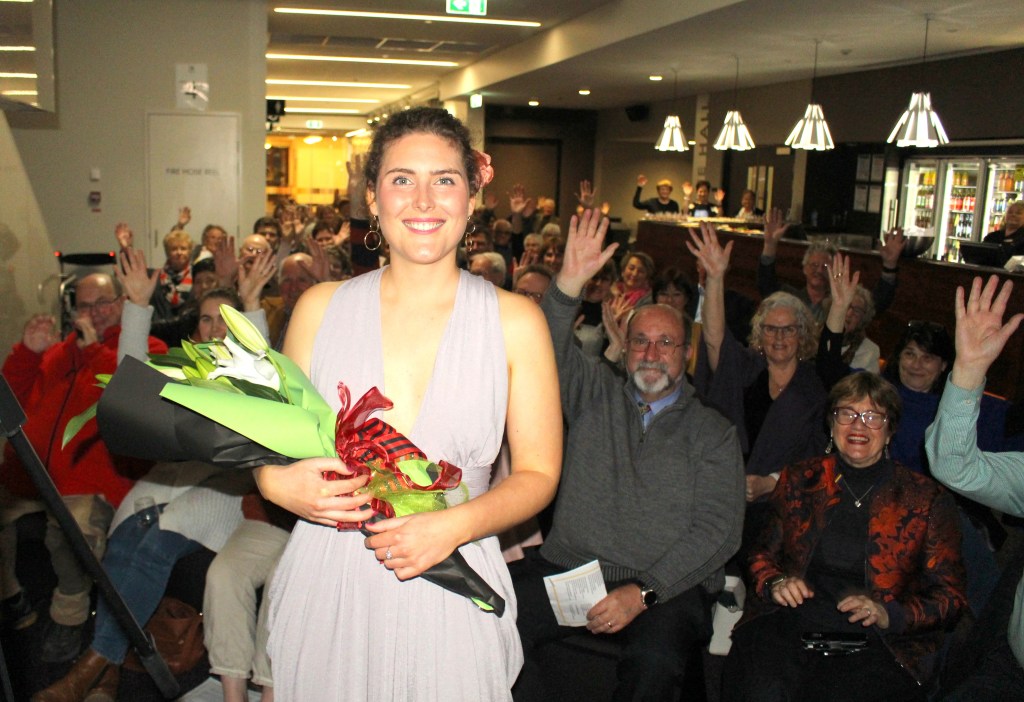
We had seventy tickets to sell for the concert- I thought that number wasn’t too large, but if we didn’t sell out it wasn’t going to look too bad. We reached pretty far and wide trying to spread the word, and we ended up selling out two weeks before!
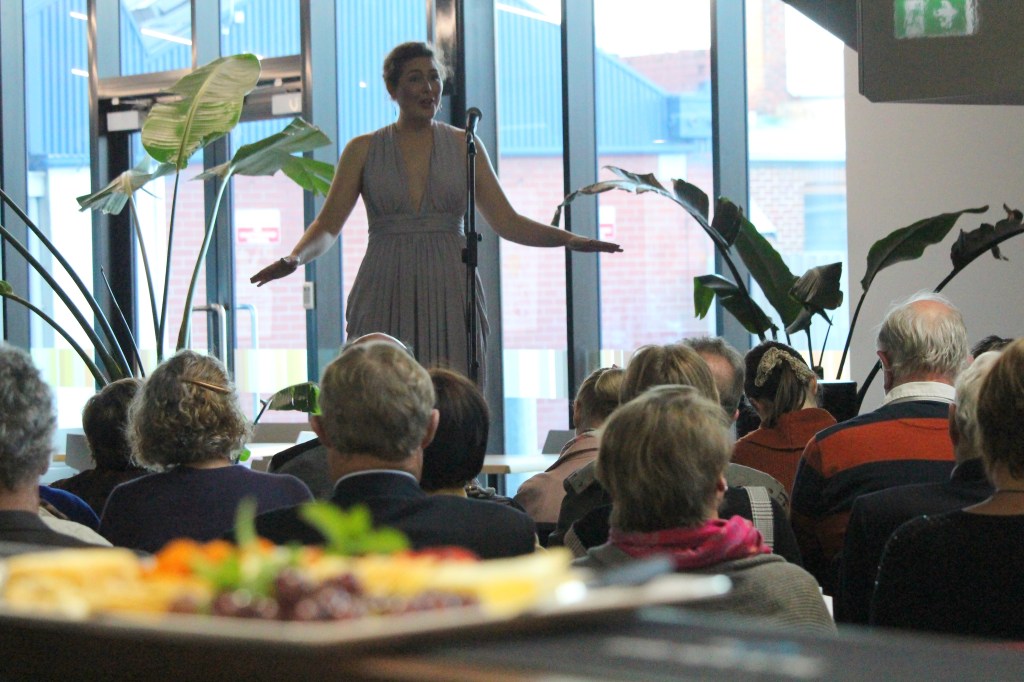
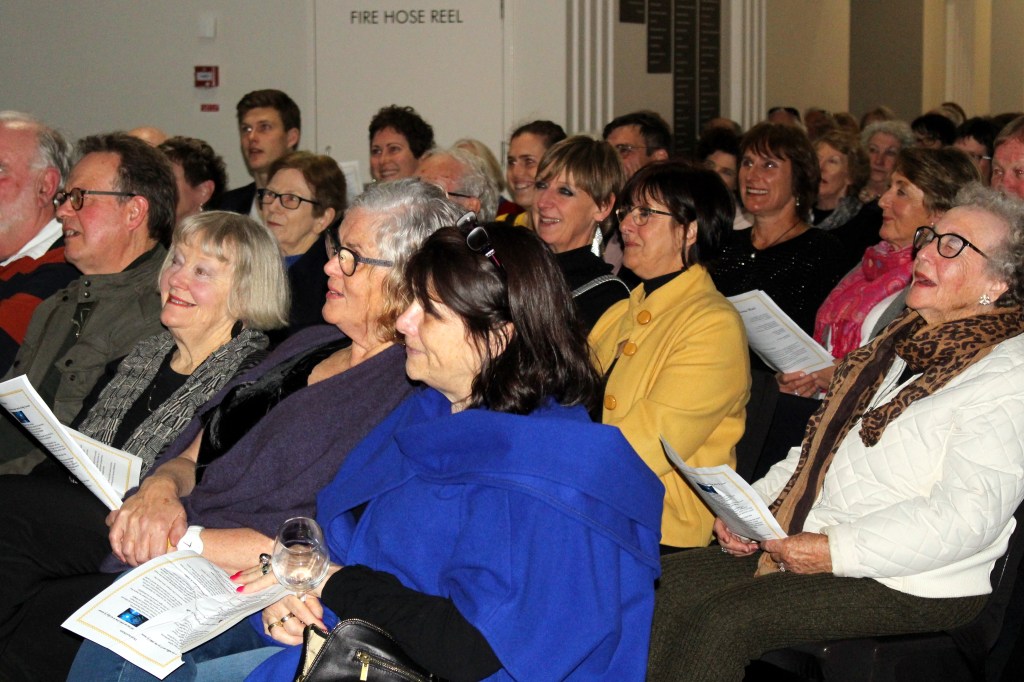
The concert was held at the Horsham Performing Arts Centre, which was only built a few years ago. The actual auditorium seats something like eight hundred people. But because I wanted to make the event a bit more accessible and take it out of the theatre, we performed the recital in the foyer area. It created more of an intimate salon feel, and it was nice that the bar was right next to the seats!
All up, with ticket sales and raffle ticket sales, we ended up raising $2,700. And the fact the event sold out really did reinforce for me that wider regional audiences are interested in classical music and opera. But it’s a challenge because of the lack of accessibility.
It’s interesting, because in the city centre of Melbourne, we can encounter the opposite problem- because there is so much going on, it’s hard to get people to come to your specific event. But it’s fantastic to hear that enthusiasm for live classical music is widespread throughout Australia and not only in the urban centres.
Exactly! Before the show started, my accompanist Karen came up to me backstage and said, I’m not going to give anything away, but there is so much love in this room for you. It was a very rewarding night. And it was lovely to get such a positive response to my first time running a concert event in the real world!
What did organising the event teach you in terms of time management skills, budgeting skills, etc?
It taught me to be very prepared very early on. We started planning the concert six or seven months beforehand. There were so many factors to take into consideration to even lock in a date. We knew if the event was taking place during footy season, it couldn’t be on a Saturday, because footy is very important in the country. And we knew if it was going to be on a Sunday, it should be in the early evening, and not so late that it would be hard for people to drive back home. I suppose that’s the who in the process of planning an event. Who is the event for and how are you going to cater to that demographic?
Allison Butler from the board of the foundation ran me through a number of their past budgets, and the lists and templates she has used in organising events. That was incredibly helpful.
We had great photographer and videographer documenting the event. The videos are great for me to look back on and go, okay, did that work? It’s so different when it’s a live show. Coming from the Conservatorium, it’s easy to get caught up in the perfectionism of ‘I can’t sing, because I’m not perfect’, or ‘This isn’t ready because that note isn’t exactly right…’ Audiences don’t care about that! It’s about the performance. As long as I can communicate what I want to communicate, and help the audience feel what the music wants you to feel, then I’ve done my job. It was great to see audience members crying in the places I wanted them to cry in, and laughing in the moments I wanted them to laugh in! I knew the story I wanted to tell, and I could tell the audience was right there with me.
Who are some of your favourite composers of vocal music?
My niche in this area is actually Scandinavian art song. My mum’s Danish and I speak Danish. And as you know, it’s hard to sing opera as a young singer, you have to wait until your voice develops. So I branched into like looking at Scandinavian composers.
I stumbled across three who I really love: Norwegian composer Edvard Grieg, Danish composer Carl Nielsen and Finnish composer Jean Sibelius. Sibelius would have to be my favourite art song composer at the moment, he’s written some really great stuff in Finnish and Swedish.
I’d love for my Honours recital in the future to be made up solely of Scandinavian art song… it can be fantastic to do a themed program, because that way you can take it and perform it as a concert outside of uni. It can be hard to do that when you have the usual student program of a mixed bag of repertoire!
Do you have any strategies for dealing with stress and nerves?
I go to yoga classes. It’s something I found last year that’s really helped me with stress. It’s also a place to escape- there’s a beautiful mantra on the wall of the studio I go to which says something like ‘Your practice is your time to feel alive and free. There’s no stress or pressure. If you can’t touch your toes, don’t force it, you’re on your own path’. Which is also very relatable to singing!
Also, to go home to the country more often. If I’m feeling stressed or claustrophobic, it helps even to get out of the city for a night, feel that space.






















 Fever Pitch Magazine