Unit 7 Noise is the publisher of musical works by Michael Folmer Hansen a.k.a. folmR and collaborators. Folmer’s Roland SH-2 and MC-202 synths, Boss DR-55 drum machine and fretless Rickenbacker knock-off were stolen in 1984. The items were uninsured and folmR is still seeking revenge, making like Gauguin some thirty years later and dropping his suit for the life of an artist. He won’t be leaving his wife and marrying a 14-year old Tahitian girl (or getting syphilis and becoming famous after his death), but he is having fun and exacting revenge by creating noise and other things.
Owner of the Hong Kong studio Kwun Tong Noise Works from 2014-17 and now Unit Sep(t) Creek in Australia, coproducer of the Phillip Glass Buddha Machine and early supporter of Soundbrenner, The Chromatic Endpin and WORNG Electronics, FolmR’s interest in music goes beyond the desire to make it. folmR is also a life member of Melbourne Electronic Sound Studio.
After more than thirty albums on his own or with collaborators Christiaan Virant (FM3), James Banbury (Blood Wine or Honey, The Auteurs, Infantjoy, dadahack), Antony Ryan (Isan, Mugwood), Emilio Guarino (Hot Wobble), John Lee (Phaedra Studio, Mountain in the Sky) and many others, folmR’s output is equal parts prolific and eclectic. He calls it Fretless Monophonic Post Krops Jazz – a kind of avant-garde-noisy-jazzy-sometimes-danceable music.
folmR sees music and has collaborated with video artist like Tina Douglas, remi freer, Tanglokto, Shahriar Shadab & Maxim Lewis to create a visualise his music.
“Folmer creates enigmatic, energetic and exaggerated soundscapes and song-noises that are vast in scope, yet intimately personal.” — James Banbury (Blood Wine or Honey, The Auteurs, Infantjoy, dadahack)
“… really feels like I’ve been at the centre of a fusion reaction” – Antony Ryan (Isan, Mugwood)
Back in July I put out a call to my immediate musical network, to ask who would be happy to be interviewed on how they have adapted during Melbourne’s lockdown. The last seven months have been disorientating and frequently exhausting. Prioritising your mental and physical wellbeing is more important than ever.
This prompted me to start an ongoing series called Creativity Amongst Crisis. Today’s subject is arts administrator Leonie Thompson, who I met when I started working at Melbourne Recital Centre early this year. Leonie is Philanthropy & Bequest Coordinator within the Development department at the Centre, and gets to witness firsthand the incredible programs which spring out of the generosity of private donors.
Leonie has a Masters of Music (Performance) in classical piano from Melbourne Conservatorium of Music. During her university days she established an ongoing concert series at St George’s Anglican Church in Travancore- you can find more information through the website and Facebook page. I was particularly interested in asking Leonie how she found herself in an arts administration career.
While Leonie and I are both employed at MRC, we both volunteered our time for this interview.
Can you give us an insight into your musical background?
Growing up in Wauchope, a small regional town in NSW, I wasn’t exactly surrounded by music. However, my mother happened to be one of the few music teachers in the area. She not only taught me piano, but encouraged me to see the value in music education and the doors it can open in life.
I was fortunate to gain scholarship support to move to Melbourne and study piano performance, under the wise guidance of Anna Goldsworthy, Ronald Farren-Price and Sonya Lifschitz. I met a circle of incredibly bright and beautiful people who are still close friends today, not least of which my husband Nick Slaney.
Leonie (right) pictured with Ronald Farren-Price (left).
During these years I formed an ensemble with violinist Nathan Juriansz and clarinetist Aaron Klein, and commissioned and performed new works around Melbourne. I also had the thrill of performing the Grieg concerto with the Maroondah Symphony Orchestra. But the most memorable experience was performing my two Masters recitals – truly a marathon – and something which gave me a newfound appreciation for the career musician and the investment before each concert that we as audiences sit down to enjoy.
How did you find yourself in the arts administration role you are in today?
I’ve always been business-minded and interested in the swirl of activity behind the scenes to get things done. So I suppose alongside my journey as a musician I was also drawn to leading and organising things, and gained a lot of voluntary experience along the way.
During my years at the Con, I ran a piano studio of private students and would organise student concerts at the end of each term. I was frustrated with the lack of affordable performance spaces with good instruments in my area and started a concert series to fundraise for a new grand piano and eventually set up Concerts at St. George’s (now the Friends of Music Series). When I moved to Germany the following year, I used the opportunity to explore this interest in development a bit more and landed a job in business development.
Eventually, these varied experiences and interests actually came together nicely in beginning work at Melbourne Recital Centre.
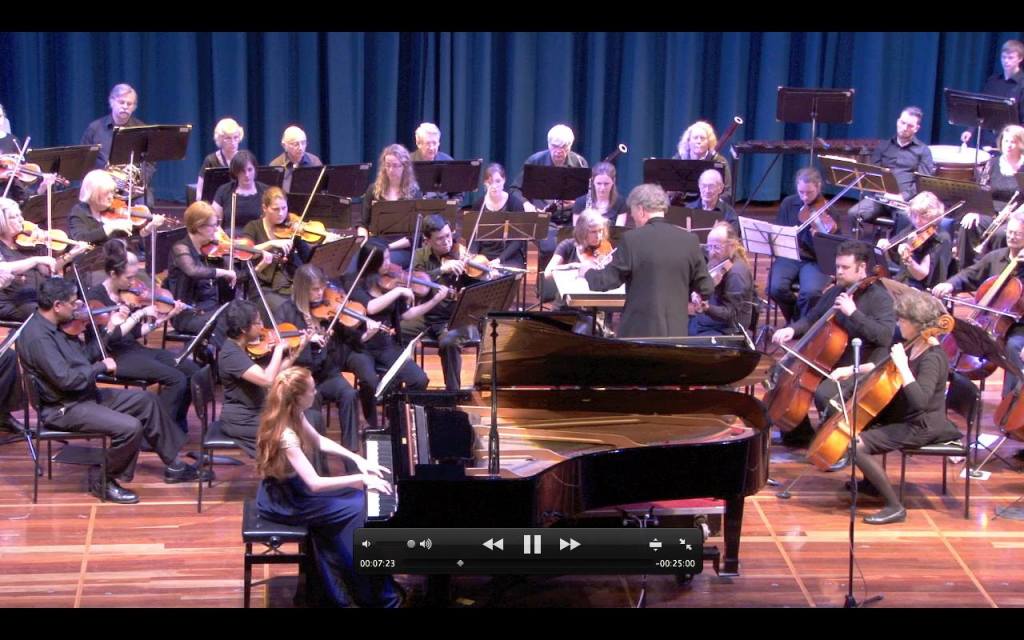
Performing Grieg’s Piano Concerto with the Maroondah Symphony Orchestra.
Any pieces of advice in terms of gaining experience, for those who would like to enter the arts admin field?
Take a moment to look back over everything you’ve done and note the demonstrable skills and strengths that would translate to arts administration. Too often we overlook these and assume we need other skills, when really we’re already more than capable. For example, I was teaching piano, but this also involved invoicing, receipting, scheduling, record keeping, marketing, liaising with clients, etc.
From there, you can gain experience in weaker areas by volunteering with community groups or at university, or undertaking an internship with a local ensemble or organisation. Or even start your own projects or programs where there’s a need, which would give you further opportunities to refine your skills or plug any skills gaps.
Other than that, I think it’s great to be confident to ask questions and talk about your goals. People care and are willing to help you.
What is your favourite aspect of working in the area of philanthropy and arts funding?
Helping to make good things happen! I get to witness the impact and outcome of a community’s generosity first hand, which is very rewarding. I’m working so closely to the joy of music.
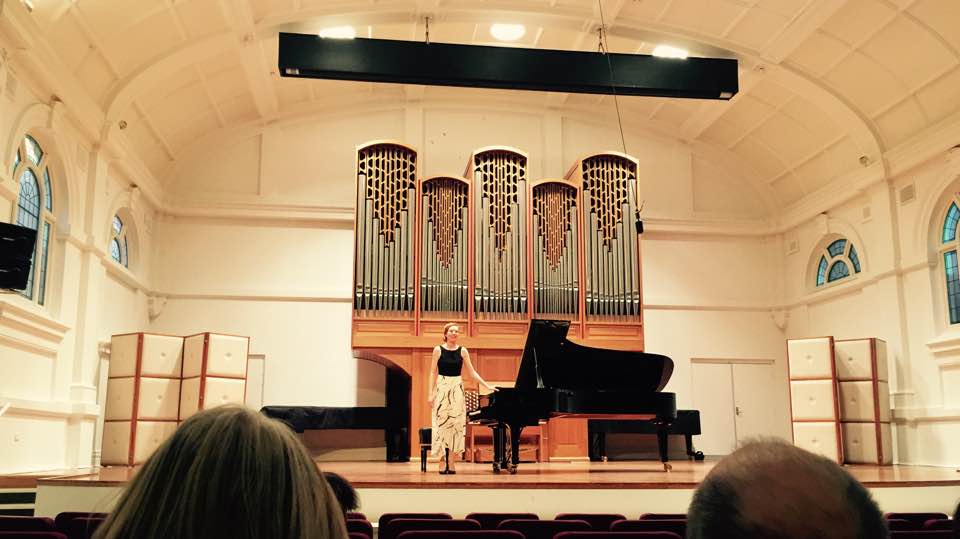
Performing her Masters recital in Melba Hall, Melbourne Conservatorium of Music.
The people I get to meet are wonderful – the Melbourne Recital Centre donor community feels like a big extended music-loving family. I enjoy calling to say thank you for their gifts, learning their stories and facilitating a meaningful relationship between them and the programs they support.
It’s a creative industry, you’re working with creative people on all fronts, and this flexibility and fresh thinking is really energising to be around.
Have you learnt anything specific that you may not have been forced to learn, were it not for COVID-19 restrictions and the flow-on effects?
I learnt that Zoom backgrounds can be videos, and that you can in fact get motion sickness from watching someone ‘ride a rollercoaster’ backwards during a meeting…
I’ve had time (haven’t we all?) to reflect more on the arts industry too, and my role within it, whether that’s as a performer, teacher or fundraiser. Being surrounded by creative people is energising, and it nurtures a kind of infectious resilience. I think this will be vital as we move out of COVID-19 lockdowns and navigate the coming year, healing the wounds of 2020 and rebuilding connections across our community.
Leonie joined the Melbourne Recital Centre after two years in Germany where she worked in business development. Her unique knowledge of the music industry results from the diversity of her professional engagement over the years, which includes experience as piano soloist, chamber musician, music teacher and fundraising coordinator.
Leonie has a Master of Music (Performance) from Melbourne Conservatorium of Music, and has studied with Prof. Ronald Farren-Price AM, Dr. Anna Goldsworthy and Dr. Sonya Lifschitz. As a recipient of several scholarships during her music studies, alongside her experience founding and directing the Friends of Music concert series at St. George’s Travancore, Leonie understands firsthand the value and impact of philanthropy in the music industry – whether it be by supporting a talented musician in their musical training, or by contributing to concert life and thereby enriching the community.
On the evening of 28th October, six Honours composition students from the University of Melbourne broadcast a YouTube premiere of their new works. The critical dimension of this review will be moderated by the fact that this was a free concert, consisting of works submitted for university assessments.
I’ve never been to a virtual composition concert, and they’ve stepped up to the pandemic challenge with great confidence. Several performances were conventionally recorded in the conservatorium concert hall, while others featured split-screen videos, home footage, multiple camera angles, and a particularly dramatic black silhouette of Lindsay Hicks performing against the Melbourne skyline as seen through a practice room. We were also treated to several films, live action and animated – which made it a lot easier to appreciate the film score techniques of John Li and Sue-Anne Tan – and some non-narrative animated visuals. In combination with spoken introductions and stylish title cards, this made the online format really come into its own.
Much of Metamorphosis could perhaps be described as post-minimalist, taking a cue from that other well-known “Metamorphosis,” those piano pieces by Philip Glass from 1989. Laura Abraham, Sue-Anne Tan, and John Li continue mining Glass, generating material through largely tonal means and familiar minimalist devices, such as open-ended movement structures that grow out of repeating phrases. They moved confidently between pop or jazz flavours and a more neutral, contemporary-classical feeling for consonance.
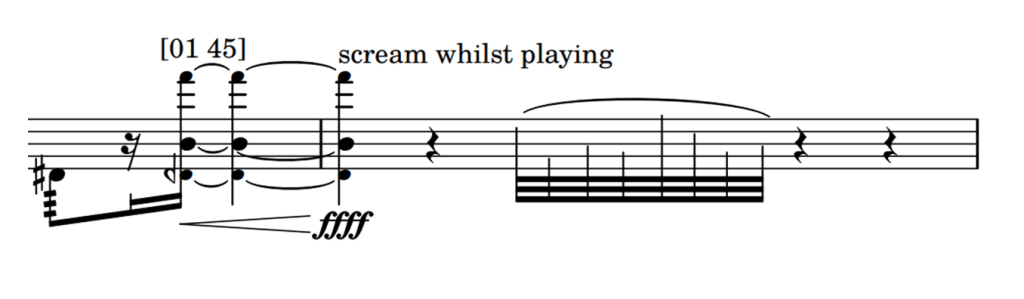
Robert McIntyre incorporated more explicitly polytonal devices. In Figure 1, from Intercept for oboe and piano, we see how the bold oboe part moves through harmonies based on fifths and fourths, rather than the familiar third. Rhythmically, a familiar 4-semiquaver unit predominated, subject to additive and syncopated repetition.
Figure 1. Excerpt from Intercept (2020) by Robert McIntyre, bars 23–24.
Lilijana Matičevska and Benjamin Drury both operate in more dissonant sound worlds. Matičevska veers towards New Complexity in her conventional but intricate notation, pushing expressive limits in three pieces that eschew, or even actively satirise, tonal forms (Palimpsest, for example, mockingly quotes Mozart in a non-tonal universe). Drury, conversely, approaches performance and noise art, electronically processing ‘found sound objects’ to blend the pitched and the unpitched.
Drury’s experimental electronic work Touch was one of this concert’s most dramatic and daring events. As the program note explains, “all the sounds heard come from contact microphones sewn into gloves worn by the performers.” This piece was performed split-screen, with piano on the left and suspended cymbal on the right, but Drury managed to be in two places at once.
The music of the begloved touch is pandemically topical, although ‘contact’ between foreground and background operates as an aesthetic figure throughout Metamorphosis. In order to bring us together, in Touch, Drury had to wear a barrier, a kind of PPE, or Personal Performance Equipment. Midas-like, everything that Drury touches turns to music. However, what’s interesting to me about this strange phenomenon is how oddly familiar it is: all instruments are played through touch, all musical discipline transforms the body into a sound-machine.
I particularly loved Abolish the Police, Matičevska’s work for solo garklein (tiny recorder) and pedal pad effects. This work is programmatic and yet specifies “nothing concrete:” as the program note explains, “it is a piece derived from [Matičevska’s] strong feelings against state-enforced violence against all civilians and [her] hope for a more peaceful future.”
This piece begins with deep inhalations and breathing ‘over’ rather than ‘into’ the recorder, as performer Ryan Williams rapidly moved his fingers along the instrument while producing no sound. It hesitates; it asks whether the police may be abolished, whether the garklein can even be played (it’s so tiny!). The unfamiliarity of the garklein’s sound is utopian, and we tremble before the possibility of abolition just as Williams trembles before the possibility of performance.
Figure 2. Excerpt from Abolish the Police (2020), bars 60–61.
There is a staged mimicry at work here: Williams plays, the microphone picks it up, Williams stops, but the pad continues, escaping the body. Given Matičevska’s political titles, we could interpret the pad, which picks up the solo garklein’s melody and then transforms it into accompaniment, as the translation of individual praxis into collective action. The pad produces the sonic/material background against which we make sense of melodies and of the gestures of the individual. Every piece in this program could perhaps be interpreted according to the politics that are implied by this figure/ground relationship. Do we fade away into the ground, or do we produce and reproduce it? How do we come to know our bodies as belonging to the earth?
Abraham acknowledges the inspiration and ecopolitical influence of Karen Tanaka’s 1998–1999 work Children of Light. Tanaka aimed to write a “message to children of the future;” Abraham identifies herself as one of these children and, through aesthetically reproducing Tanaka’s message, carries on that musical and ecological heritage. Light Years, like Abolish the Police, can be listened to politically, I suggest, because it insists on the possibility of hope under capitalism and the beauty of nature.
Tanaka’s work reflects, at times painfully, on the 1996 IUCN Red List of Threatened Animals. Listening to Abraham’s flute part touch and merge with its electro-acoustic backing makes me think not of how distant we are from the animals on this list, but rather, how close we are to them. We, too, are a part of nature, at risk of becoming Threatened in turn. This is what I took from the way Metamorphosis staged our relationships to our natural and social environments through sonic figures and sonic grounds.
This proximity to nature is, finally, made explicit in Sue-Anne Tan’s spectrally emergent electronic work The Insects Inside my Head, which included a video of a very scary-looking caterpillar. The music tracked a range of visuals, approaching an almost cyberpunk aesthetic of thermal imaging, nuclear sunset, and neural processors. Tan is a virtuoso of the Digital Audio Workstation: melodic figures and deep ostinatos shift from clean and cutting to washed-out and fuzzy depending on their electro-acoustic treatment. It was satisfying to conclude this program with her affectively-charged rendition of human anxiety as a kind of insectitude. I was jolted somewhat by the final appearance of the larval creature whose metamorphosis, political or otherwise, we have yet to encounter.
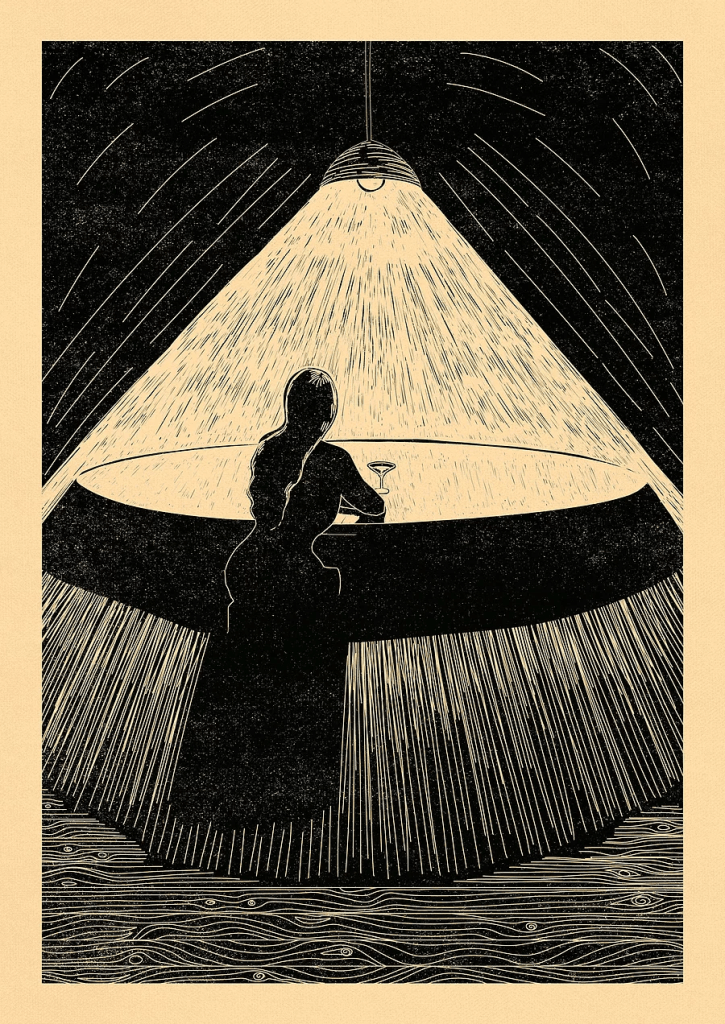
Digital Illustration for ‘Together, Apart’ by Melbourne artist Jess Reddi Coronell, commissioned by Gertrude Opera. You can follow her work on Instagram and Twitter.
Together, Apart was available for streaming between the 23rd-24th October, as part of Gertrude Opera’s online Yarra Valley Opera Festival. (Although I recently interviewed soprano Morgan Carter who was involved in the festival, I was not asked to write this review. I purchased my own ticket.)
The work was composed by Nicholas Gentile, with libretto by Lincoln Hall. I’m always keen to learn the backstory of newly composed operatic/ music theatre/ cabaret works, so I was disappointed by the lack of accompanying material on the Gertrude Opera website. Program notes and and a track listing could easily have been made available to ticket holders after purchase. I think it’s an important element for organisations to consider in this new frontier of online offerings, as a festival atmosphere cannot be created physically (for now). Accompanying material can help bridge this gap and build audience anticipation and understanding.
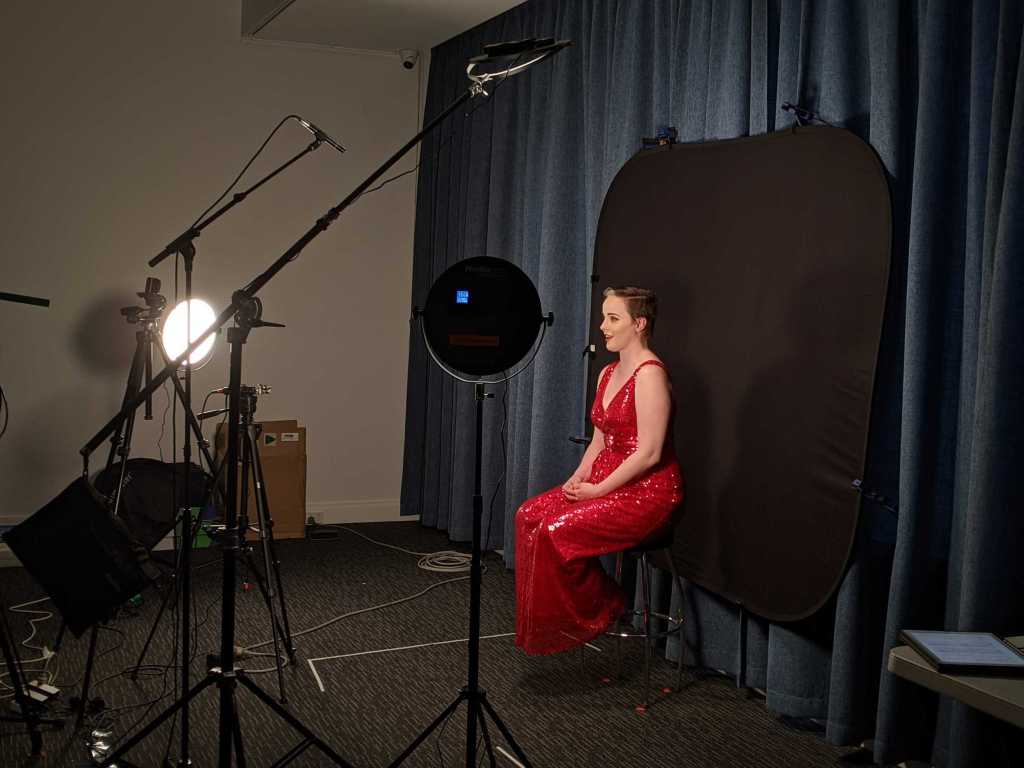
Together, Apart was presented in a direct-to-camera format, and featured the talents of four singers, accompanied by Glenn Amer (piano) and Flora Carbo (saxophone). As the work was pieced together during Melbourne Stage 4 lockdown, the singers filmed their portions during individual time slots, with the backing track playing in their ear. Unsurprisingly there were a handful of moments where the synching of multiple vocal parts was a bit off-centre, but overall the sound and video quality was high. I must commend Gertrude Opera on managing to create content safely during this time.
While described as a cabaret opera on the Gertrude Opera website, Together, Apart could also be described as a music theatre song cycle, sung by four classically-trained performers. The diction and clarity displayed by the entire ensemble was impressive, not always an easy thing to achieve when singing in English with a heavier classical voice. Soprano Georgia Wilkinson especially impressed on this front, with an unforced emotional presence while limited to performing while seated.
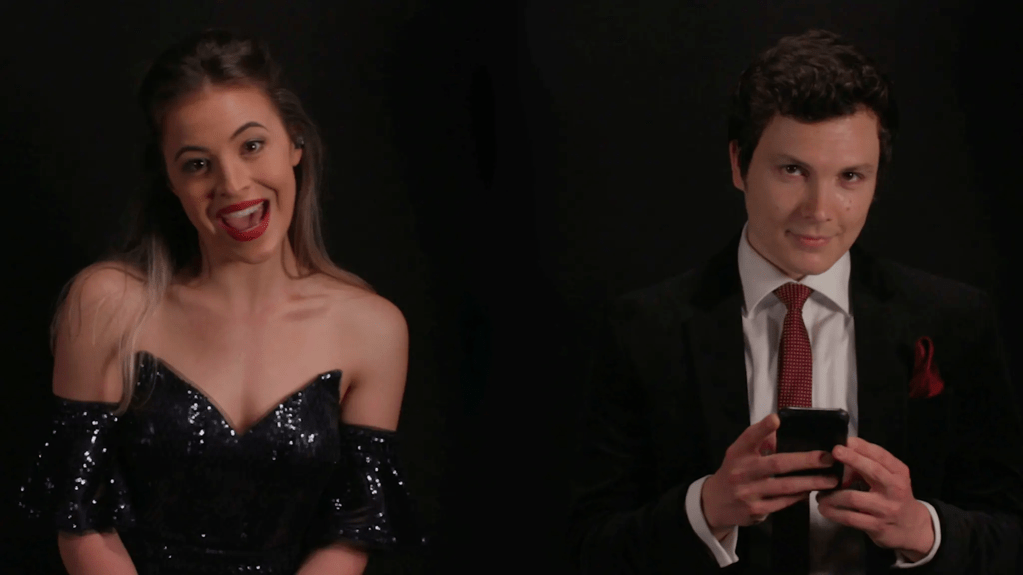
Georgia Wilkinson (left) and Nigel Huckle (right). Image credit: Gertrude Opera
The piece consisted of an hour of songs strung together in an unbroken sequence (with no distinct ‘story’, rather a series of fragmented moments). As the singers were seated for the entire hour with no variation on the black background with visual effects, sets or props, it was hard to maintain steely focus. The piece may have benefitted from being trimmed to forty minutes, with a greater focus on the ensemble pieces and more engaging solo numbers.
Highlights included the very sweet and nuanced duet written for two female voices, sung by sopranos Georgia Wilkinson and Morgan Carter. The characters meet in a café where one works, and the other sits and writes. The two voices were well paired, with the brightness and clarity of Wilkinson’s voice contrasting satisfyingly with the darker, supple strength of Carter’s. It was a refreshingly understated romantic moment. (And LGBTQI representation is always a nice thing to see!)
Another lighthearted moment was the interplay between Wilkinson and tenor Nigel Huckle. Huckle was given multiple ballads over the course of the hour, but displayed a deft comedic touch as the two characters playfully discussed whether he would bring her to a desert island if he could only bring three things (food and water excepted, of course). Instead of a direct proclamation of love, the man decides to name sunscreen as one of his three things- he doesn’t burn in the sun, but she does.
Lastly, I greatly enjoyed the sung conversation between two friends, performed by Huckle and baritone Sam Ward. I felt that Ward was under-utilised during the hour. Baritone stereotyping must’ve reared its head when the piece was being written, as Ward was cast as a sleazy figure in a song heavy on baseball/ sex metaphors (first base, second base, homerun, scorecards, etc), and as a terrible housemate receiving a lecture for being a slob and having noisy sex.
During this duet he was an engaging on-screen presence, in the more serious role of a friend who is running out of patience. On the other end of the phone is his old friend, seeking advice on how to proceed with a problem; he is ‘equally’ in love with two women, one of them the baritone’s ex-girlfriend. Golly.
An online opera festival which programs three recently composed works is certainly an exciting step in the right direction. I’m looking forward to seeing how arts organisations continue to evolve with the increased focus on digital platforms.
Back in July I put out a call to my immediate musical network, to ask who would be happy to be interviewed on how they have adapted during Melbourne’s lockdown. The last seven months have been disorientating and frequently exhausting. Prioritising your mental and physical wellbeing is more important than ever.
This prompted me to start an ongoing series called Creativity Amongst Crisis. Today’s subject is emerging composer Alex Olijnyk. Alex is an old friend of Fever Pitch magazine, having first been featured alongside her collaborator and co-director of Hyper Dynamic Studio, Hamish Keen (you can find that interview here).
That was back in April, which feels like centuries ago now. As Melbourne begins thaw out of Stage 4 lockdown, it’s no longer quite so impractical to contemplate what 2021 might look like for the arts.
Can you tell us a few sentences about yourself, what your musical practice is, and how you’re currently working on it.
I’m a screen composer with a background in contemporary classical and chamber music, currently based in Melbourne. I specialise in multimedia/sensory works and have collaborated with extraordinary creators from abstract painters, to filmmakers, graphic designers, and even chefs! I love blending orchestral elements with electronic textures, strong melodies, and improvisation.
Along with fellow composer and sound designer Hamish Keen, I have a firm called Hyperdynamic. We handle sound and score for film and other media, and currently have multiple short films in the pipeline which is very exciting! I am also in the process of composing several commissions, but these are solo projects.
What have you found to be most challenging aspects of this time of COVID-19, as a composer/ orchestrator and more generally day to day?
I think one of the hardest things was the grief I felt for a year that I was looking forward to personally and professionally. Recently I’ve been thinking a lot about a party that I went to in December last year. It was a warm night and I was having a drink in the backyard of a mate’s place. We spent hours and hours talking about what we were going to do this year – what we would learn, what we would make, who we would meet… It seemed so exciting at the time.
Looking back, the plan we made is so completely different to how life turned out. I still want the things that I hoped for in that alternate universe 2020, but they have been put on hold. It’s interesting to think there is music that I would have written, projects that I would have worked on in that other time that will never exist now. The reverse is also true. I’ve had opportunities that I wouldn’t otherwise have had- chief among them, the chance to get to know every nook and cranny of my apartment! Still, sometimes I feel a sort of sadness for the music that I’ll never write or hear because of how this year has progressed. Additionally, I feel a lot of anger for the music the world will never hear because artists didn’t have the government support they needed during this time and have essentially been forced out of the industry.
Have you learnt anything specific that you may not have been forced to learn, were it not for COVID-19 restrictions and the flow-on effects?
Oh definitely. The main thing has been learning how to collaborate with other creatives over the internet. Before 2020, I had these amazing workflows set up that have since been completely trashed by the pandemic.
For example, in August Hamish and I were working on a short film called ‘Glasshouse’. We had to learn how to compose together remotely. Pre-Covid we would’ve been sitting in a room together bickering about chord progressions, or whose first draft of a track has an appropriately judicious serving of “ooft”. Now we’re sending each other files back and forth every few hours, while neither of us has full access to the other’s hardware, plug-ins, or instruments.
At the end of that project we realised we had sent each other over 250GB of music all up. My computer was very mad at me, and I was very mad at the NBN. Despite this, it was great to get a lesson in collaborating remotely. It’s fairly common in the film industry for the director to live in one country, the composer to live in another, the orchestrator in another and so on. They may meet face to face only a handful of times. So it’s good to have that practice and develop ways of working efficiently and creatively over distance. I’m not sure I would have had the reason to do that so soon in more normal times.
Do you have any projects in the works you’d like to share?
The film ‘Glasshouse’ that I mentioned earlier recently premiered at Adelaide Film Festival. If you want to listen to our music from that (or anything else we’ve written) it is on our website.
Hamish and I are also (frighteningly) busy from November through to April next year as we are working on some really cool new films. I’m also personally working on a commission for the Victorian Youth Symphony Orchestra for which I am super excited. As a composer, it’s not often that you get to have a full orchestra at your disposal!
Lastly, for those who didn’t make it to my collaboration with the restaurant Matilda late last year, the recordings (featuring the extremely talented Invictus Quartet) are finally up on my own website.
How do you sustain hope for the future, or overcome periods where you feel less motivated?
It goes without saying that this year has been challenging for pretty much everyone. That is particularly true for those working in the arts. Not only has the pandemic struck at the very core of the industry – i.e. people sharing musical/artistic experiences face to face – many creatives have insecure or contract-based work and therefore haven’t received the kind of support they deserve. Personally I’ve been relatively OK, and for that I’m very grateful.
As for motivation, I am a natural procrastinator and work in fits and starts. How much a blank page terrifies me depends on the weather, the COVID numbers, what I had for breakfast, etc, but what I have found to be both a source of motivation and hope is collaboration. It’s hard to believe that everything will always be awful forever-and-ever when you’re deep in a three-hour conversation about music, about beauty, about stories. When you have somebody else to bounce ideas off, to inspire you, and yes, to make sure you make deadlines, everything seems more possible.
Back in February I published a piece called Sometimes Pessimism Is All You Will Feel. The title says it all. I’d like to think I am a naturally hard-working person who is capable of using a positive mindset to get things done. But shit, sometimes pessimism is all I feel. The piece was predominantly focused on many reasons the performing arts industry in Australia can be a hard place to thrive (scarcity of jobs, funding, etc, etc).
Unsurprisingly I’ve found it hard to shake that feeling lately, to the point where I find myself experiencing bouts of frustration and anger where I feel like I could scream. After all, there’s a lot to be angry about. For the sake of thematic cohesion, I will be limiting my discussion to the performing arts industry (rather than the countless disasters- economic, environmental, racial, cultural- plaguing the world in 2020).
Sometimes I truly feel like giving the middle finger to those who post relentlessly optimistic statements on social media, talking about their hope that the performing arts will emerge out of this global pandemic more valued than ever before. I really want to entertain those fantasies, but I don’t. I think if you’re posting something like that you must either be intentionally putting blinkers on for the sake of promotional cheeriness, or completely deluded.
Photo credit: Stella JJ
On one hand, we have the systematic undermining and unconscionable price-hiking of arts degrees by universities and the government. After years of being told that humanities and performing arts-based careers aren’t legitimate contributions to society, we’re also being told that we’ll have to plunge ourselves in thousands of dollars of debt in order to pursue them. This doesn’t square well with universities pocketing this money while simultaneously paying lecturers peanuts and hacking away at student resources. Monash University recently announced plans to cut over 100 subjects, including its entire Musicology and Ethnomusicology specialisations.
On the other hand, we have the questionable behaviour of directors of major arts organisations such as Opera Australia. OA has historically received a lion’s share of government subsidy, but in recent years has drawn criticism for consistently out-sourcing lead roles to international singers. This became so flagrant that in 2017 there was a government review of OA’s finances and practices (along with Opera Queensland, State Opera of South Australia and West Australian Opera). The review found that this hiring practice resulted in a significant reduction in opportunities for Australian singers, and proposed a $200,000 fine if these national opera companies could not “produce an appropriate balance in the employment of Australian versus non-Australian artists”. That’s embarrassing.
Over the past month it has been revealed that OA is being taken to Fair Work commission by a number of former employees, after making 40% of its permanent and contract staff redundant. This happened despite OA receiving Job Keeper, a government payment with the express purpose of preventing staff cuts during the pandemic.
This pattern of profit-driven, short-sighted behaviour has been contributing to the atrophy of the Australian performing arts industry for years.
Photo credit: Stella JJ
For the record, I’m not completely disdainful of an optimistic approach. I think there is a real time and place for it. Just like there is a time and place for the ‘uglier’ emotions on the spectrum. Feeling anger or even fury at the state of the world is not only valid, but it can teach you something. Obviously, it’s not healthy if it begins to overwhelm your life. That’s the balancing act.
In this age of buzz words, one has emerged that touches on this concept. ‘Toxic Positivity’. Like all buzzwords designed with attention-grabbing in mind, it’s a tad heavy-handed but the behaviour it refers to definitely exists.
‘Toxic Positivity’ is the idea that a positive attitude is a shield you can never take down; it takes ‘good vibes only’ to its most extreme conclusion. There comes a point where this approach is not only unhelpful, but actively counter-productive. Studies have shown that emotions are like inflatable pool toys; trying to suppress them will only make them pop up again even stronger.
If you’ve gone through something distressing or painful, you might have noticed that people can become incredibly uncomfortable when they don’t know what to say. Many revert to the default setting of trying to be as upbeat as possible. Perhaps it’s a sentiment about ‘moving on’ or ‘needing to look on the bright side’, or reminding someone that bigger problems exist. While this can be well-intentioned, minimising or dismissing someone’s pain is harmful.
The response that angers me the most is ‘Everything happens for a reason’. This motto neatly sidesteps the fact that shitty things happen to good people who work hard and do all the ‘right things’.
Photo credit: Stella JJ
I suppose what I’m getting at is, as sensible, tough-minded and hard-working as you want to be, there is nothing wrong with letting yourself feel the full range of ‘icky’ human emotions. It’s completely normal and often the quickest path to getting through it and moving on. Wallowing sometimes is a great idea! (Ice cream and pajamas optional)
In regards to my newly persistent pessimism condition, I’m trying to remember that moments of anger can help you work out the things you really care about, and give you the kick up the butt to try and make those things happen.
I’ll leave you with an excerpt I stumbled across recently from Madelene L’Engle’s novel The Wind in the Door:
“With my intellect I see cause for nothing but pessimism and even despair. But I can’t settle for what my intellect tells me. That’s not all of it.”
“What else is there?” Mrs Murray’s voice was low and anguished.
“There are still stars which move in ordered and beautiful rhythm. There are still people in this world who keep promises… That’s enough to keep my heart optimistic, no matter how pessimistic my mind.”
I was recently approached by Morgan Carter (they/ them), an emerging soprano who will be taking part in Gertrude Opera’s online iteration of their annual Yarra Valley Opera festival. The festival is now in its third year and like the entire performing arts industry, has been forced to re-invent itself over the past few months.
Gertrude Opera is a not-for-profit opera studio which uses “earned income from events and concerts to pay professional repetiteurs, directors and industry professionals, and give financial support to selected Young Artists”. Morgan is one such Young Artist with the company in 2020, and over the last six months has experienced coachings, rehearsals and collaborations virtually.
I am always excited to see small and medium-sized companies mount new works, and the Yarra Valley Opera festival has an intriguing program on offer. The line-up features three newly composed chamber operas: Kate Kelly, based on the life of Ned Kelly’s sister, written for five singers, clarinet, violin and cello; Together, Apart, which sees characters navigate dating and relationships in a cabaret format; and Love Fail, a multi-media homage to the tale of Tristian and Isolde. The festival will take place from October 16th -25th, with performances being available to watch for 28 hours from the advertised start time.
I had the chance to ask Morgan how they have adapted to Melbourne’s ongoing lockdown as a developing artist. You can follow Morgan’s singing adventures further through their website and Instagram. The full program of the Yarra Valley Opera festival and links to tickets can be found on the Gertrude Opera website and Facebook page.
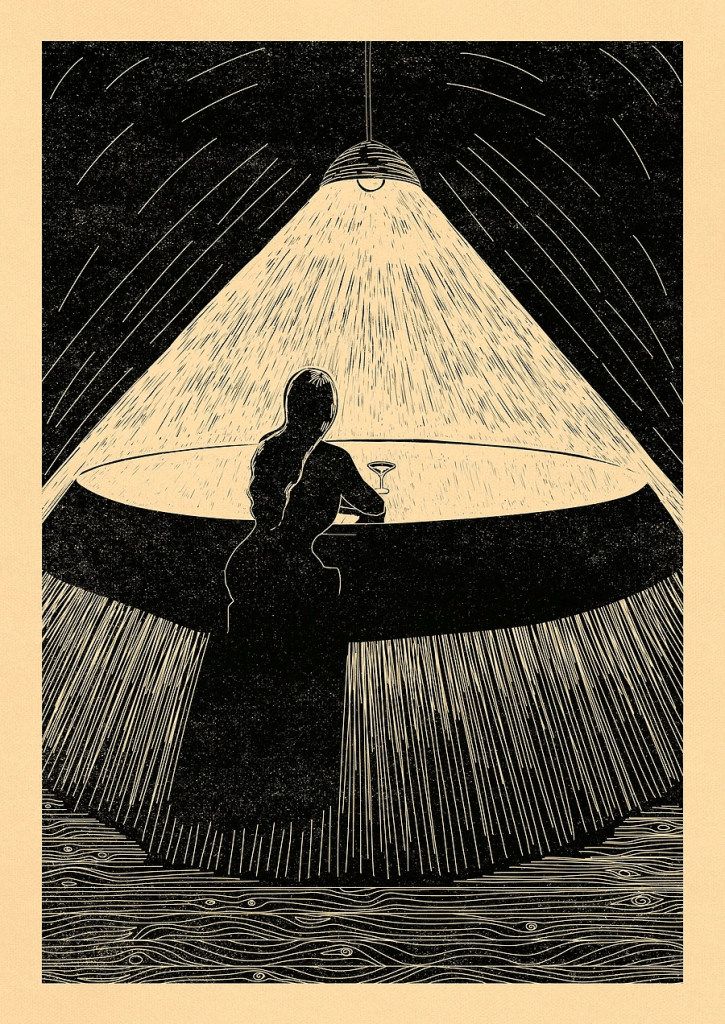
Digital Illustration for ‘Together, Apart’by Melbourne artist Jess Reddi Coronell, commissioned by Gertrude Opera. You can follow her work on Instagram and Twitter.
Can you tell us a few sentences about yourself, what your musical practice is, and how you’re currently working on it?
I’m a twenty-four-year-old soprano currently based in Melbourne. I knew from a young age I wanted to become a performer, and when I was fourteen I performed my first role, Glinda from the Wizard of Oz. During my secondary education I sang with the Australian Youth Choir, The Arts Unit Senior Singers, and the Sydney Philharmonia Choir.
My interest in opera grew exponentially when I saw my first opera, Giasone by Francesco Cavalli in 2013, a rarely performed pre-baroque opera. The production I saw was funny, tragic, and beautiful… After that night I knew I wanted to do what they did for a living: get on stage in funny and amazing costumes and make people laugh and cry.
Since graduating from Sydney Conservatorium of Music I have been performing non-stop around Australia, Italy, Germany, and China. In November 2019 I moved to Melbourne from Adelaide, where I had been an Emerging Artist with State Opera South Australia. Melbourne always seemed like the place to be for the arts. And then COVID happened! Since lockdown I’ve been having zoom coachings with fabulous singers all over the world, making the most of my time at home.
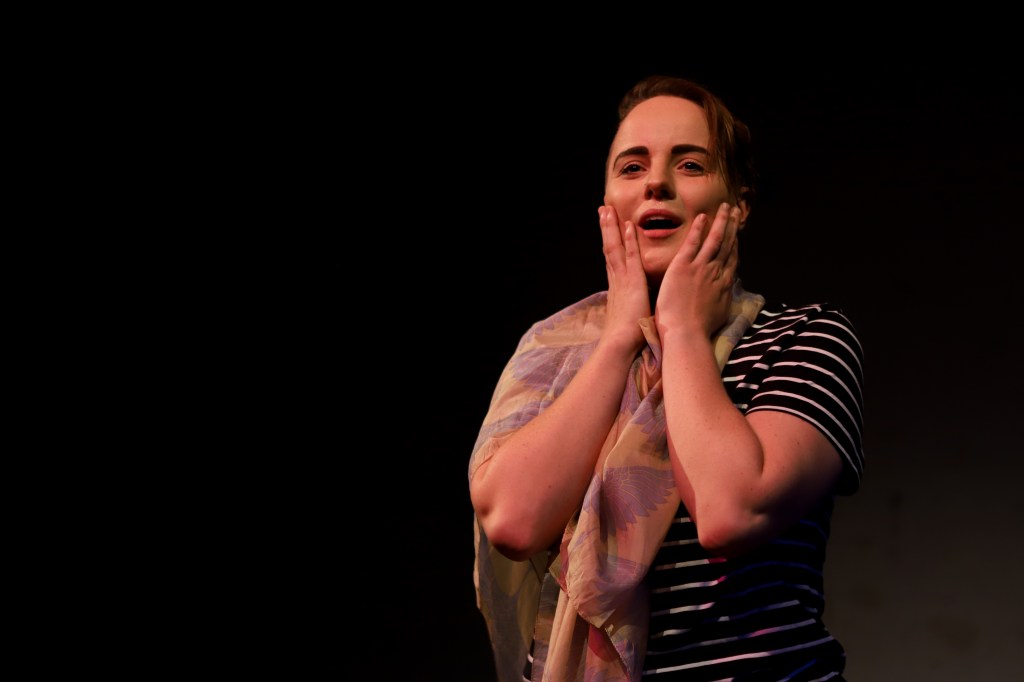
Performing as Hannah After in Gertrude Opera’s 2020 production of ‘As One’. Australian premiere of chamber opera by Laura Kaminsky (libretto by Mark Campbell and Kimberly Reed).
What have you found to be most challenging aspects of this time of COVID-19, as a performing artist and more generally day to day?
As an artist, it’s been extremely difficult to find the motivation to practice and work on new repertoire, especially knowing full well that I won’t be performing for a live audience anytime soon. When there’s nothing to work towards, it’s very easy not to work…
During the first lockdown I barely sang, because all of my performances for the year had been postponed and the whole situation was a lot to deal with. In terms of day-to-day, the most challenging thing would have to be finding a schedule. It’s very easy to lie in bed all day when you live alone and have nowhere to be (and nobody to hold you accountable)!
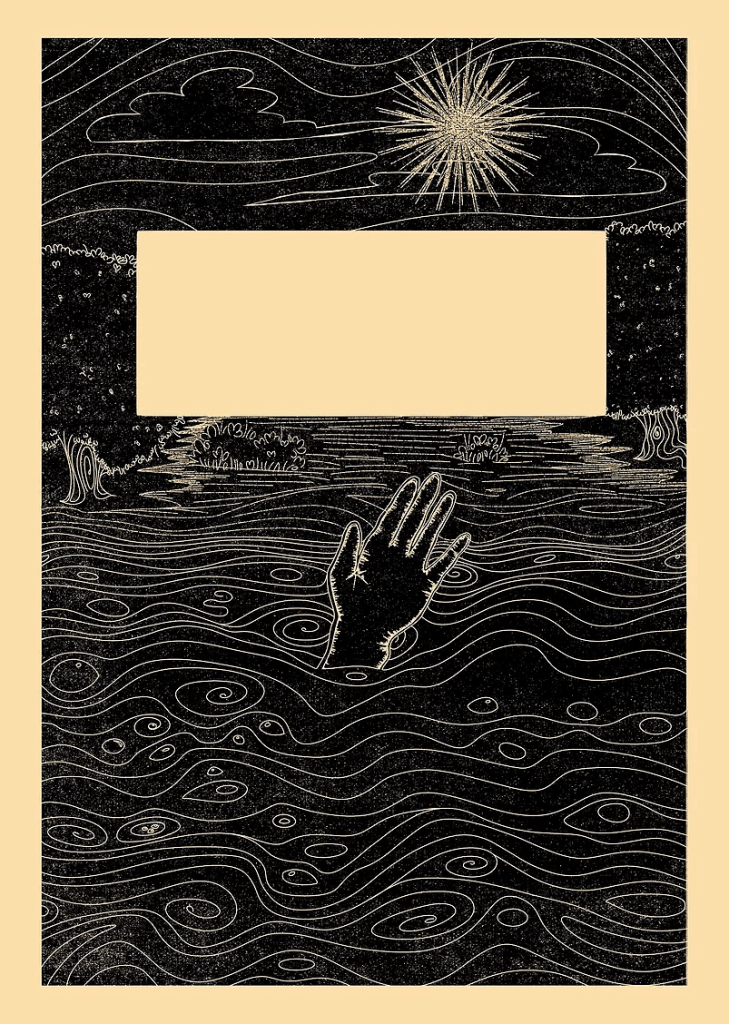
Digital Illustration for ‘Kate Kelly’ by Melbourne artist Jess Reddi Coronell, commissioned by Gertrude Opera. You can follow her work on Instagram and Twitter.
You are a recipient of a scholarship with Gertrude Opera as a young artist. Later this month you will be participating in the company’s Yarra Valley Opera festival, which has been taken online. How have you navigated the rehearsal process in this socially-distanced time in Melbourne?
I am very grateful to be a Gertrude Opera young artist for my second year and to be the recipient of the prestigious Gertrude Johnson Fellowship for 2020. Before the lockdown, it allowed me the opportunity to work with some amazing artists face-to-face; and now, during lockdown, via zoom!
We have used this platform for many of our rehearsals for the festival, with readthroughs and coachings. Just the other day we met with our musical director, Patrick Burns, and artistic director, Linda Thompson, to discuss the remaining pieces we need to record and get answers to any musical questions.
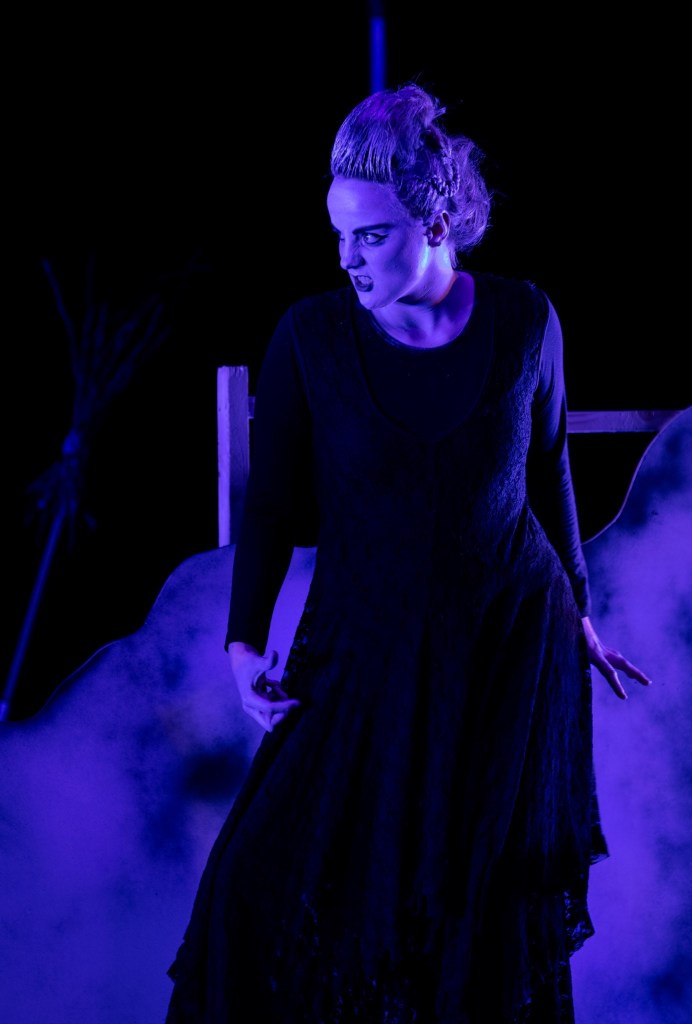
Performing as Witch 3 in Gertrude Opera’s 2019 production of ‘Verdi’s ‘Macbeth’.
During the festival you are performing in ‘Together, Apart’, a newly composed chamber opera. Can you tell us a bit about this piece?
Together, Apart is a series of fourteen individual pieces by Nicholas Gentile and Lincoln Hall. The work as a whole follows four young adults as they navigate their way through life, relationships, and living together. There are two male characters and two female characters, and the piece features an interesting love triangle, an aria about Tinder, and an intervention!
Do you think it’s important that the artform of opera adapts in the 21st century? If so, what would you love to see more (or less) of?
Definitely. Opera has been around for centuries, and anything that has been around that long is bound to need dusting off and refurbishing every now and again. The advances in technology in the 21st century has allowed the artform to adopt a much needed new medium and depth to performances.
Performing as Hannah After in Gertrude Opera’s 2020 production of ‘As One’. Australian premiere of chamber opera by Laura Kaminsky (libretto by Mark Campbell and Kimberly Reed).
I’ve seen productions that utilise video backdrops, LED screens as props and set, iPhones as a lighting technique, and even emojis inserted into surtitles! It’s these sorts of directorial choices that are going to draw new audiences to a show, perhaps even people who have never seen opera before.
The Yarra Valley Opera Festival this year is a prime example of utilising technology to our advantage. We couldn’t have the festival in person, so we’re taking it online! Making it more accessible to larger audiences and appealing to a different demographic.
How do you sustain hope for the future, or overcome periods where you feel less motivated?
During lockdown, I’ve come close to throwing in the towel more times than I can count. It’s definitely hard to be a young artist (or any artist) during this time, seeing your entire industry be brought to the brink of collapse in the blink of an eye.
Whenever I mull over these thoughts, I remind myself why I sing in the first place. I love it! I love sharing a story and an experience, with total strangers in such an intimate way. Nothing beats the feeling of walking on stage, and any worries you’ve had throughout the day about life, finances, how you’re going to make a career out of all this, just vanish. That feeling when an audience laughs with you, cries with you, and breathes with you is something so special. There’s nothing else like it in the world.
And of course, the standing ovation! Every time I’ve experienced one it’s been monumental. It’s like having every emotion at once take over your body; you’re smiling but you feel like crying, and your heart is rushing and warm. That’s why I sing. To have that feeling every time I perform. It has taken a lockdown to realise I wouldn’t trade that for anything in the world.
Morgan Carter is an award winning British/Australian Soprano. They are currently a Gertrude Opera Young Artist and hold the prestigious Gertrude Johnson Fellowship for 2020. In 2019, Morgan was a participant in the State Opera South Australia James and Diana Ramsay Developing Artist Programme. They hold a Bachelor of Music from the Sydney Conservatorium of Music, where they were the recipient of two scholarships for performance excellence. Morgan is looking forward to returning to the Yarra Valley Opera Festival for 2020 and performing in; Together, Apart (Gentile), Kate Kelly (Carey), Ari-archi-tecture, and the opening Gala – At Home.
Morgan was excited to be performing the role of Sophie in Werther (Massenet) for BK Opera, however due to the COVID-19 global pandemic, this performance has been postposed indefinitely.
Their roles include Carmen (Carmen), Hannah After (As One*), Edith (Boojum!), Cherubino (Le Nozze Di Figaro), Suzuki (Madama Butterfly), Third Witch (Macbeth), Mrs Northwind (The Enchanted Pig*), Ottavia (The Coronation Of Poppea), Tessa (The Gondoliers), and Jefferson (Space Encounters). They have covered Amneris (Aïda), and Larina/Olga (Eugene Onegin). Morgan has numerous chorus credits, including; Fidelio, Le Nozze di Figaro, Madama Butterfly, Peer Gynt, Carmen, Orpheus in the Underworld, La Sonnambula, Aida, Tosca, Cunning Little Vixen, the Bartered Bride, Eugene Onegin, Hamlet (Brett Dean), and The Enchanted Pig* (Jonathan Dove).
Morgan is a principal artist with Gertrude Opera (2020, 2019), BK Opera (2020), State Opera South Australia (2019), Elephant in the Room Productions (2021, 2018), Australian International Productions (2018), the Mediterranean Opera Festival (2018), Co-Opera (2020, 2017), Emma Knights Productions (2018, 2017), and Rockdale Opera Company (2017). Morgan has been in the chorus for productions with Melbourne Opera (2020, 2019), and State Opera South Australia (2019, 2018).
Back in July, I put out a call to my immediate musical network to see who would be happy to be interviewed on how they have adapted during Melbourne’s lockdown. The last seven months have been disorientating and frequently exhausting. Prioritising your mental and physical wellbeing is more important than ever.
This prompted me to start an ongoing series called Creativity Amongst Crisis. Our subject today is young mezzo-soprano Syrah Torii. Syrah is currently undertaking her Masters of Music online, and has seen firsthand how institutions have been forced to shift their approach in this changing landscape.
Firstly as an intro- can you tell us a few sentences about yourself, what your musical practice is, and how you’re currently working on it.
I’m a young mezzo-soprano currently studying my Master of Music in Opera Performance at the Melbourne Conservatorium of Music. I studied Linguistics and Spanish for my undergrad, I love languages. I also completed a Diploma in Music in Classical Voice, which I initially began to learn about vocal technique so I could be a speech pathologist who worked with singers. Instead, my passion for voice and classical music blossomed! I love singing music from different countries and time periods, and in different languages.
What have you found to be the most challenging aspects of this time of COVID-19, as a performing artist and more generally day to day? Can you tell us a little bit about the experience of having your course converted from necessity to online-only education?
Due to COVID-19, two of my favourite parts of being a performing artist – rehearsing in-person and performing live – have been put on pause. All of my coaching sessions, lessons, assessments, competitions, and Eisteddfods are now held in the virtual world. While I am easily adaptable to change, nothing compares to the energy of a live performance. I still miss working in a rehearsal room with other people. In lockdown day-to-day, there is that blurred line between when I am ‘at university’ and when I am ‘at home’, but I’ve got a daily routine that I follow to keep things balanced.
Amelia Le Plastrier (left) and Syrah Torii in Melbourne Conservatorium of Music’s 2018 performance of Gloria. Photo credit: Drew Echberg
My course has been through a lot of changes this year – from moving online in first semester, to a few weeks of in-person rehearsals for Mozart’s Die Zauberflöte back in June, to back online for second semester – but my cohort and the staff have been very resilient through these changes! It’s tough that you don’t get the full experience of working with people in person, and singing over zoom doesn’t capture the richness of sound. Despite these challenges, I think we’ve managed really well and made the most of these unique circumstances. We also made a film clip of the Brindisi from La traviata which was shared on The University of Melbourne’s Facebook page (https://bit.ly/3lggp1l), and it was received very positively by friends and strangers alike. I’m glad we could bring joy to people in these uncertain times!
Have you learnt anything specific that you may not have been forced to learn, were it not for COVID-19 restrictions and the flow-on effects?
Since live performances are on hold at the moment, the only way we can ‘perform’ is through video, so out of necessity I’ve delved into the world of self-taping, video editing, and sound recording and mixing. It’s been fun to get to know the tech side of performing, and it’s a skill that will definitely be useful in the future.
Do you have any projects in the works you’d like to share?
Our Masters course is currently working on Die Zauberflöte, and we’ll soon be meeting in person to record and film the scenes. I’m playing Third Lady and Third Boy – which involves quite a lot of German! It has been a few months since we were originally meant to perform the roles, so I’m excited to bring a fresh perspective to my interpretation. I’m also looking forward to singing with other people again!
Performing in Divisi Chamber Singers’ 2019 concert Tallis to Tavener. From left to right: Lisha Ooi, Syrah Torii, Alex Owens
How do you sustain hope for the future, or overcome periods where you feel less motivated?
I engage with other artists’ work for inspiration. Recently, the Met Opera Nightly Opera Streams helped me get out of a slump, and earlier I was listening to a lot of Jacob Collier. I also love watching movies as I learn about ways of expressing that can be applied to my work. Hope and motivation can so easily be buried beneath pandemic related anxiety, sadness, and frustration, but lifting my head and witnessing other people’s work reminds me of why I love music and makes me hopeful again.









 Fever Pitch Magazine