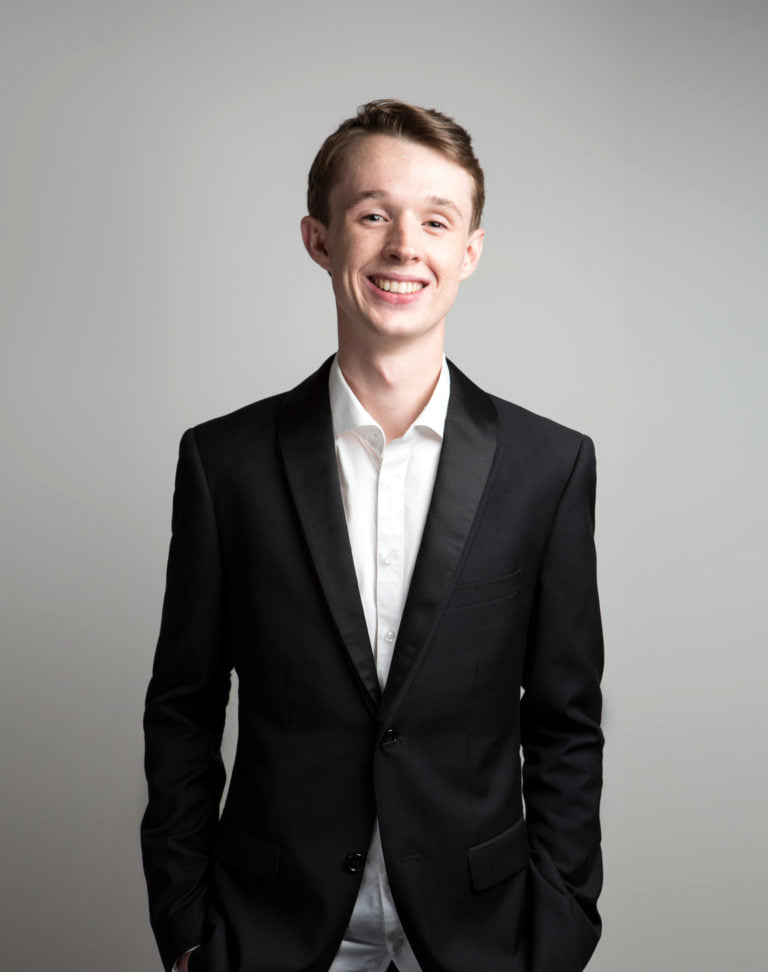
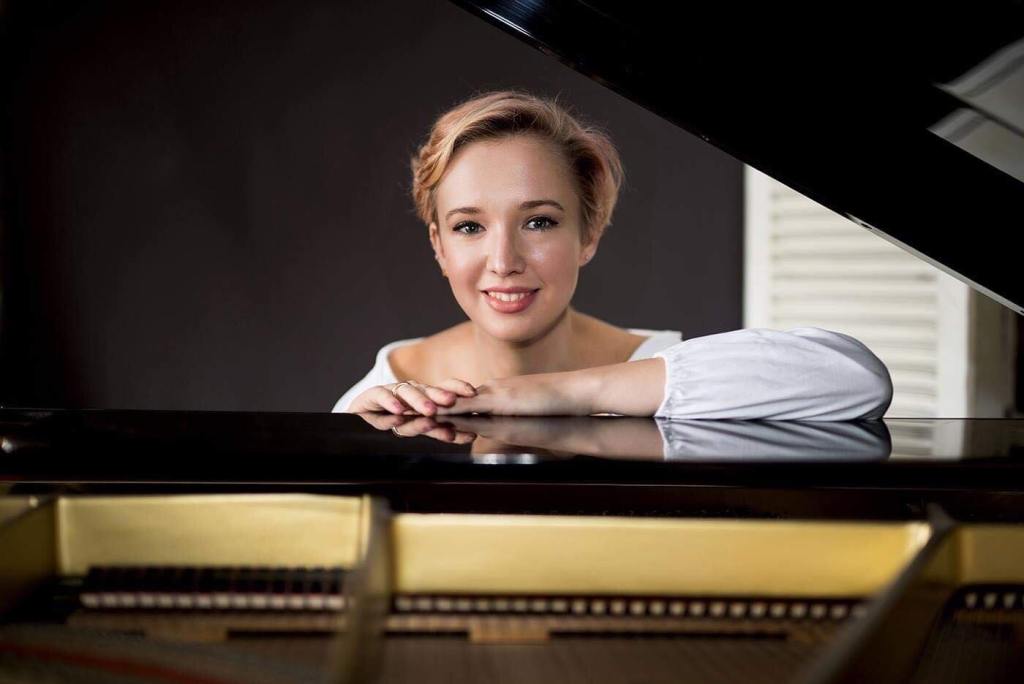
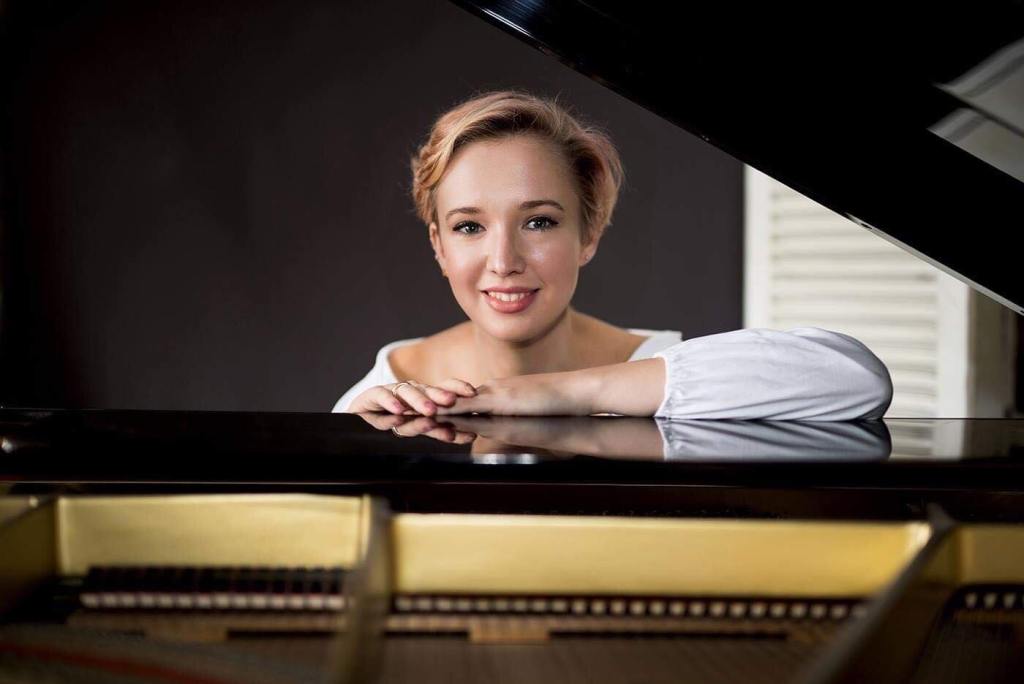
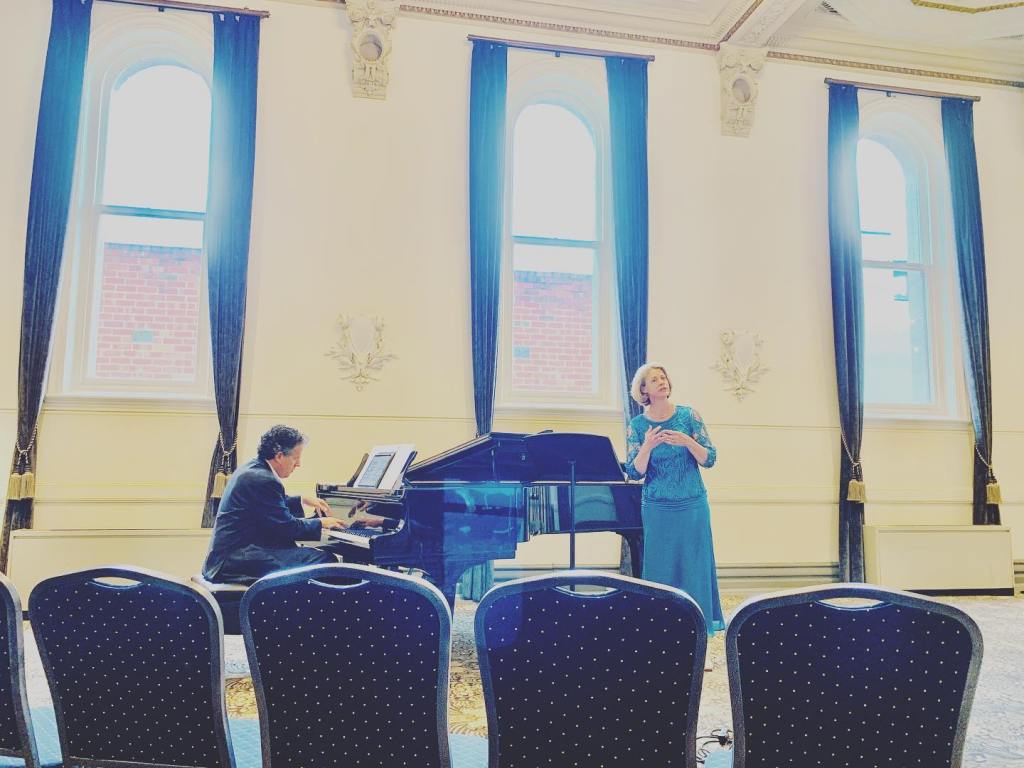
James Penn is an emerging conductor and tenor, who began his musical training as a boy chorister at All Saints church, St Kilda East in Melbourne. He holds a Bachelor of Music Performance from the Victorian College of the Arts, and a Graduate Diploma in Music from the Western Australian Academy of Performing Arts.
His roles
include Turiddu (Cavalleria Rusticana), Camille de Rossillon (The Merry Widow),
Lucentio (The taming of the shrew), Frederic (the Pirates of Penzance), Ralph
Rackstraw (HMS Pinafore), Don José (Carmen) and the title role of Werther.
In 2016 he co-founded BK opera in Melbourne with director Kate Millett. The company specialises in dark and intimate interpretations of classic operas.
Read James’ interview for Fever Pitch Magazine here
Follow BK Opera’s productions through their Facebook page here
On a rainy evening in November, down an alleyway off Sydney road, a concert of new Australian music was presented at Tempo Rubato, under the banner of New Music Sounds Good. Tempo Rubato is a new chamber music venue complete with a bar and fabulously industrial, no-frills, appropriately Brunswick vibe.
The concert was organised by composer Chris Healey, who enlisted a team of collaborators: fellow composers Sam Colcheedas and Luke Severn, and the performing talents of Adam McMillan on piano, Andrew Baird on flute, Luke Severn on cello, and the Invictus String Quartet (Rebecca Wang and Nyssa Sanguansri on violin, Jin Long on viola and Annika Cho on cello).
All of the pieces on the program could be described as ‘new’, with most of them written this year. The opening number was Richard Meale’s Melisande for solo flute, written in 1998. This piece was performed with elegant and fluid phrasing by Andrew, who managed to foster moments of dramatic tension amongst the fast-paced melismatic passages.
Flautist Andrew Baird
The second piece was Cello Sonata No. 2 (2019), written by Chris and performed by Adam and Luke. The lyrical melodic lines of the first movement showcased the dark, caramel-y tone and expansive warmth of Luke’s cello. Adam played with agility and nuance on the piano, and there was great communication between the two musicians. The following three movements provided a contrast in mood, with a lush and filmic second movement, a gently undulating third movement (the interplay between the piano and cello reminding me at times of the rocking of sea waves) and a sprightly, energetic fourth movement with a rousing finale.
Next up was Sam Colcheedas’ piece ‘Aromatic Fantasy’ for String Quartet in F Sharp (2019), played by
Invictus Quartet. Before the piece was presented, we heard a short summary of
its inspiration: memories triggered by scents, which can create a feeling of
‘euphoric nostalgia’. Sam’s bio in the concert program cited musical influences
such as Sergei Rachmaninov, Sergei Prokofiev and Erich Korngold. So it made
sense that the piece was melodic and stunningly evocative. The quartet produced
a wonderful sound and played with disciplined communication.
Invictus Quartet. From left to right: Rebecca Wang, Nyssa Sanguansri, Jin Long, Annika Cho
After a short interval we heard Trio for Flute, Cello and Piano (2019), the second piece composed by Chris (played by Andrew, Luke and Adam). The trio was dedicated to the memory of William Von Witt, a friend of Chris’ who tragically died in an accident. The two movements were entitled The Day’s Long Journey Towards Dusk and Adagio- Towards Peace, with Chris describing the trio as a ‘time-lapse in musical form’. The three musicians were well balanced as they crafted a range of tonal colours and rhythmic shapes. The final movement played with the agile brightness of the flute contrasted against the stormy darkness of the cello.
Pianist Adam McMillan
The concert concluded with Luke Severn’s piece When the World was Young, for piano and cello. There were moments of quiet tenderness in the piece, as well as more tempestuous and extravagant passages, which called to mind a Russian sensibility.
Composer and cellist Luke Severn
It was an exciting experience to see young musicians play new music by emerging Australian composers. When you hear a performer triumph over a particularly virtuosic passage, it’s fabulous to know the composer is in the audience. I hope we are able to witness more of these fresh artistic collaborations in the future.
One of the most challenging aspects of being a young musician is our inherent need for external gratification. But it isn’t our fault; our very discipline is built around a construct that forces the musician to chase external gratification. Will the audience like what you’ve played? Will your teacher rip you to shreds in your masterclass? Will you win that scholarship or award?
This somewhat toxic need for external gratification is reinforced by an
ever-changing set of goals and benchmarks the musician has to try and achieve. I
think it is worth remembering that there is no such thing as a true path to
‘perfection’ (because absolute perfection cannot possibly exist), and that you
can find your own path to success. Since music is so subjective, every teacher
you speak to will offer you different and often conflicting advice; a mentor
who absolutely loved what you did last week will be challenged by a mentor the
following week who absolutely despised that same approach. There is no specific
benchmark, no concrete determinate of success and no definitive way to become
an accomplished musician.
Within this musical proving ground, a musician’s mental health is what
suffers most. Life for young musicians is a seemingly endless cycle of
transition from the highest highs when you are receiving positive feedback, to
the lowest of lows when you are completely picked apart the very next day. So,
how can young musicians steel themselves against this most turbulent of
performance cultures?
Nathan pictured during rehearsals for Victorian Opera’s 2018 production of Rossini’s William Tell.
I have recently begun the slow process of rewiring my brain to filter
out and ignore negative feedback. Don’t get me wrong, technical feedback from
mentors is important and is reflected upon and considered, but positive
self-talk and the way in which I deliver that feedback to myself is far more
important. Phrasing and how I speak to myself adds up over time. If a teacher
tells me my phrasing is bad, my instinctual internal dialogue would be
something along the lines of “You knew that and you should have done better.
That wasn’t good enough.” I wouldn’t speak to someone else like that so why
would I speak to myself in the same way? A better approach is to focus on the
positives, what I have achieved in the process and the fact that the way to
improving has been made clear. Something along the lines of “You performed
optimally today and did the best you can. We have some opportunities that we
can work on to be even better next time, but you should be very proud of what
you achieved today.” One of these approaches is constructive.
Our internal dialogue and how we talk to ourselves is vital for long term success as a young musician. Your internal dialogue builds up over time, and making a conscious effort to be your own biggest supporter will do wonders for your mental health and your performance experience as a whole. There is some inherent truth in ‘what others think about me is none of my business’. Keep your eye on the prize and back yourself. If you’re a classical musician you can do something that a very small percentage of humanity can do, and you are already exceptional.
Nathan participating in radio station 3MBS’s performance program highlighting young musicians, The Talent.
Fever Pitch Magazine enquiries can be directed to Stella Joseph-Jarecki at stellamusicwriter.wordpress.com
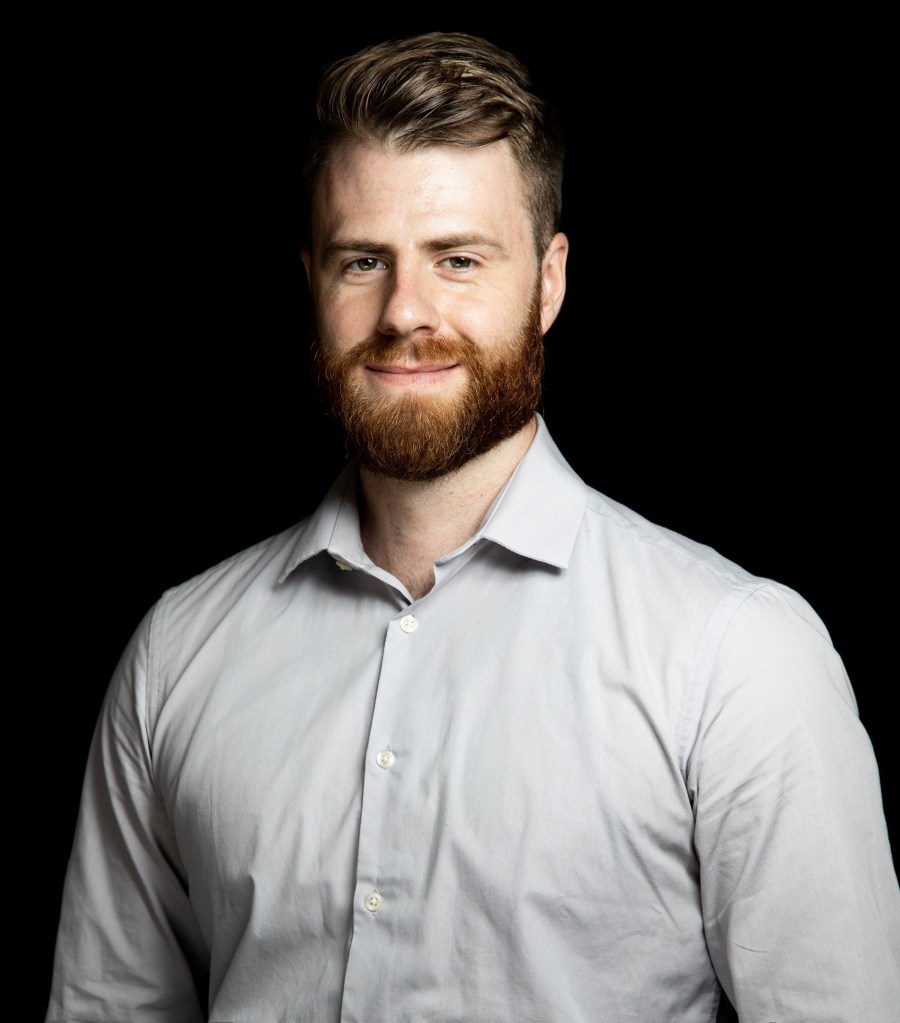
Nathan Michael Wright is a classically trained tenor with experience in both opera and music theatre. Nathan is currently studying his Bachelor of Music specialising in classical voice at the Melbourne Conservatorium of Music. Previous accolades include a 2017 Bachelor of Music scholarship for excellence from the Melbourne Conservatorium of Music, the 2019 Maroondah Singer’s Vocal scholarship, and many nominations and commendations from the Victorian Music Theatre guild.
Most recent performance credits include chorus in Victorian Opera’s William Tell and Parsifal, the Premiere Commissaire in Dialogues of the Carmelites and Sid Sorokin in the Pyjama Game.
Read Nathan’s opinion piece for Fever Pitch, Conquering External Gratification here
Keep up with Nathan’s singing adventures via Facebook here
During the last week of September, I had the chance to pick the energetic brain of soprano Phoebe Deklerk. Phoebe is a singer and educator who has produced a number of concerts, and we discussed the many challenges and rewards of juggling multiple musical careers. You can keep up to date with Phoebe’s singing adventures through her professional Facebook page here
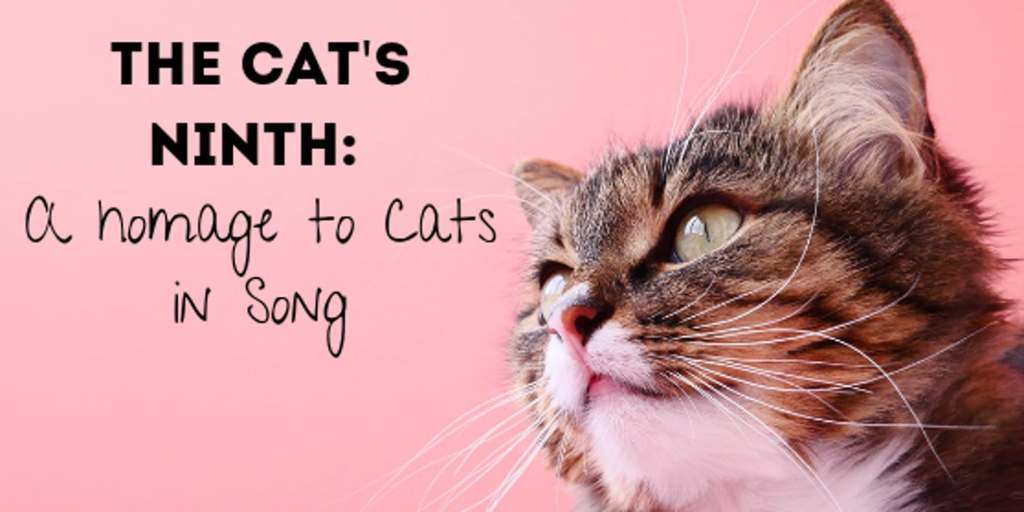
Phoebe’s latest concert is coming up- The Cats Ninth: A Homage to Cats in Song. A portion of each concert ticket will be donated to Maneki Neko Cat Rescue.
Sunday 10th November at Newland Community Centre, Coburg: Facebook event link here, Eventbrite link for tickets here
Friday 15th and Sunday 17th November, St Georges Anglican Church, Travancore: Facebook event here, Eventbrite link for tickets here
In regards to becoming a portfolio musician
with many projects in the works, pursuing a career in music education as well
as a music performance career… Was that something you planned from the outset,
or something that gradually evolved for you?
That’s a really big question, particularly because I decided I wanted to be an opera singer when I was twelve. So when I was twelve, I didn’t know that there would be multiple facets I could pursue, or that I was even interested in passing on my love of music.
It was through a series of events and circumstances, with my family also being involved in music, and my own experience with amateur and community-based singing groups, that I discovered that there was more that could be done educationally. Singing is what got me through my high school years emotionally, and I wanted to be able to share that. Teenagers will forever be forced to become adults, and music can help with that transition!
As for cabaret and concerts and the more performance side of things… It was only the realization that there wasn’t much going on, and that I couldn’t just wait for experiences to come to me. I never really expected things to be brought to me on a platter but there’s just so little out there. And the people who run concerts don’t often advertise for auditions or seek out people with different abilities, they like what they’re comfortable with.
So that sparked the desire to produce my own concerts and help other young artists gain performance opportunities. And importantly, have some say in the works that they perform. As young artists we do have some limitations, we’re still developing our technique and our ranges are smaller than what they might be in future… We have to pick our music well. So everyone I work with picks their own solo music and we collaborate when choosing ensemble repertoire.
Cabarets were something I’d always been intrigued by and after I saw a good handful, I just realised that I could do it. It’s not rocket science, it’s just performance and it’s storytelling. So I chose a topic that I was really passionate about to start with, which is funeral music. I’m passionate about that because I think not enough thought goes into it before people pass away. So when their family are taking care of that process, they don’t even have time to think properly. They just pick, you know, from the top twenty songs.
So after my first cabaret I was told that it was a skill that I had, and now I am under the wing of a cabaret club owner who wants to help me experiment and bring as much as I can to the stage through the form of cabaret. Which is really exciting! But had you asked me five years ago, if I would be doing all these things including the workshops and the online singing courses, I would probably have said, pick two out of the five or six.
Phoebe performing her first cabaret show, Funerals with Phoebe, at The Butterfly Club. Staged as part of The Melbourne Fringe Festival, 2018.
In having so many projects at
different stages of development, how do you approach time management?
That’s a great question, time management is something I’m
really passionate about. You can often find me rewriting my ideal schedule or
timetable. I get all colour-coordinated with a planner that sits above my desk.
So what I do is I calculate how much time a project will take. So for example, a concert takes fifty hours of my time for admin, social media, getting people, meeting people, hassling them to send me their music, blah blah blah. So I separated the divisions for that and came up with a formula. Putting singing practice aside, practice is just assumed, I need six to eight hours of work a week, for projects that are performance-based.
For things that are more business-related, they fit into the time I spend on my business. So the workshops, the teaching, the choirs, the online courses, they fit into my business and therefore my business time. With that side of things, the focus is more about the bottom line and getting leads, etc. So the focus is a very different with the business time and the performance or project time… but it seems to work well!
I use an online project management platform which really helps the process. It’s called Trello, and you can use it to create boards for different projects. On each board I have different categories: ideas, to do, doing, done, potential obstacles… They each have dates and checklists, it’s really handy. I also use doodle poll for arranging rehearsals, and various other things for collating information including Google Documents.
As a freelance artist who has to use, as you said before, your business brain, how do you find social media fits in with this?
Social media is imperative. It’s how everyone shares everything and I had no trouble with it initially. What I guess I still struggle with, is sharing on my personal page. I have a business page for everything that I do, but I’m still a little bit uncomfortable with sharing even selected things on my personal Facebook page. I also agree with the author of Beyond Talent, Angela Myles Beeching, that a mailing list is an artist’s best friend. A mailing list is one of the most valuable tools that we can have as performers and teachers, and just musicians in general!
That being said, Facebook ads do take a little while to get used to. It took me several projects to actually get some return on the money I was spending on Facebook ads. It’s trial and error, honestly. I was lucky enough to have my friend Teresa Ingrilli give me some training in branding and social media and values. How your personal values spread into the business side of things.
So I set up a social media schedule, and each week I try to post daily, or schedule posts to release daily. I share the heart and mind and soul behind the projects I have.
The thing with social media nowadays that is somewhat troublesome,
is that it always seems to portray only the good things. That’s something I actively
try to work against. So I like to show the vulnerable aspects of being a
musician, because we are so vulnerable and we have to feel to be artists. That
vulnerability lets people know that we are human and people can relate to that,
and they are more likely to trust me and what I produce.
Photo credit: MR Photography
What do you think are some of the most important qualities for someone who is crafting a portfolio career and wants to continue to diversify, besides their musical ability?
I would say joy and passion. But it really depends on the situation. This is going to sound so weird, but you wouldn’t catch me in a music school teaching singing. Because the niche that I like to sit in with my singing teaching, is really different to the typical singing teacher stuff. Of course I do warm-ups and technique, but it’s not about becoming better. For me it’s about empowering students to feel more comfortable using their voice, playing around with it, learning about the little aspects of the soul they might not have discovered without singing. That is something I’m really passionate about and I use my music to help achieve that.
And then it’s having the drive. Do you have the drive and persistent motivation to produce a concert? I don’t even look at the music that I’m going to be performing until twenty, thirty hours in. So I put in twenty or thirty hours of admin, of my own time, just trying to get the baby off the ground before I even get to do the juicy bits.
You have to like working with people and be good at managing people. Communication is so freaking important! We need to be able to communicate what we want, whether it’s a little speech before a concert or a workshop or a behind-the-scenes video about the meaning of a song… You need to be able to present eloquently and clearly.
I guess the big one which increases impact and reach is networking. We need to know how to communicate things and then actually go tell people about it. So I go to business networking events quite regularly and it has been great practice. I’ve come up with a little title for what I do, I call myself a ‘singing empowerment teacher’. So people know that I look at the empowerment side of singing and use that, rather than just assuming it is the usual teaching stuff.
Also, sharing. A desire to share what we love makes the admin and business side of stuff so much more meaningful.
Phoebe waiting backstage before performing her funeral-themed cabaret show at Perth Fringe Festival, January 2019.
That’s fabulous. There is so much
solid science emerging which completely backs up your perspective on how
singing allows people to grow in confidence and literally embrace their voice.
It lights me up when I do work with students like that. It’s
so beautiful.
How do you find the experience of
shifting gears between different vocal styles? I know you do a lot of classical
repertoire but also operetta, cabaret, music theatre. How have you found that
experience as a singer?
I haven’t had too much trouble with that, just because I’ve been doing it from a younger age. I remember when I was first doing performances for family and friends, I was never very good at choosing songs, so I’d say do you want a jazz or classical or music theatre song? And then they’d say they wanted one of each. Nowadays, I sing at aged care homes and I do the same thing. I sing an hour of music that ranges from jazz, to musical theatre, operetta, opera, art song… And it’s great practice, but it is hard work.
I find it a lot easier in performance. So in a cabaret sort of style, where it follows that very musical theatre aspect of singing… what you’re saying comes to an emotional peak, so it has to be sung. And then that song is well chosen and it makes it easy to sort of launch into song, and it doesn’t really matter what style that song is. When we’re performing, technique isn’t something we’re always thinking about, but I suppose some aspect of our mind is always conscious of it.
I also find that thinking about the storytelling, sort of makes the genre irrelevant, if that makes sense. Music isn’t broken up, it’s not separated into chunks, music is music. It’s just one big blob of goopy stuff! So I really don’t feel that there should be any gear shifts, but I can understand how people would perceive that.
So can you tell me about the thought
process behind the concert coming up? [At the time of interviewing, Phoebe was
preparing for a concert of predominantly French sacred music, entitled Contemplation
and Harmonie: The Divine in French Music. It was held at St. Mary’s Church in
Ascot Vale, in late October]
Well the concept of this concert was born from a parishioner at the parish that I sing at, St. Mary’s Church, taking me out to lunch and saying that she wanted me to produce more concerts. So I think this happened in April and I was like, okay, because the concert would take place in a church, it has to be about seventy to eighty percent religious music. I also have this weird thing with Ave Marias, where I just want to sing all of them, share all of them, to make people realize that there’s more than just two!
So I got baritone André Sasalu and organist Zac Hamilton-Russell on board and I was like, okay, what sort of rep do you want to do? Andre is a French speaker and I really like the composer Saint Saëns, so that’s what we went with. And Andre has introduced me to Jean-Philippe Rameau, the French Baroque composer, which is very exciting!
Photo credit: MR Photography
Can you name some of your favourite
vocal composers of the moment?
It’s hard to consciously give you my favourite vocal composers without having thought about it for a long time. But off the top of my head, Maurice Ravel is coming to mind. Ravel’s weird, but he’s beautiful. I love his intricacies and his music is just epic. We’re doing some Ravel at the in the cat concert, which is in November. We’re doing his cat duet from his one-act opera L’enfant et les sortilèges. At the moment I’m falling in love with the bel canto composers… the expression, the romance, the drama! The drama is musical, not necessarily just the text. It’s so rich. I really like romantic music. But I also do enjoy some more modern composers like Samuel Barber and Hugo Wolf, and Richard Strauss, you know, and there’s more!
Our last question is a meaty one. What do you believe is the future of opera in the 21st century? I’m passionate about the art form, but for it to have a future in Australia I think there needs to be a significant shift in the way that it’s supplied to audiences. I’d love to hear your thoughts on that.
Yes a good question. And it’s very valid.
Well with my business mind, I think well where does it work? Who’s got a good structure and a good system going? So, you know, let’s look at Vienna. The kind of audience members who don’t go to the opera here in Australia, go to the opera when they travel over there. And there’s definitely lots of contributing factors to that, one of which is, that’s where that type of opera was born.
But it’s also because there’s a beauty to those opera houses, they’re rich in culture, the architecture is really beautiful. And the ticket prices are much more accessible. We need cheap student tickets in Australia. I don’t understand why some companies won’t allow emerging opera singers to get cheap tickets. Even if we had to prove that we were a singer or perhaps flash them our Bachelor of Music or student ID, that sort of thing… Because it’s us! We’re passionate about it! We can bring friends, we can say, oh my goodness the staging was amazing, you’ll have to check it out, I know you’ll like this particular part of it…
Introducing my ex to opera, he didn’t like Wagner, but he loved Victorian Opera’s The Sleeping Beauty a couple of years ago, which had puppets. [Ottorino Respighi’s 1922 opera, staged by Victorian Opera in 2017]. He was an animator himself, so it inspired him! So I think sharing opera and getting opera in front of people who hadn’t thought about it because no one does. As a way of inspiring, because all artists know (fine artists, graphic artists, musical artists), we all know that we get inspiration from other art.
Victorian Opera’s 2017 production of The Sleeping Beauty. Photo credit: Charlie Kinross
And then accessibility…. The reason I am doing a cat concert in November is to help cat lovers discover classical music! It’s as simple as that. Bringing a topic that everyone loves, no one is scared of, and everyone has like small-girl-cute-excitement about, and introducing them to something that’s a little bit different, a little bit alien, through that… I think is one of the best ways to do it.
I don’t think we need to start having opera busked on the street, but if it was heard a bit more on the streets, I think that would make it much more accessible. People will be like, oh yeah, I heard that last week, oh yeah, I saw an opera singer busk at Christmas time. It’s not so alien and it’s not so detached.
Also, I think people pull away from classical music and opera in particular when it’s performed in venues that are religious. Not everyone is going to pull away from it because of that, but I certainly know that my dad won’t enter a church unless I’m singing at it, and there’s no Mass. So we could stage operas more frequently in venues that have no religious attachment, more modern venues. Refurbished factories, warehouses, natural amphitheatres, outdoor amphitheatres, botanical gardens… places that people feel comfortable and don’t feel like there’s an expectation of behaviour. I think that would be a good start.
I think having more of an online presence will also help. The only problem, from someone who has thought about doing it, is the cost of getting things filmed professionally. That would have to be absorbed into something, I don’t know what that something would be, because you can’t necessarily sell that fifteen minute opera online for however much it cost to make. So it has to be treated as a form of promotion, but I do believe it is necessary.
I also think there are other ways that we can lighten the mood of operas. I remember being shushed and I know that friends of mine have been shushed while at the opera when something funny actually happens. Why can’t we laugh? That’s just a bit ridiculous!
I think there are so many little things that would help to lighten the mood and make opera less serious. Even though the themes are dramatic, the whole air around it doesn’t have to be as serious as it currently is. I would love to see classical music and opera being performed in wine bars, in cheese shops, in places where there the mood is slightly more sophisticated than a pub, as long as the venue thought it was appropriate. I’m looking into this myself! Bringing opera and classical singing to the everyday person, to the places they go.
Phoebe Deklerk is a classical soprano with a passion for opera and art song. Studying music from an early age, Phoebe has combined her strengths in musicality, voice and performance to pursue a career in opera performance. Since finishing her Bachelor of Music (Performance – Classical Voice) in 2017, Phoebe has continued to train and develop her technique with teacher Sally Wilson. Phoebe has created several performances, including concerts in sacred music as well as a cabaret on funeral singing performed in Melbourne and Perth. Phoebe is currently creating her second cabaret, this time with a purely classical theme called Mozart Muses.
Phoebe also teaches private students, directs choirs and runs ten week courses for women to realise and release their self-expression, as part of her mission to give people the power to embrace and honour their voices.
Read Phoebe’s interview for Fever Pitch magazine here
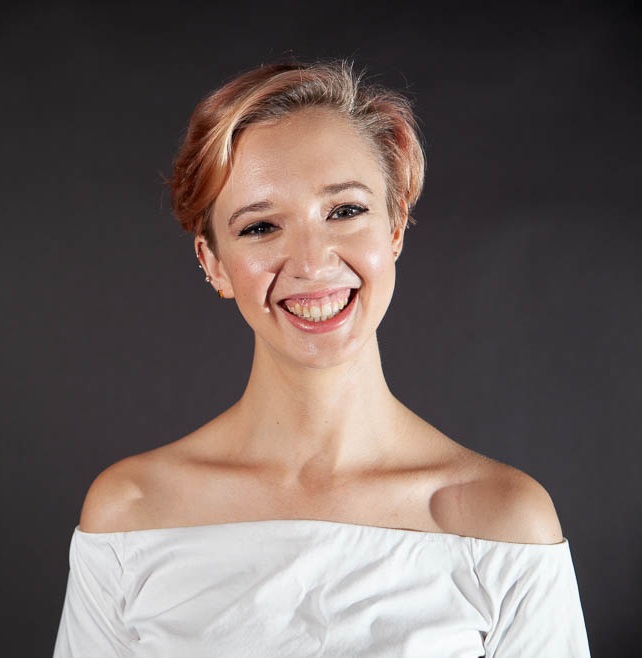
Stella Joseph-Jarecki wears many hats, due to her undiagnosed but highly suspected ADHD and her desire to have many projects running simultaneously (see?).
Predominantly, she is a writer and classically trained soprano. She is particularly passionate about breaking down the barriers to the arts that exist for many audiences.
When she’s not using her marketing brain, Stella works as a freelance arts writer across Melbourne and has written for organisations such as Limelight Magazine, Adelaide Symphony Orchestra, and Melbourne Recital Centre. in 2018 she completed her Honours dissertation at the University of Melbourne, focusing on musical symbolism in the film scores of Erich Korngold.
In 2019, Stella created the online music publication Fever Pitch Magazine. This blog was established to celebrate emerging musicians, music therapists, composers, educators, and administrators. Over a two-year period, Fever Pitch Magazine published 37 interviews with emerging creatives, 36 opinion pieces, and 14 reviews!
In 2025, Fever Pitch Magazine will be returning… stay tuned.
Stella is also a freelance makeup artist working across events and photography. (And earring maker, and painter, and…)
Come From Away is simply a remarkable ninety minutes of theatre. It proves a show can pick an absolute punch without an absolute spectacle, going without large-scale sets, lavish costumes, or complex special effects.
The show does not feature the traditional music theatre divide of a handful main roles and a crowd of chorus members. Instead, it is energised by twelve fantastic performers who are on stage for almost the entire show, with each performer in charge of portraying multiple characters.
Come From Away tells the stranger-than-fiction story
of the small town of Gander, Newfoundland, population 10,000, that suddenly had
to host 7,000 stranded passengers in the wake of 9/11. In the immediate
aftermath of the terrorist attack, all air traffic in or bound for the USA was
grounded. As the airport in Gander is one of the largest in the world (and was frequently
used back when US aeroplanes still needed to re-fuel before crossing the
Atlantic), a whopping 38 planes were forced to land there.
The townspeople of Gander and the stranded passengers use the forces of music and alcohol to lift their spirits after a long few days. Photo credit: Jeff Busby
While the events which spark the plotline are obviously tragic, the mood of the show never veers into sappy sentimentality. Instead it focuses on the human stories of resilience and making do in seemingly impossible circumstances. The patchwork of anecdotes from the townspeople and travelers are woven into vibrant songs. The actors would change roles with fluidity, sometimes with the simple technique of taking off/ putting on a certain jacket or hat.
The small but mighty band of eight musicians played with incredible skill and vitality, and kept me and my parents bopping our heads throughout the entire production. The musical energy was brought from the first seconds of the opening scene, the thumping percussive chorus Welcome to The Rock. Several numbers in the show, such as Heave Away and Screech In, channeled the traditional music of Newfoundland, a kind of fiddle-heavy folk music reminiscent of pirate sea shanties. (The traditional music of Newfoundland has its roots in Celtic music, I found an informative and concise article on this musical heritage here)
Englishman Nick (Nathan Carter) and American Diane (Katrina Retallick) form a bond over the course of the events in Gander. Photo credit: Jeff Busby
Being a non-traditional musical, the production didn’t
feature formal dance choreography so much as stylized movement and theatrical
blocking of the actors. Many of these techniques would be very familiar to
anyone who has taken a basic acting course, such as having two rows of wooden
chairs set up to represent the interior of the plane, and a near constant flow
of performers weaving around each other as they shifted from scene to scene,
maintaining the energised dynamic of the show without any sagging between the
developments of the story.
Gander citizen Beulah (Emma Powell) comforts passenger Hannah (Sharriese Hamilton), who is yet to hear news of her firefighter son in the wake of 9/11. Photo credit: Jeff Busby
One of the rare solo musical number was sung by Beverley Bass, a female air captain of one of the flights grounded in Gander (played by Zoe Gertz). The mood of Me and the Sky was reflective and triumphant, as Beverley told her story of persevering in a profession where only a tiny portion of flight captains are female. The song hits its peak with a killer belting section, very musically appropriate as she sings of soaring through the sky and finding her wings.
With only a bare-bones set of wooden chairs and tables on a revolving
stage, the cast and crew of Come From
Away created an immersive and wonderfully entertaining musical experience. Despite
the sobering plot device, the musical was uproariously funny, with just the
right amount of inspirational sprinkled in.
I encourage absolutely everyone to see it. Even if you are
someone who doesn’t normally enjoy big-budget musicals, the unorthodox
character of Come From Away is sure
to appeal.
Gander mayor Claude (Richard Piper) holds a ceremony in the pub to make some of the stranded passengers honorary Newfoundlanders. Photo credit: Jeff Busby
Cast:
Nicholas Brown: Kevin J & Others
Nathan Carter: Nick & Others
Zoe Gertz:
Beverley & Others
Sharriese
Hamilton: Hannah & Others
Doug Hansell:
Kevin T & Others
Kolby Kindle:
Bob & Others
Simon Maiden:
Oz & Others
Sarah
Morrison: Janice & Others
Richard
Piper: Claude & Others
Emma Powell:
Beulah & Others
Katrina
Retallick: Diane & Others
Kellie Rode:
Bonnie & Others
Band:
Luke Hunter:
Musical Director, keyboard, harmonium, accordion
As I settled in to watch Gender
Euphoria at the famous Spiegeltent, I noticed a sense of jovial expectation
in the air. As the audience were excitedly chatting away, and I took in the
colourful flashing lights and disco balls strung up around the perimeter of the
tent, I felt more like I was participating in a rowdy party than getting ready
to watch a performance.
Gender Euphoria assembles together the largest transgender and gender-diverse cast ever featured on a main stage in Australia. It is a true variety show, with a range of short and sweet performances featuring everything from dramatic monologues and aerial gymnastics, to lip-synching and sung ballads.
The capable ringmaster for the night was cabaret singer Mama
Alto, who took to the stage in many stylish and sequinned gowns throughout the evening
with her signature flowery headpiece. She addressed with the audience with delightfully
pun-ny alternatives to ‘Ladies and Gentlemen’: ‘Lollies and jellybeans’ and
‘They-dies and gentle-them’. As she reiterated in her opening and closing
monologue, only machines think in binary, and after all, we are ‘delightfully,
dizzyingly, deliciously human’.
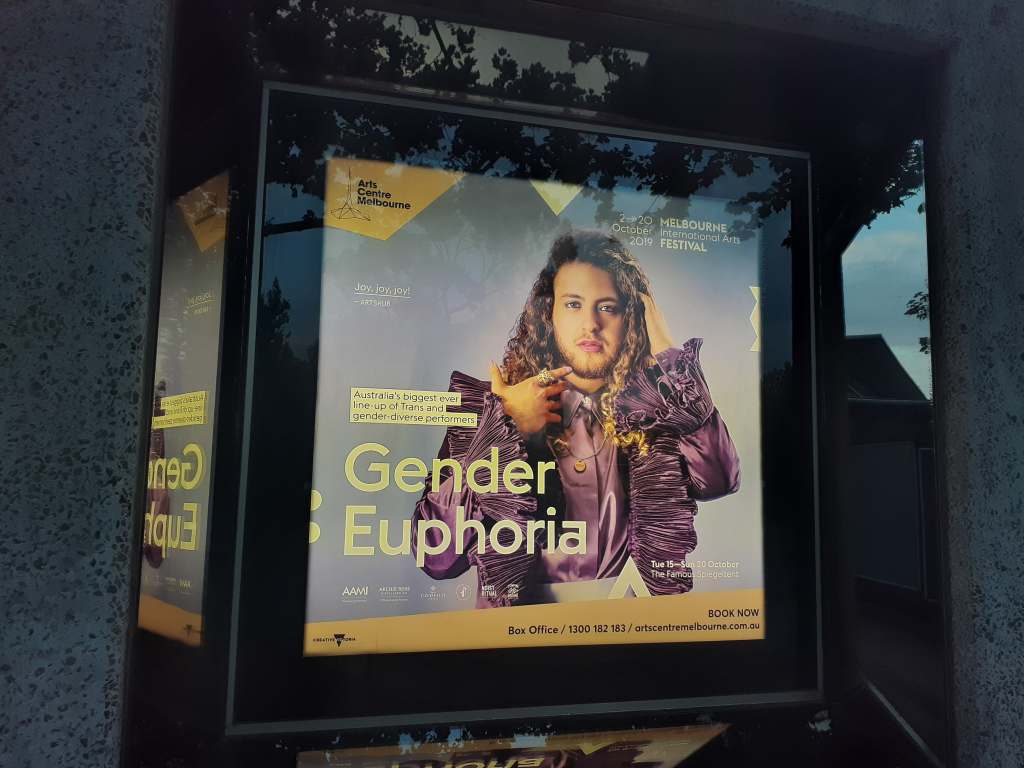
Nevo Zisin featured on the poster outside the Arts Centre.
While I was expecting bold and brassy song and dance, which
was certainly featured in the show, I was happily surprised by the eloquent and
sharply realised spoken word performances. Performers Harvey Zielinski, Fury,
Nevo Zisin, and Melbourne special guest Nikki Viveca all delivered powerful and
insightful monologues on their experiences as transgender and gender diverse
people. A memorable vignette from Zielinski’s speech was a time he was waiting
for his food outside a fish and chip shop, in the midst of his female to male
transition. He was then approached by a male customer who called him ‘mate’ and
began earnestly talking at him on the topic on finance, prompting Zielinski to
wonder: ‘At what point did I become his audience and not his enemy?’
Fury spoke in a charismatic fashion on the nature of transgender
stories, and the fact that they are at their core, human stories of growth, revelation
and change. They spoke powerfully on the strangeness of the belief we commonly
hear in society, that we won’t be real until someone loves us enough.
Nevo Zisin delivered a sharply intelligent and wryly humorous
address, describing themselves as a Gender Whisperer who will ‘manipulate your
voices into empowerment and self-confidence, and crawl over the skin of straight
white old men and infect them with empathy’. The ancient history nerd in me was
very happy to hear Nevo reference ancient Mesopotamian goddess Inanna/ Ishtar,
who was purported to have androgynous powers such ‘changing man into woman and
woman into man’. Nevo addressed the transgender audience members, earnestly stating
‘I want you to not need to be brave anymore, for our existence to no longer be
radical.’
Nikki Viveca brought a delightfully batty energy to her
monologue, which appropriately enough explored how she channelled her confusion
about her gender as a child, into an interest in witchcraft and magic.
Mama Alto sang throughout the night, and showcased her powerful upper register and nuanced artistic interpretation of ballads. Mx Munro presented a sultry jazz club take on Christina Aguilera’s Beautiful with lovely communication with the musicians in the pit, music director Ned Dixon and bassist Cerise Howard.
Later we were presented with a genuinely moving lip-synch to Beyoncé’s I Was Here and Whitney Houston’s rendition of Higher Love by Crystal Love, an Aboriginal trans woman from the Tiwi Islands. She talked briefly about the Tiwi islands and the rates of suicide being so high, especially within the LGBTQI community. Amao Leota Lu, a Samoan fa’afafine and transgender woman of colour, treated us to a dance performance to thumping party anthem Chameleon by PNAU, with a fabulous UV light glow-in-the-dark costume, accompanied by a fabulously enthusiastic Auslan interpreter.
The interior of The Famous Spiegeltent
The line-up of performers was rounded out by Quinn Eades, Mahla Bird, dancer Bailee Rose and Krishna Istha. Istha is a stand-up comedian who came to comedy from a performance art background, and delivered the zinger: ‘The aim for stand-up comedy is for the audience to laugh. The aim for performance art is for the audience to never laugh again.’ When Quinn Eades and aerialist Mahla Bird took to the stage, Eades delivered a monologue while physically supporting Bird, who ascended a rope and performed aerial stunts (with no harness!).
The finale of the night saw the entire ensemble sing The Pretenders’ Hymn to Her as an anthem of resilience. Gender Euphoria was a vibrant, disco-infused testament to the fierceness and tenacity of the human spirit. As a supporter from the outside looking in to the trans community, I sincerely hope it tours Australia, and hopefully cabaret festivals around the world.
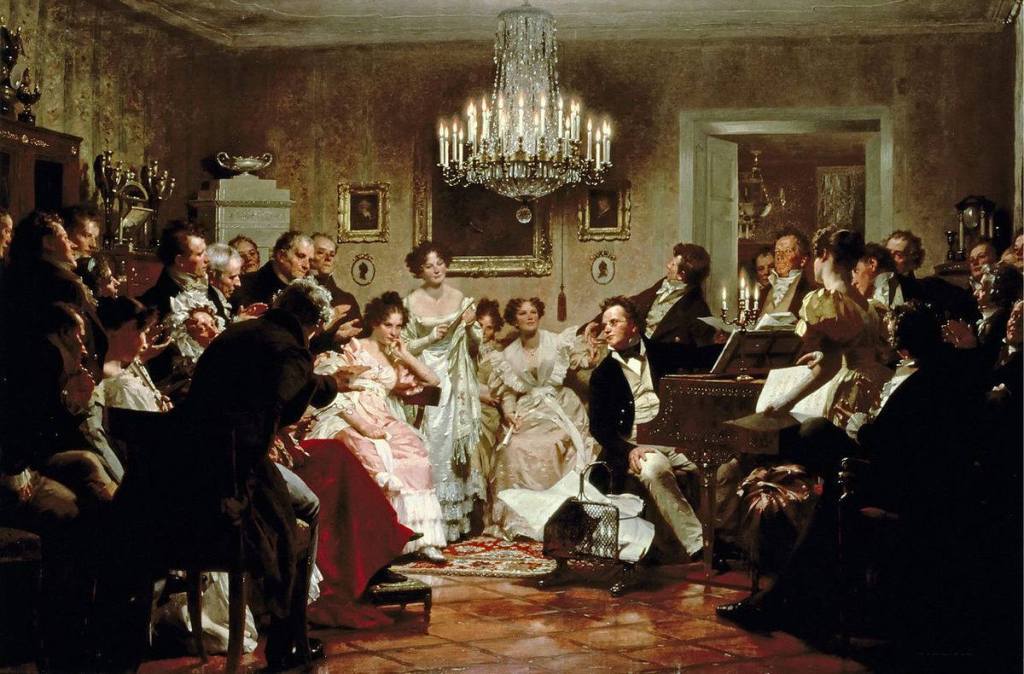
Over the course of an October weekend, Songmakers Australia presented a series of concerts as part of a festival dedicated to the music of Franz Schubert. I attended the fourth and final concert, Swan Song. The concert was so titled as it focused predominantly on music composed by Schubert during the final year of his life, including a song cycle of the same name.
Tragically, Schubert died at the age of 31 after contracting syphilis. Schubert is a composer who is very close to my heart, as he was the first composer of classical vocal music who captured my imagination as a teenage voice student. His exquisitely melodic lieder were the first pieces of music which made me want to pursue classical singing more seriously. (A big thank you to my first serious singing teacher Angus Grant for introducing me to his work!)
Chamber group Songmakers Australia regularly hold concerts of art song and have presented a yearly subscription series at Melbourne Recital Centre since their foundation in 2011. Current core members of the group, led by pianist and repetiteur Andrea Katz, are Merlyn Quaife, Nicholas Dinopoulos, Christina Wilson and Brenton Spiteri, and the ensemble’s artistic patron is Graham Johnson. Over the course of the Schubertiade festival, these singers were also joined by emerging artists taking part in the Young Songmakers Development program: Emilia Bertoili, Alastair Cooper-Golec, Stephen Coutts and Hamish Gould.
From left: Blake Cutler, Andrea Katz and Merlyn Quaife rehearse Der Hirt auf dem Fels at the Hawthorn Arts Centre. Image supplied.
The program of Swan Song was well-balanced, and included solo lieder, duets, a trio consisting of voice and clarinet accompanied by piano, and a quartet and sextet for the finale. The vocal performances were universally strong, with the developing artists holding their own alongside the more seasoned performers. An absolute highlight was Der Hirt auf dem Fels (The Shepard on the Rock) which saw Merlin Quaife perform beside clarinettist Blake Cutler. There was lovely communication between the two performers, as they took turns carrying the dominant melodic line, and each had a chance to shine as a solo performers. As a vocal student and all-round singing nerd, listening to Merlyn Quaife was like witnessing a master at work. Her command of her bright and agile soprano voice was astounding. Her use of dynamics, ranging from a fierce fortissimo to a delicate pianissimo, was enormously exciting to witness. The Heine songs from the song cycle Schwanengesang (Swan song) were also dramatically and musically exciting, with Nick Dinopoulos showcasing an impressive depth to his bass-baritone voice.
There were no weak links in the line-up of performers. Mezzo
soprano Christina Wilson displayed a rich caramel vocal tone during her solo
lieder An die Musik. Baritone Stephen
Coutts had a brief but meaningful appearance, lending a warm golden vocal quality
to the pieces he was a part of. Soprano Emilia Bertoili and tenor Alastair
Cooper-Golec both showcased a sophisticated level of musicality and agility in
their phrasing. Unfortunately I did not get to hear counter-tenor Hamish Gould,
as he was featured in the other concerts of the festival.
From left: guest pianist Alan Hicks rehearses with Christina Wilson for day 1 of the festival, Saturday 5th October. Image supplied.
During my time as a voice student at the Melbourne Conservatorium of Music, I was lucky enough to take part in Andrea Katz’s vocal ensemble subject for several semesters. It is lovely to see her put her impressive programming and musical interpretation skills to use in Melbourne, by mounting regular events with Songmakers Australia. It was telling to me that the quartet and sextet were very well balanced vocally, with a range of tone colour and dynamics emerging with the canny communication between the performers. I know first-hand how challenging it can be to achieve a good blend with a chamber group of classically trained vocalists, each with unique and powerful voices, (while still letting each soloist take their moment to shine), and Andrea’s skill in guiding ensembles in this way was on full display.
If you want to experience the magic of music composed by Franz
Schubert, Robert Schumann, and many of the other composers of art song, the
concerts held by Songmakers Australia are a fantastic place to start.
The repertoire of the concert is listed below:
Accompanied by Andrea Katz throughout
Die Taubenpost (Bass-baritone Nick Dinopoulos)
Licht und Liebe (Soprano Emilia Bertoili, tenor Alastair
Cooper-Golec)
The Heine songs from song cycle Schwanengesang
(Nick Dinopoulos and
soprano Merlyn Quaife)
Der Hirt auf dem Felsen (Merlyn Quaife and clarinettist Blake
Cutler)
And die Musik (Mezzo soprano Christina Wilson)
Des Tages Weihe (Baritone Stephen Coutts, Emilia
Bertoili, Alastair Cooper-Golec, Christina Wilson)
Gebet (Young Songmakers, Christina Wilson, Merlyn Quaife, Nick Dinopoulos)