Louis Nicoll on ‘Lisztomania’

When you think of classical pianists, you automatically think of stand-up comedy, right?

It might seem like an unusual combination, but I can personally attest that in the right hands it works very well! Earlier this year I saw Louis Nicoll perform his show Lisztomania as part of the Melbourne International Comedy Festival, and now he’s back at it for Melbourne Fringe Festival until Sunday 19 October.

Louis took the time to reflect on his first-ever solo comedy outing and the process of creating the show, exclusively for Fever Pitch Magazine!

Have you ever done a classical piano degree? Have you ever done two? Have you ever done two and wondered what to do next? Have you ever written an article and tried to hook people in with a question that’s way, way too specific? Well, believe it or not, I have done all of those, and after finishing my classical piano degree(s) I decided to write and put on a CLASSICAL PIANO AND COMEDY EXTRAVAGANZA all about composer FRANZ LISZT at the Melbourne International Comedy Festival!!!

I did my undergraduate classical piano degree at Melbourne conservatorium – I had a great time, and was quite set on the whole classical piano thing while I was studying. I won a few competitions and prizes and things, but around the time that I graduated I wasn’t totally sure what I wanted to do and whether or not I actually wanted to continue with it. I had always had an interest in comedy and started to dabble in it – I did improv classes at TIC, and was involved with a few sketch comedy groups at Melbourne University when lockdowns started. I eventually moved to Sydney to pursue a masters’ degree at the Sydney Conservatorium in 2021, and set myself the goal of performing stand-up comedy; I finally did it in 2022. And it Went Okay, which is really all that can be asked of your first ever attempt at doing stand-up.

I had Had A Dream (that is, it had been on my to do list since like 2019) to put on my own solo comedy hour that involved both piano and comedy, combined into one shambling Frankensteinian monster. And over the years it sort of trickled down my to-do-list, as dreams sometimes do, and I wasn’t sure if it was something that I would ever actually seriously go after. But I was lucky to be involved with Marcel Blanch deWilt’s wonderful CWG (Comedy Writers’ Group) for a while, and Marcel even asked me to play piano for his MICF 2024 show Let Me Eat Cake. With my artists’ pass in hand, I saw a great many shows, ranging from the very very good, to the kinds of shows that make you realise that you, too, can do a comedy show. I booked a space on the CWG’s 2024 Winter Writers’ retreat, and there received lots of love, encouragement, and support from a lovely bunch of comedians. Then I submitted, and was accepted to perform, a 30-minute spot at Awkward Giraffe’s Festival of Critical Comedy in 2024, and then I found a venue and paid a registration fee for Melbourne International Comedy Festival 2025 and all of a sudden,

It was On.

And I was Worried.

I spent months complaining constantly to everyone around me that I didn’t know what I was doing, that I was stressed out, that I had only ever performed comedy in 5 or 10-minute chunks to strangers in a pub and how would I ever be able to write 45 MINUTES of comedy, and REMEMBER it, let alone actually get people to come see the show. What if no one came? What if people came and it was really weird, and bad? What if no one came to see it, and it was really weird and bad???

That last one would actually have been ok and they would have cancelled each other out, when you think about it.

Anyway, I’ll admit that it was very difficult to write this silly show – I had no idea what I was doing, what would work and what wouldn’t. And I would often find myself overwhelmed by negative thoughts, that it would be a disaster, and that it would be better if I didn’t do it, I should cancel the show and not do this stupid crazy thing and embarrass myself in front of everyone.

I think that what helped me to push through that mental barrier was taking an attitude that I’m not just doing the show for myself, but for the people who come along. Doing the show for myself and myself alone wasn’t a strong enough motivation; doing the show to give a loving gift to the people who are kind enough to choose to come along and see it was a strong motivation to make the show as good as I could. If even one person came to see the show and had their otherwise miserable and empty life enriched, then it would be a success.

Just kidding about that last part! Many more than one miserable empty person has to come see the show for it to be successful. But I do believe that shifting my perspective from I’m Doing This To Prove Something And To Feel Good About Myself to I’m Doing This Because I Want The People Who Come To Have Fun And Be Happy was a very useful mindset shift that helped me break through my writers’ block and write and complete the show.

So the time of the first performance rolled around – I was obviously very nervous. But there was a big lovely supportive crowd, so the show went well and I had lots of fun trying out various new bits. You forget that you know all the jokes but for (most) of the audience it’s their first time seeing it, so the punchlines surprise them, then they laugh. Then they’re quiet again until the next time to laugh. That’s showbiz, baby!

The second performance was the hardest of the run. The venue that I performed at didn’t have a licence to sell alcohol, so everyone was sober. If there’s only one tidbit of information you take away from this article, let it be this – comedy is hard when everyone is sober, and easier when people drink a little bit of alcohol. After this second performance, we decided to give everyone a free glass of wine or beer with their ticket, which we were legally allowed to do; after that, during the 3rd show, the punchlines really soared! Unfortunately, in the fourth and final show we did make the mistake of going overboard and spiking everyone’s drinks with 2CB, LSD, and Tylenol. If there’s only two tidbits of information that you take away from this, let it be alcohol is good but there is a limit, and you should always enjoy responsibly.

The last two performances did go really well – the advantage of my show is they have a drink and they’re laughing for the first half, then around the 45-minute mark they start getting tired and getting that glazy look in their eyes, and BAM, you hit ‘em with the piano playing. That’s showbiz, baby!

I of course could never have achieved anything without the help of people around me, most of all Sara, my director Penny Greenhalgh, and my Friend Who Understands The Comedy World Conor Lynch. Much thanks and love to all of you! I’m proud to say as well that the show will be going ahead AGAIN at the Fringe Festival this year, at the exciting new venue the Moonee Ponds Clocktower.  Buy a ticket PLEASE! No hard drugs included!!!

Stories That Must Be Heard

Guest Reviewer Daniel Szesiong Todd

Image supplied

What happens when you combine a solo violin with the physical prowess of an acrobat? Australian composer Chloé Charody and violinist-acrobat Sonja Schebeck have been exploring this combination for years, and their latest collaboration – LIMBO: Sonata for acrobatic violin – is a breathtaking success!

Charody has teamed up with Nightingale Performing Arts to present Stories That Must Be Heard at Melbourne Recital Centre’s Salon. For Charody, this isn’t merely a concert. It is “a form of artistic resistance – a way of giving voice to the voiceless.” The featured works are Charody’s response to the Australian Government’s long-standing policy of indefinite detention for stateless asylum seekers, which led to decades of untold suffering in Australian detention centres.

The concert began with Truth in the Cage: song cycle for soprano – performed by Livia Brash and pianist Jerry Wong. It is a setting of seven harrowing poems by Iranian refugee Mohammad Ali Maleki, who was imprisoned on Manus Island for seven years. Brash performed the English translations of Maleki’s poems from memory, enabling full dramatic commitment, and crafting her richly dark soprano voice to superb effect, while Wong wrung a broad palette of colours from the piano, highlighting the peculiar sweetness of Charody’s harmonic language against the rawness of Maleki’s poetry.

Image supplied
Image supplied

But it was LIMBO that blew the audience away. This is no ordinary violin sonata. The work explores the inner plight of a refugee named Amin (portrayed by Schebeck), who is trapped for nine years in the terrible limbo of immigration detention. She is supported by pianist Allie Wong, and fellow acrobat Josh Frazer, who embodies the external forces acting on Amin – ranging from absurd and harmful bureaucracy, to tender hope and longing.

The result is astonishing. Across seven movements, Schebeck combines violin virtuosity with extreme physicality, as she and Frazer engage in a wild and beautiful pas de deux. Schebeck is lifted, spun, thrown to the ground, and at one point, lifted by her upper teeth – all the while playing Charody’s stirring score with impressive musical vigour and nuance. At such close quarters, the performance feels viscerally dangerous, eliciting gasps from the audience. Yet this wasn’t mere circus novelty. Every movement served the emotional inflections of Charody’s music, enhancing the score with each awe-inspiring act.

Stories That Must Be Heard is a sublime and moving admixture of circus and art music that invigorates both art forms. Furthermore, it powerfully amplifies the voices of refugees, who have been deeply wronged by successive Australian governments. This is Charody’s artistic resistance.

Who are you calling ‘Fat Pig’? A triumphant Australian premiere

By Stella Joseph-Jarecki Enquiries

Note: A ticket was supplied by the artist in expectation of a review on the blog. No further payment was made.

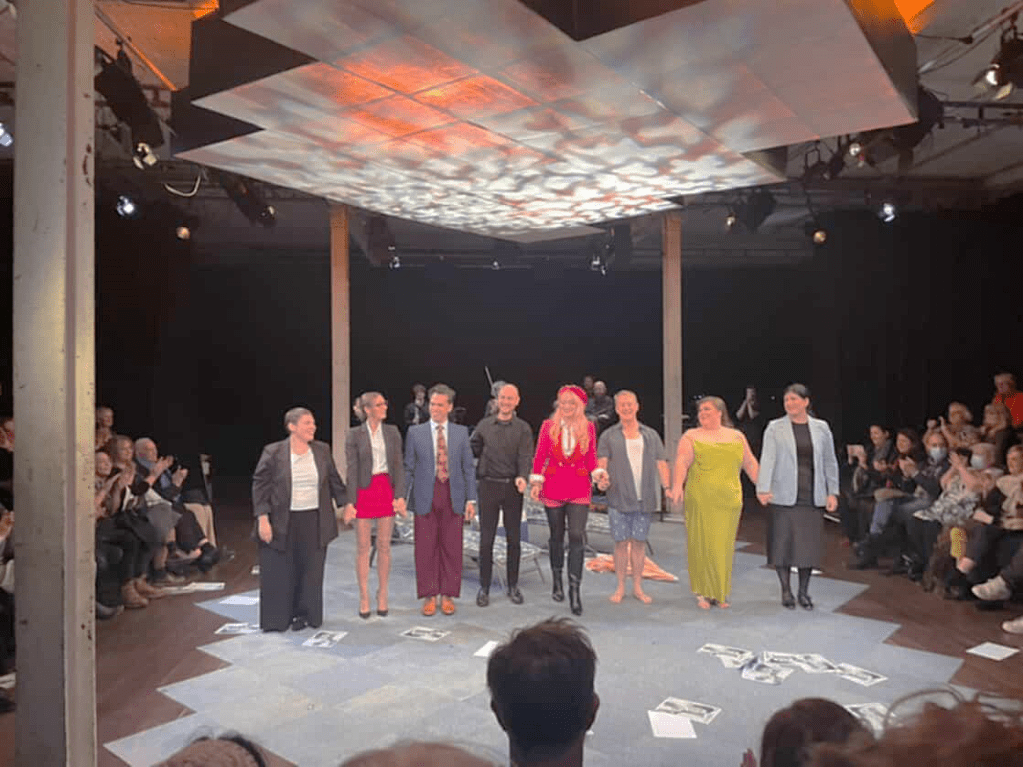
The cast and crew of Fat Pig take a bow. Credit: Teresa Ingrilli.

Fighting blisteringly cold winds, on Friday 5 June I made my way to the Australian premiere of American opera Fat Pig. My first thought was, what a title! It’s memorable and a conversation-starter.

Presented by Forest Collective and BK Opera, Fat Pig follows the story of Helen and Tom. It’s not your average melodramatic opera love story: rather than a dizzyingly intense affair ending in typical soprano-stage-death, it’s a relatable modern dating story with emotional vulnerability and moments of insecurity on both sides.

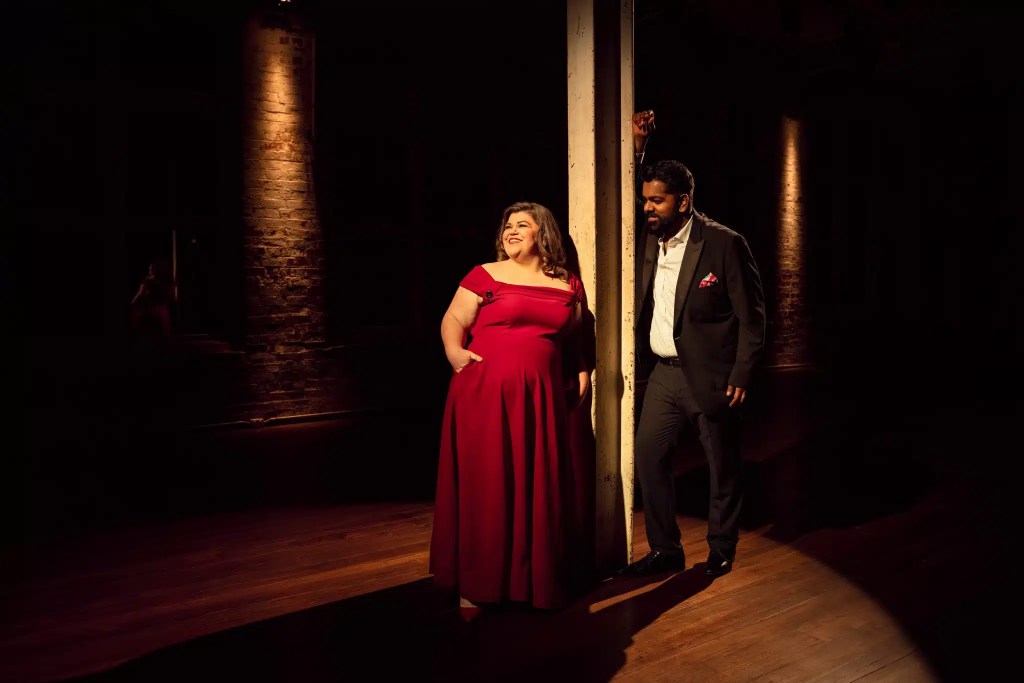
Amanda Windred and Kiran Rajasingham in a promotional image.
Credit: Cameron Grant.

The copy around this show sums it up brilliantly:

How many insults can you hear before you have to stand up and defend the woman you love? Tom faces just that question when he falls for Helen, a bright, funny, sexy young woman who happens to be plus-sized – and then some. As Tom faces the taunts and judgment of his peers, Fat Pig questions whether anyone can really see past the surface.
Adapted from Neil LaBute’s award-winning 2004 play, by Australian librettist Miriam Gordon-Stewart and American composer, Matt Boehler, this black comedy examines the nature of beauty and attraction, revealing the operatic reserves of human truth that lie beneath the surface of a workplace rom-com.
Credit: Stella JJ

It’s not often that I have nothing constructive to say. After all, entirely positive reviews are boring to read. Also, I’m not that easy to please – I’ve seen a lot of average and downright bad shows in my time.

But this production really was quite flawless. Everything worked together in harmony: the direction, the set, the lighting, the music, the acting, and the cast.

I also brought along a friend who had never seen a live opera before, who is otherwise very experienced in the arts and works in the not-for-profit sector. This was an excellent litmus test for how entertaining the show was, without any prior knowledge of the artform… Considering he kept repeating ‘I get opera now!’, and was full of specific compliments towards the cast and direction, I’d say Fat Pig succeeded with flying colours.

There were no weak links in this cast. Amanda Windred was luminous as Helen with an easy warmth on stage and a powerful dramatic soprano voice. She carried the burden of being the protagonist and so-called ‘fat pig’ of the title with absolute grace and star power. It was easy to imagine falling in love with her as Tom does.

Credit: Stella JJ

She had ample chemistry with baritone Michael Honeyman, who deserves a special shout-out. Not only was his acting and singing full of nuance, but he was a last minute-fill in for Kiran Rajasingham, who sadly came down with covid before opening night. (How 2022 of him.) He sang from a score that he held so naturally in character, you didn’t even notice it at first. I couldn’t help but feel for the embattled Tom, whose judgemental friends never give him a moment of rest for the sin of dating a larger woman. Even when his behaviour defending Helen fell short.

Tenor Daniel Szesiong Todd was exceptional, and exceptionally unlikeable, as the classic office asshole Carter. He was that charismatic guy who would be fun to be around if he wasn’t such a dick all the time. Jeannie, Tom’s petite and beautiful ex, was sung to perfection by soprano Belinda Dalton. She gave her character nuance, showing that diet culture hurts everyone – both the women who fit into the beauty standard and the ones who don’t. She was also very funny, at one point indignantly protesting (very prettily) that she could ‘bend like a BARBIE DOLLLL!’ in bed with Tom.

Credit: Stella JJ

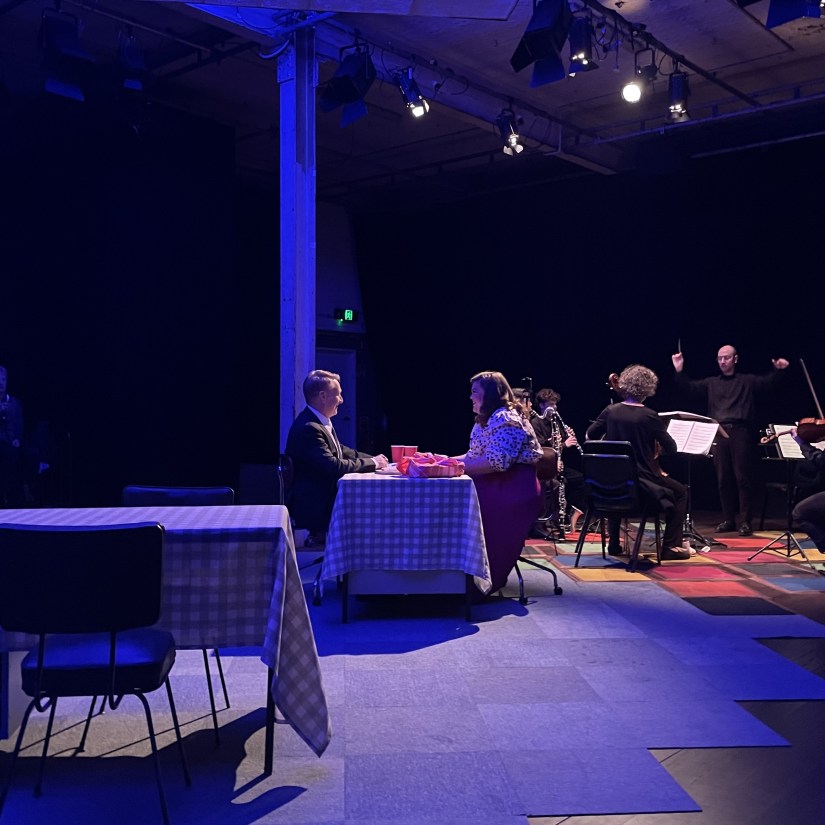
The set and costumes were simple and effective. Direction from Kate Millett was assured and cohesive, making great use of a space surrounded by audience on three sides. The ensemble, led by musical director Evan Lawson, played with tight unity and sounded fabulous. And of course, the music and libretto itself was fabulously written and natural. It sounded as much like talking as opera can, following natural speech patterns.

While the season is over, this is your sign to get out and support new operas. When companies like Forest Collective and BK Opera are brave enough to program them, the results are often fabulous.

A huge congratulations to all involved! I urge you to follow the future projects of Forest Collective and BK Opera, and these talented musicians and performers.

The Art of Tango

By Stella Joseph-Jarecki Enquiries

Note: A ticket was supplied by the artist in expectation of a review on the blog. No further payment was made.

Credit: Stella JJ

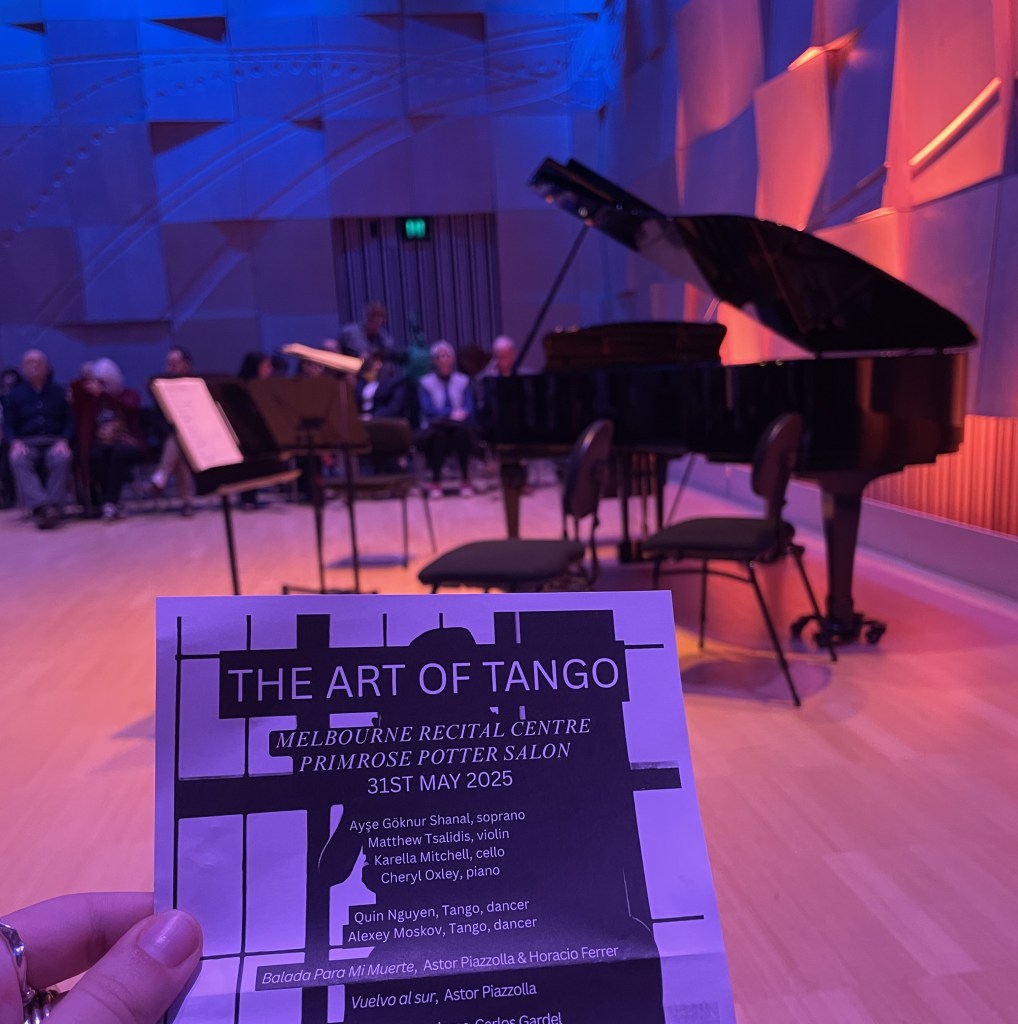
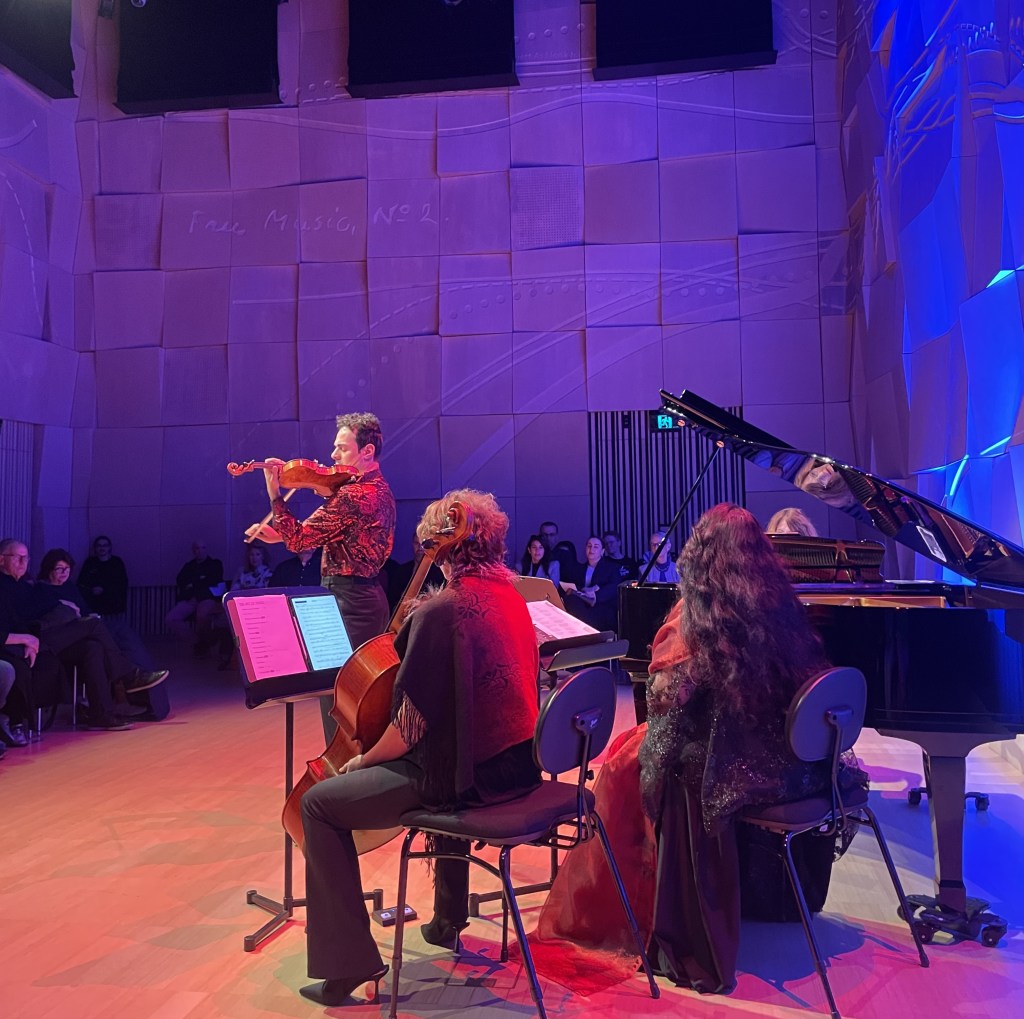
On Saturday 31 May, soprano Ayşe Göknur Shanal presented The Art of Tango, a passionate and wildly entertaining concert at Melbourne Recital Centre. She was joined in the Primrose Potter Salon by Matthew Tsalidis on violin, Karella Mitchell on cello and Cheryl Oxley on piano.

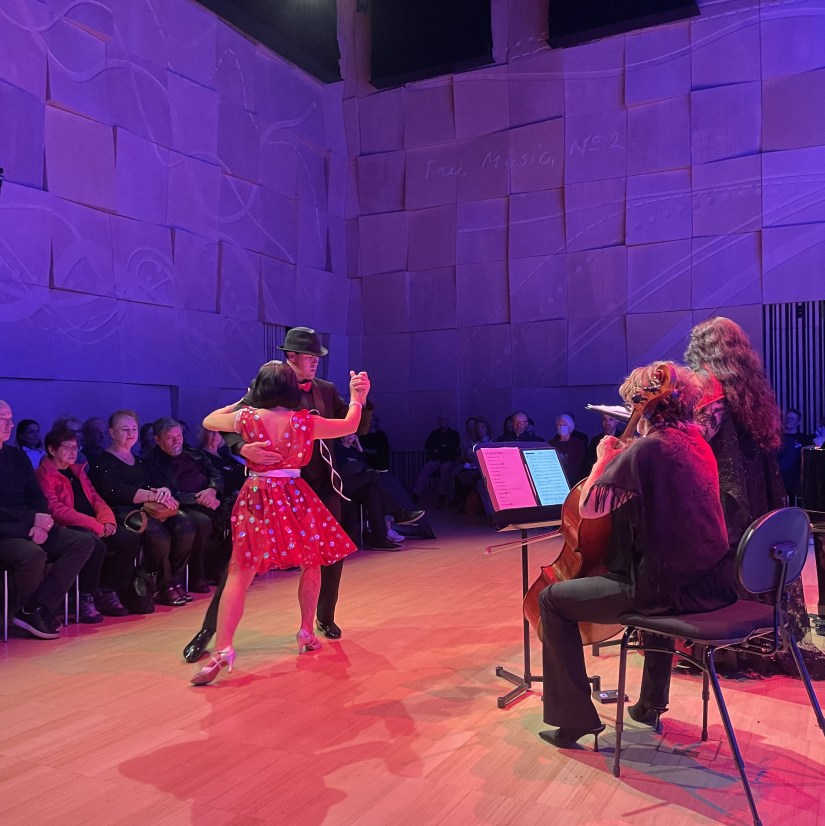
There were two more stars on the roster: tango dancers Quin Nguyen and Alexey Moskov. They emerged every few songs with Quin in a new outfit, with both dancers slinking across the stage with easy confidence and sinewy grace.

Two tango dancers dance on stage during the concert Art of Tango.
Credit: Stella JJ

The program included seven songs by Astor Piazzolla and compositions by Gardel, Ginastera, Gade, Canaro, and Farres. The whole concert reminded me so much of a friend of mine who would have been obsessed with the flair, the dancing, the beautiful clothes, and most of all, Ayşe’s breathtaking voice.

Ayşe is classically trained and boy, can you tell. The Salon is a wonderful small performance space with very resonant properties. From the first song, Piazzolla and Ferrer’s Balada Para Mi Muerte, Ayşe took assured control of the room with captivating stage presence and excellent diction. This composition had the heightened emotion of a Mexican telenovela – including a spoken word section which could easily have veered into ‘cheesy’ territory, but didn’t.

Credit: Stella JJ

When she moved into the operatic section of her upper register, it was something to behold. To be frank, at times she nearly blew the audience’s ears clean off. (This is a compliment.)

The ensemble played with tight unity and communication. Ayşe took the time to explain the meaning of the song before each piece, which I greatly appreciated.

When we came to a particular piece in the program, Ayşe shared that she’d programmed the entire concert around this song. Invierno Porteño is Piazzolla’s answer to Vivaldi’s incredibly inspiring Four Seasons. You might not know it by name, but its melody is truly iconic (without veering into hyperbole.) Violinist Matthew Tsalidis stepped into the soloist spotlight with confidence and gave an excellent performance with great agility.
By the end of the concert I realised Astor Piazzolla had been added to my roster of favourite composers. His command of drama, humour and heart-wrenching beauty is simply unparalleled.

Credit: Stella JJ

My final thoughts on this concert are: while musical excellence was certainly present, it was refreshing to go a concert and simply have FUN. Ayşe encouraged us to get up and dance towards the end, and I found myself getting expertly whisked around the room by the multi-talented photographer who was also a tango teacher! She opened up the room to requests at the very end and we had a reprisal of the crowd favourite ‘Quizás, quizás, quizás’, with us all singing along.

All in all, it was a delightful and musically arresting afternoon  of music which truly did immerse in the Art of Tango.

My Beautiful Friend Jordan

By Stella Joseph-Jarecki

Jordan in full flight singing Quando me’n vo’ (Musetta’s Waltz) from Puccini’s opera La Boheme. Opera Scholars Australia.

CONTENT WARNING: This post is a tribute to Jordan Auld, who left us in 2021. Please don’t read it if you aren’t up to it; look after yourself. This was an easy one to write but a hard one to share.

Jordan – I raise a glass to you and try my best to live a bold, sparkling life in your honour.

Readers – If you’re ever struggling with your mental health, there are services available to you. As someone who has made use of many of them, multiple times, I cannot recommend them enough.


Copied from Health Direct, a government website:

  • Lifeline provides 24-hour crisis counselling, support groups and suicide prevention services. Call 13 11 14, text 0477 13 11 14 or chat online.
  • Suicide Call Back Service provides 24/7 support if you or someone you know is feeling suicidal. Call 1300 659 467.
  • Beyond Blue aims to increase awareness of depression and anxiety and reduce stigma. If you or a loved one need help, you can call 1300 22 4636, 24 hours/7 days a week or chat online.
  • MindSpot is a free telephone and online service for people with anxiety, stress, low mood or depression. It provides online assessment and treatment for anxiety and depression. MindSpot is not an emergency or instant response service. Call 1800 61 44 34.
  • Medicare Mental Health gives advice and will connect you to local mental health services. Call 1800 595 212.
  • MensLine Australia is a professional telephone and online counselling service offering support to Australian men. Call 1300 78 99 78, 24 hours/7 or chat online.

If you’re feeling lonely:

  • FriendLine supports anyone who’s feeling lonely, needs to reconnect or just wants a chat. You can call them 7 days a week on 1800 424 287, or chat online with one of their trained volunteers. All conversations with FriendLine are anonymous.

For young people who need mental health support, and their parents or carers:

  • Kids Helpline is Australia’s only free 24/7 confidential and private counselling service specifically for children and young people aged 5 – 25. Call 1800 55 1800.
  • headspace provides free online and telephone support and counselling to young people 12 – 25 and their families and friends. Call 1800 650 890, or chat online.

For people with complex mental health issues:

  • SANE Australia provides support to anyone in Australia affected by complex mental health issues, as well as their friends, family members and health professionals. Call 1800 187 263 or chat online.
  • Blue Knot Foundation Helpline is the National Centre of Excellence for Complex Trauma. It provides support, education and resources for the families and communities of adult survivors of childhood trauma and abuse. Call 1300 657 380.

My Beautiful Friend Jordan

I think about my beautiful friend Jordan a lot.

She inspires me every day. Heartbreakingly, she isn’t here with us anymore. I think about her and my eyes fill with tears.

Jordan left us in 2021. Barely a month later, like a surreal fever dream, I was sent to hotel quarantine with absolutely no chance of having covid. (By that point I had been living out and about as usual for three days…) The government paid for thirteen days of quarantine in a brand-new hotel repurposed for this, and it was the most bizarre experience of my life.

These events changed me. I’ve approached life differently since then. I leave it all on the table – and every time I need to be brave, or take a chance, I think of my beautiful friend. Who had a glittering life ahead of her, more talent than you could poke a stick at, the best wardrobe I’d ever seen, and a wickedly sarcastic sense of humor. And you couldn’t even be annoyed at her for being so incredible! BECAUSE SHE WAS ALSO KIND! Urgh, how annoying.

I don’t believe in heaven or hell personally… But I believe in something. And I know without shadow of a doubt that she’s watching over me, and her best friends who she loved so much. I think of her whenever I think of the character Musetta from Puccini’s La Boheme. I think of her when I think of an absurdly talented and stunning woman, who could dance and act as brilliantly as she could sing. I think of her when I remember laughing until I cried during our university production of Francis Poulenc’s Dialogues of the Carmelites. I can clearly hear her guttural laugh in my head.

Singers dressed in all-white Carmelite nun ensembles smile at the camera.
Jordan (top, arms outstretched) pictured with the rest of the Carmelite nun ensemble in Melbourne Conservatorium of Music’s 2018 production of Poulenc’s Dialogues of the Carmelites.

It’s been four years Jordan. My grief for you broke through in the last six months, almost as if I knew that I was brave enough to feel it.

I miss you so much. I love you.

I’ll never stop thinking of you and living an amazing, adventurous life in your honour. I’m raising a glass to you today!

Listen to Jordan perform a stunning duet here

EDIT: I’m proud to have interviewed Jordan in 2020, and humbly believe I captured her dazzling talent and tireless work ethic. This interview has been viewed over 800 times, a sign of how sorely she is missed.

If you’d like to read the piece in question: Voice Notes: Jordan Auld

A Songmaker, A Tenor, and ‘A Poet’s Love’

By Stella Joseph-Jarecki (Enquiries: stellamusicwriter.wordpress.com)

Generally speaking, hero worship is a bad idea. (Unless it’s directed at Pedro Pascal… that man can do no wrong!)

People are people: flawed, skilled, brilliant, complicated… But I would be lying if I said I didn’t worship Andrea Katz while I was doing my Bachelor of Music in classical voice. She was the five-foot-firecracker. God help you if you showed up for Vocal Class with a bad attitude or didn’t know your music. I’m proud to say I never did either of those things!

Andrea took a class called Vocal Ensemble. In it she dispensed wisdom, delivered tough-love, and told the craziest stories. (One of which involved Pavarotti!). I still remember every anecdote she shared and the way she said Bizet’s Carmen would be the perfect opera if Bizet shifted the entire opera a quaver to the left (BRILLIANT).

Honestly, I still worship Andrea. But just a normal amount! I promise…

Andrea got in contact with me and asked if I would talk about an upcoming concert of hers on the blog. Of course, I was happy to oblige. If you’re in Bendigo on the 8th of June, check it out!

Andrea and I had a chat about all things art song below.

A Poet’s Love at Langley Estate (Bendigo)

Sunday 8 June 2025 3:00 PM – 4:00 PM (UTC+10)
Lauriston Chapel at Langley Estate
Tickets from $40, and audience members under the age of 18 get in for free!
Book your tickets here

Excerpt from the event page:

In A Poet’s Love, Michael Petruccelli, one of Australia’s leading tenors, teams up with Melbourne-based Argentinian pianist Andrea Katz, for an outstanding program of German, French and Italian songs. And the date of 8 June itself is perfect celebrating the anniversaries not only of Robert Schumann’s birthday on 8 June 1810, but also the opening of the Langley Chapel on 8 June 1873!

The concert title A Poet’s Love references the inclusion of Schumann’s famous Dichterliebe – A Poet’s Love, composed in 1840: the best-known song cycle by Robert Schumann and a rare chance to hear this immortal work with two of our country’s finest musicians. This memorable afternoon also includes a performance of Schumann’s delightful suite for solo piano: Papillons – Butterflies, Op. 2, together with other exquisite songs by Henri Duparc and Paolo Tosti.

After the concert, you can enjoy meeting the artists and other audience members during the refreshments served in the Langley Hall mansion.

A poster for the concert Á Poet's Love' at Langley Estate

If you get to the edge of what words can express, only music can take you beyond.

Andrea Katz

How did your ensemble Songmakers Australia come about?

I was inspired by the London based Songmakers Almanach while working with its pianist and director Graham Johnson, who became a mentor and eventually our Artistic Patron. Upon hearing I was moving to Australia, he gave me a mandate, to create something similar here. After the opening of the Melbourne Recital Centre, I was able to gather a fantastic group of singers and perform there and around the country for 14 uninterrupted years.

Your upcoming concert features ‘Dichterliebe’, the famed song cycle by Robert Schumann. What is your favourite thing about this song cycle and why do you think it’s so enduringly popular?

Obviously, the piano part is the best part of the cycle! I say that with tongue in cheek, because the songs are one of the best examples of poetry and music amalgamation. The poems are by Heinrich Heine, a literature genius Schumann probably understood better than any other song composer. The text is beautifully set, and the music is coloured in such tangible ways as to make them understandable beyond the language barrier.

Schumann is a composer close to your heart. How would you describe him and his music to someone who knew nothing about him?

Yes, he is! His music really reflects every single aspect of his life: love, tragedy, friendship, mental health. He was also an innovator in his approach to piano writing, totally obsessed with sound, resonance and colours, which may explain why he was so good when it came to songs!

What is your favourite thing about working so closely with singers?

Another thing I have in common with Schumann, I have worked with singers all my professional life. They teach you a very important lesson: without breath there is no life. When you perform with a singer, you strive to imitate those wonderful, sustained sounds, that sense of endless legato, the magic of word painting that comes from extraordinary poetry.

How did you start working with Michael Petruccelli?

Michael was a young tenor in one of my classes at the Conservatorium. I have been following his career for years! He went overseas to continue his development and had an impressive performing career too. We are very fortunate that he is now back based in Melbourne.

We had the chance to perform together last year for the first time. We reunited for a beautiful program of French songs. I was able to reciprocate and invite him to sing Dichterliebe with me in two weeks. His affinity with Schumann’s music really matches mine, which makes for a thrilling musical experience. 

What do you think makes art song so special?

By now it would be clear I am totally crazy about art song. Thinking back of the great traditions of storytelling throughout the ages, it has always been accompanied by music. If you get to the edge of what words can express, only music can take you beyond.

Fever Pitch Magazine Returns

By Stella Joseph-Jarecki (enquiries: stellamusicwriter.wordpress.com)

This is what I look like these days.

Well, technically, it never left. To be more correct: I am back!

For those who have forgotten, or who don’t know me at all, my name is Stella and I am the editor and creator of Fever Pitch Magazine. I named it a magazine rather than a blog because when I started sharing content online, it was with the aim of providing a place for my audience to seek career guidance. Or to just vent, and read other people’s vents!

I would describe this audience as emerging musicians, music therapists, educators, composers, and arts administrators. But it’s also anyone interested in the performing arts industry in Australia and the challenges it is facing. And those are many and varied.

The last article I shared on this platform was in late 2021. The past three and a half years have gone pretty quickly! During this time I’ve caught covid (twice), quit my job (twice), gotten facial piercings (twice), come out as bisexual and fallen in love (many times).

There’s a lovely sense of continuity as I write this. For everything that’s changed, a lot has stayed the same. I have the same commitment to the arts industry which I love and am frustrated by in equal measure. I have the same admiration and love for my wide net of talented friends and colleagues.

So we return to the mission! And that continues to be, to highlight the excellent work done by my fellow creatives in the performing arts industry – those who work hard for the love and fulfillment, and certainly not the (lack of) money or fame.

Stay tuned for more content highlighting… well, whatever the fuck I want to highlight! No one is paying me so I can be as bratty as I want!

Shifting Tides: The Music of Wesley Stormer

By Stella Joseph-Jarecki (Enquiries: stellamusicwriter.wordpress.com)

From left to right: Tim Hans (piano), Wesley Stormer, and Justine Bristow (flute), at the recording of ‘A Bedside Lullaby’ at the Carrington Hotel in the Blue Mountains. 2020.

This piece was written as part of a paid partnership. Unless otherwise stated, all material published on Fever Pitch Magazine is put together through voluntary contributions from the editor (Stella Joseph-Jarecki) or guest contributors.


There are only two weeks left of 2021. It has been a mammoth effort to get to this point, but the summer of 2022 is looking fresh and bright. Live music has returned to the theatre, the beer garden, and the concert hall. A sense of tired relief can be felt across Melbourne after six consecutive weeks of ‘normal’ life, an emotion sweetened by the approaching Christmas break.

So what kind of playlist will you using to fill the lazy afternoons and long weekends? Whether you’re looking for a meditative instrumental lullaby, an atmospheric piece of chamber music, or even catchy, sun-drenched funk, Sydney-based composer Wesley Stormer has you covered.

I had the chance to pick Wesley’s brain on the musical projects he tackled over the past two years, and the idea of embracing a full spectrum of musical colour.

You can follow Wesley’s compositional work through his Instagram and YouTube channel. His 1970s pop-inspired outfit Sun Affair can be found on Instagram– their debut EP First Sign of Light is out now.  

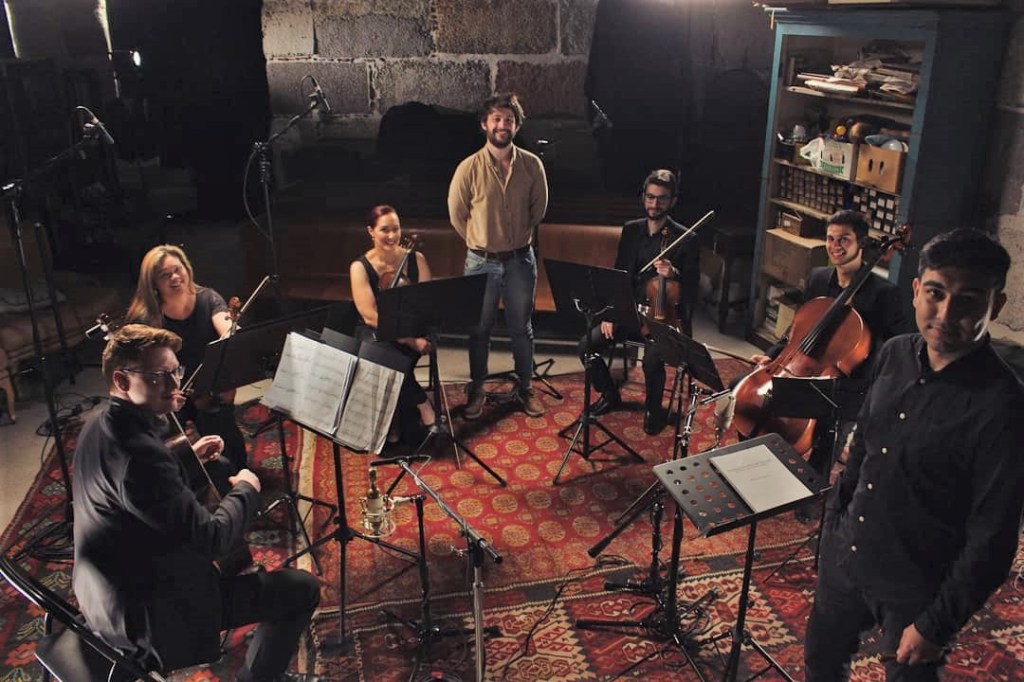
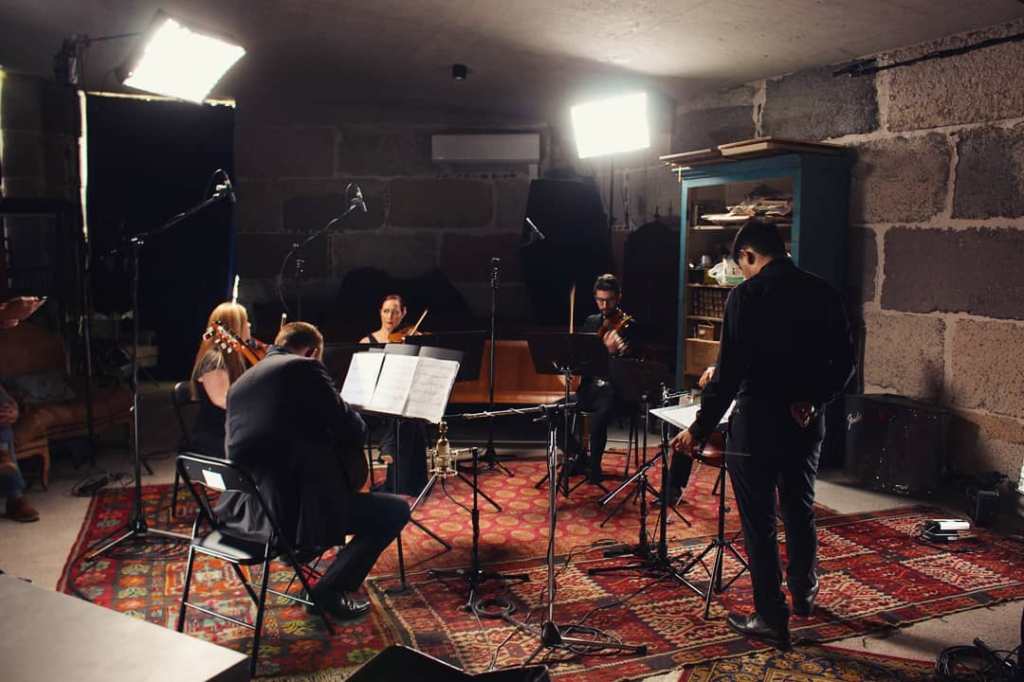
The recording of ‘Peering Out, Peering Through’ at Rhomboid Studios in the Blue Mountains, 13 December 2020. From left to right: James McDonald, Anna Smith, Elisabetta Sonego, Wesley Stormer, Jonathan Karanikas, Omid Mohebzadeh.

Where does classical music sit in the 21st century? Is it separated from other genres by a gaping divide? In a 2020 interview with Cut Common, Stormer described ‘a certain kind of pressure’ that listeners can grapple with if they are unfamiliar with classical music. But he doesn’t think it has to be that way: “I’d love for people to just click play, watch, listen and see what they feel.”

Stormer elaborated on this idea when I pressed further. “I think there is a ‘baggage’ around genres like classical and jazz which can stop people from engaging with them. Some people might feel they need to have an understanding of the music to appreciate it, which is not necessarily the case. I immediately think of how movies and television expose audiences to all kinds of musical styles and some soundtracks go on to become widely popular. 

In my own practice I try to not let what the audience might think restrict what I’m trying to create. Ultimately, I need to be happy with what I’ve composed, however I do want the audience to have a positive experience with my music. I want them to leave feeling something they didn’t before they arrived.”

Stormer’s latest chamber release Peering Out, Peering Through is written for classical guitar and string quartet. It comes with a specially filmed music video which has freshly premiered on YouTube: “Last year while weaving between lockdowns and other obstacles I managed to assemble a group of musicians to record the piece. 

Music video of Wesley Stormer’s ‘Peering Out, Peering Through’. Audio recording, mixing, and mastering by Craig Field, videography by Andrew Mell and Benjamin Green, video editing by Stephen Noble.
 

Our sound technician Craig Field knew the owner of Rhomboid Studios, a recently built performance/recording space tucked away in Mt Victoria in the Blue Mountains. Although not clearly visible from the road, the building is an impressive structure and externally resembles more of a temple than studio. The session was a really positive experience for everyone.

Peering Out, Peering Through takes the perspectives of two individuals in the same storm having vastly different experiences. One is on a boat having to contend with the chaos and danger of the storm as it rages around them. The other is standing on the shore looking out at the storm and appreciating its beauty from a safe distance.”

The team behind the Peering Out, Peering Through recording:

Conductor – Omid Mohebzadeh
Guitar – James McDonald
Violin 1 – Anna Smith
Violin 2 – Elisabetta Sonego
Viola – Jonathan Karanikas
Audio recording, mixing and mastering – Craig Field
Videographers – Andrew Mell and Benjamin Green
Video Editing – Stephen Noble


During the recording of the music video of Sun Affair’s ‘Waiting for an Answer’. From left to right: Liam Gray, Blake Dantier, Wesley Stormer, Ben Hayes, Tim Hans.

The extended lockdowns of 2020 and 2021 wreaked havoc on the Australian arts industry. I felt compelled to ask the inevitable question- how did Stormer protect his creativity and personal motivation during this trying time?

“It has been a really tough couple of years for everyone. Artists experienced a lot of uncertainty which is not a good foundation for creativity.

I found the best method for my own creativity and headspace was to think about the things that were within my immediate control. I took some down time but when I was feeling inspired, I would compose and plan ahead. It was important to exercise and stay in touch with friends during that time. I felt the more I looked after my physical and mental health, the more my creativity would flourish.”

Listen to Sun Affair’s debut EP First Sign of Light on Spotify  

Freelancing as a creative professional can be a diverse and engaging path, but instability comes as part of the package deal. I asked Stormer how he found navigating the shift from university studies to the world of professional work.

“I found that transition to be quite a tricky one, and I’m working out how to navigate it to this day. The thing that initially helped me was the realisation during my Honours year that creating music was truly I wanted to do with my life. A big part of that was thanks to my supervisor Dr Clare Maclean. So having that certainty as I entered the freelancing space helped quite a lot. Along the way I’ve learnt a lot about what works for me and I think the main thing is to diversify. Get involved with a number of different projects; see what works and what didn’t and learn from them going forward.

Since finishing my studies I’ve been out in the wild trying to make my way as a composer seeking out opportunities wherever they may be! My priority has always been to make sure I’m composing and listening to new music. I think this is vital in continuing to develop as a musician. Opportunities will come and go but if I’m not growing as a composer then I feel like I’m treading water.”

This expansive attitude is aptly demonstrated in the breadth of musical projects Stormer has on the go. Funk-pop outfit Sun Affair owes a clear debt to The Beach Boys and the era of Motown Records, bringing meaty melodies together with shimmering instrumental textures.

From left to right: Rohan Iyer, Wesley Stormer

“I’ve always loved a wide variety of music. When I was a child, I would fall asleep listening to radio station 101.7 which would play music I loved from the 70’s and 80’s. When I was a teenager, I listened to all kinds of music from jazz to classical to pop. Towards the end of high school, I actually began writing R’n’B influenced pop music before I attempted classical composition. 

I definitely intend to keep exploring different genres and styles in the future and I think they can overlap in interesting ways.  I’m currently working on a musical theatre project and the way that I have approached its composition has felt like a blend of both my classical and pop styles. I have dabbled in film music and definitely want to pursue that in the future as well.

The ideal situation for me would be having a mixed bag of projects all happening at the same time, and still being able to get on stage and perform my pop tunes with Sun Affair from time to time.”

Wesley Stormer

Composer, instrumentalist

Wesley Stormer is a composer based in Sydney and Blue Mountains, Australia. He grew up in the Blue Mountains and completed his bachelor of music (Honours in composition) at Western Sydney University under the guidance of Dr. Clare Maclean.

He is deeply inspired by ear-catching motifs and rich harmony and utilises these elements to create memorable solo, chamber and orchestral works.

Since completing his studies Wesley has been composing contemporary classical music for soloist, chamber groups and orchestras. He has collaborated with a number of Australian and international ensembles. He’s been a winner of a number of competitions including the Veridian Symphony Orchestra’s 5th annual composition competition in 2017, a finalist in North State Symphony Orchestra’s 2020 ‘Beethoven Idol’ competition and selected for Penrith Symphony Orchestra’s young composer prize for 2020. He was selected to be part of the Penrith Council and Joan Sutherland’s 2020 ‘Street Notes’ program where he collaborated with performers and composers to create new music for Western Sydney.

A Sonic Sense of Self: Sarah Elise Thompson

By Stella Joseph-Jarecki (Enquiries: stellamusicwriter.wordpress.com)

Photo credit: Billie-Jean Bullard

This piece was written as part of a paid partnership. Unless otherwise stated, all material published on Fever Pitch Magazine is put together through voluntary contributions from the editor (Stella Joseph-Jarecki) or guest contributors.

It has been a long time between drinks here at Fever Pitch Magazine. Four months passed without any new articles or content- not only because of the dire situation the performing arts industry was in, but because I was entirely preoccupied with getting through Melbourne’s fifth and sixth lockdowns in one piece.

I’m keen to embrace a sense of optimism as Australia takes its first tentative steps into a vaccinated economy. Still, I am amazed at anyone who managed to keep their creative fires burning during such a devastating period.

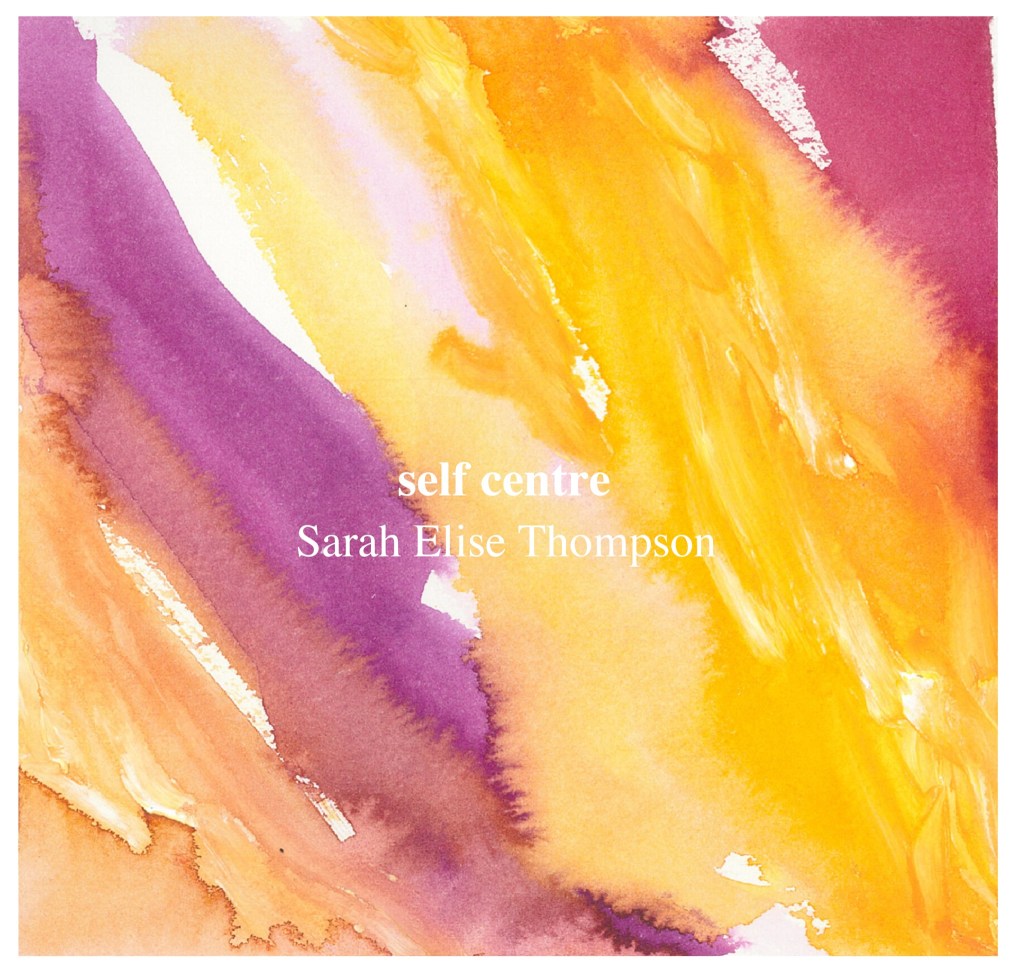
That is why I am very happy to be partnering with emerging composer Sarah Elise Thompson, to take you behind the scenes of her debut album self centre. (Out now on a range of streaming services including Spotify, Apple Music and Tidal).

Album art: Ellen Bird. Listen on Spotify, Apple Music and Tidal

The concept for self centre rose out of the enforced pause of lockdown, as Sarah had a chance to reflect on three years’ worth of music.

“I listened back to all of my pieces and read through my program notes from 2018 to 2020. I realised there was a through-line story, memories from my life that I had captured in my music… watching sunsets, diving underwater, heartaches and anxieties. I realised I could not give these pieces away to someone else. This was me- in the most vulnerable musical output I had ever written.”

Because the album is the product of gradual artistic realisation rather than a condensed stint of songwriting, each track comes with its own story. Read on to find out more!


Creativity doesn’t often happen in a straight line. For many artists, a defined sense of their musical identity is something that comes over time, often with accompanying shades of grey.

This could be said of Sarah’s path as a composer. “Before this year, I couldn’t have told you my focus- I would throw myself at every opportunity and hope one would turn into ‘my sound’. I tried sound installation, performance art, improvisation, graphic scores, multimedia interactive pieces, and orchestration jobs.

During the composition course at the Conservatorium, we studied composers such as Luciano Berio, Karlheinz Stockhausen, Philip Glass, Louis Andriessen, Gerard Grisey, Salvatore Sciarrino and more- and I felt totally overwhelmed! I felt like there was this pressure, as sense of ‘if you sound like these big composers then you too will become a successful composer and make good music’. I’d go home after uni and put on Joni Mitchell’s Blue album or Beach Boys Pet Sounds and try to come back to a familiar place musically, because in the classical music department ‘pop’ was like a dirty word.

In hindsight, my professors were showing me these composers to show us the capabilities of sound combinations we could create, and how to succinctly put them into a musical sentence. I owe a lot to my professors and I’m so grateful that I had the opportunity to learn from them.

After graduating, I started learning about composers who were able to be their own artist- they would perform in concert halls filled with people who loved their music and wanted to hear them perform live. The shows would look and feel like a pop show at Festival Hall or the Hordern Pavilion, but the set would be completely instrumental. Composers such as Max Richter, Olafur Arnalds, Hania Rani, Nils Frahm… These artists gave me the courage to be a composer and embrace my classical training, but also to be the contemporary artist I wanted to be since I was a kid. 

My focus is now on being a recording artist and creating ornate sound worlds based on my stories or events that inspire me; blending classical, indie-pop and minimalist musical stylings, based from writing sessions at my home piano.”

Premiere performance of striking out, during Ensemble Offspring’s Hatched Summer School Academy, 2019.

A music performance degree at a classical institution can be described as simultaneously broad and narrow. Broad, because a performer and composer has over 500 years’ worth of music to study; narrow, because after graduation you aren’t exactly parachuted into a ready-made job. The first few years without student status can be a shock to the system after the comforting structure of university.  

“The best thing that I did to set myself up as a composer was having opportunities to travel and participate in different workshops and residencies,” Sarah attests. “I spent a fair bit of time in Europe and the US straight after graduating – forming new networks that generated exciting collaborations and new commissions. The tracks big blue and sanddollar came from writing sessions during my time abroad.

self centre is a reflection of the core of who I am musically. It captures the feeling of coming back home and being at peace with yourself. It’s meditative and reflective in the way you listen to the album from top to bottom.”

Photo credit: Billie-Jean Bullard

These commissions came from a range of sources: the Women in Music festival in Melbourne, the New Music on the Point festival in Vermont, and US-based pianist Dr. Huizi Zhang to name a few.

“sanddollar was written especially for self centre, during a writing session with percussionist Matthew Stiens in San Francisco in January 2020. The recording you hear was actually made by Matthew in his parents’ house in St Louis, Missouri… in his mother’s closet!

undone came about after I was given the Young Composer Award at the inaugural Women in Music festival in 2019- an award I was surprised and honoured to receive! I was asked to write a piece for two of the members of PLEXUS ensemble- violinist Monica Curro and pianist Stefan Cassomenos, as well as soprano Deborah Cheetham AO.

The libretto of the piece came from a poem of the same nameby Stephanie Millett, a childhood friend of mine. Stephanie and I worked together, and created a piece on accepting when a chapter has closed, and being able to ask for help when you are not ok. It is a very personal piece and I’m grateful to have written it with Stephanie and to have had it performed by such talented musicians.

From left to right: Monica Curro, Stefan Cassomenos, Deborah Cheetham AO. Women in Music Festival, 2019.

striking out was written and recorded while I was a participant of Ensemble Offspring’s Hatched Academy summer school in 2019. The program involved workshops with the ensemble as well as mentoring from Kate Neal and Ken Thomson of the Bang on a Can ensemble. striking out is the only track on the album that was recorded before lockdown: the live recording comes from the piece’s premiere in Sydney.

core began as a piece in my uni portfolio which I had never quite fleshed out. When I returned to the piece, I asked my good friend Will Hansen whether he wanted to play double-bass on the track. After we recorded the demo, I sent it to Avik Chari, the mixing engineer on the album. We both agreed the track was missing something- a treble melody.

I remembered that I was in an email chain with David Elton- principal trumpet of Sydney Symphony Orchestra, previously the principal trumpet of London Symphony. We had been pen pals for a while. I quickly pitched him the track along with the demo- and he loved it!

It took a long time to find a suitable date to record his part. We ended up recording the track in about twenty minutes at Trackdown Studios in Sydney. We had never played together as a group- but it was an amazing experience. We were able to work closely with Rose Mackenzie-Peterson, the sound engineer at the studio. It was a really special session and the last day of recording for the album. 

pink salt originated after Huizi commissioned me to write a solo piano piece for her debut recital at Carnegie Hall in 2018. The version you hear on the album was recorded in Huizi’s home studio in her New York apartment. I love listening back to this recording as you can hear the rustling of the pages- I like to imagine that you are right there with her with the New York skyline out the window.  

big blue was written for the New Music on the Point festival, where I had been given the brief to compose a work for viola, bassoon and piano. It was such an odd combination but I felt motivated to make it work. I wrote the piece during a short window between trips overseas. In my downtime I would go swimming and snorkling at Shelly Beach in my hometown (which is actually where the visualiser for the piece is shot)! I was inspired by the feeling of being in the middle of the ocean.

The artists from the original performance unfortunately could not make it to one studio in the States, so Monica, Stefan and Jye Todorov, a bassoonist who I had met through Australian Youth Orchestra, were able to do a new recording of the piece.”

The landscape which inspired the piece big blue.